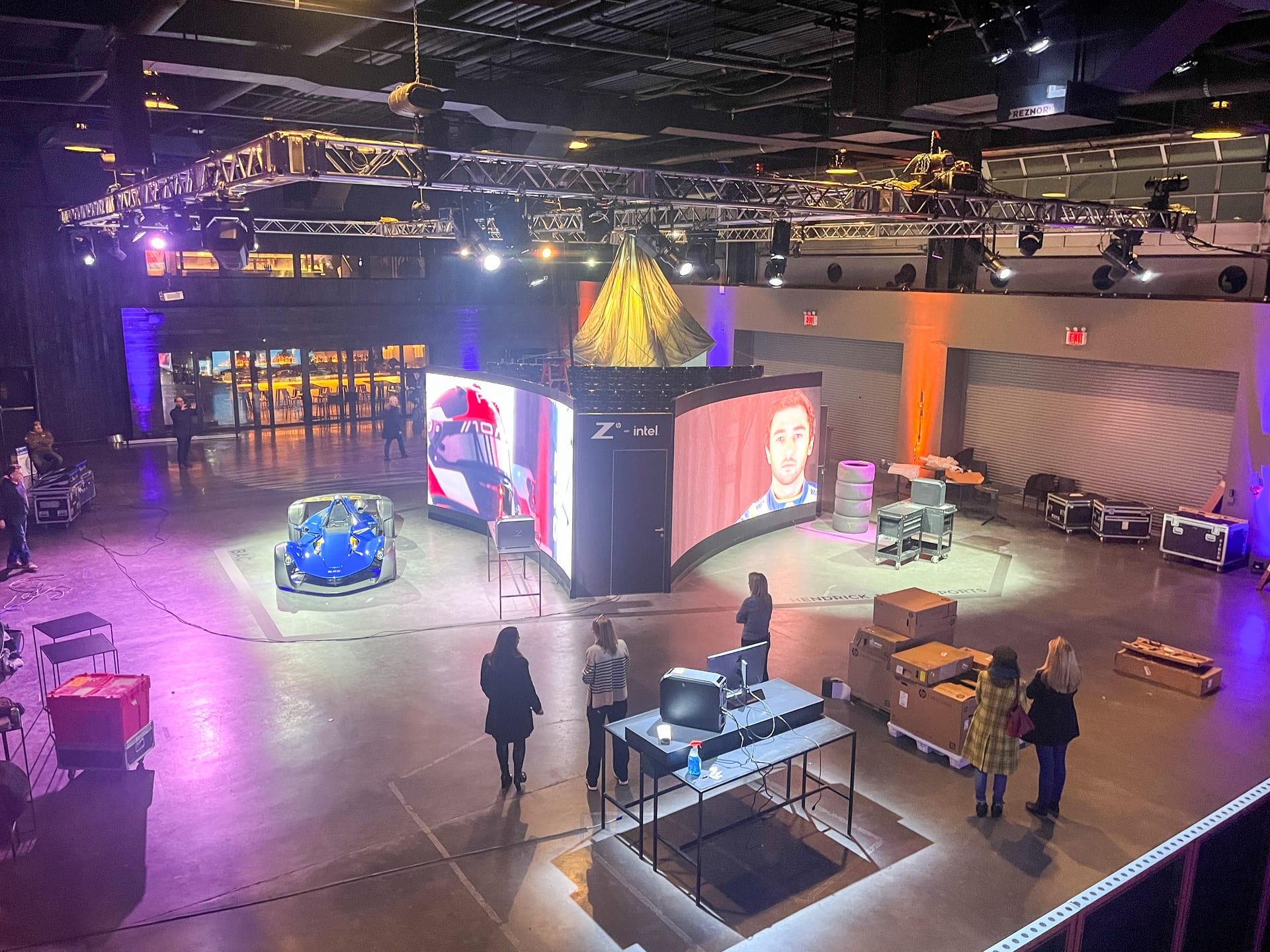
HP wanted guests standing inside the work its new workstation does, not reading about it. That meant four rendered worlds on three curved LED walls, staged on a working Hudson River pier that had nowhere near the power to run them.
By the numbers
- 3
- Curved LED walls
- 216
- LED tiles
- 8M
- LED pixels
- 46 ft
- SEG graphics wall
Four worlds, one floor
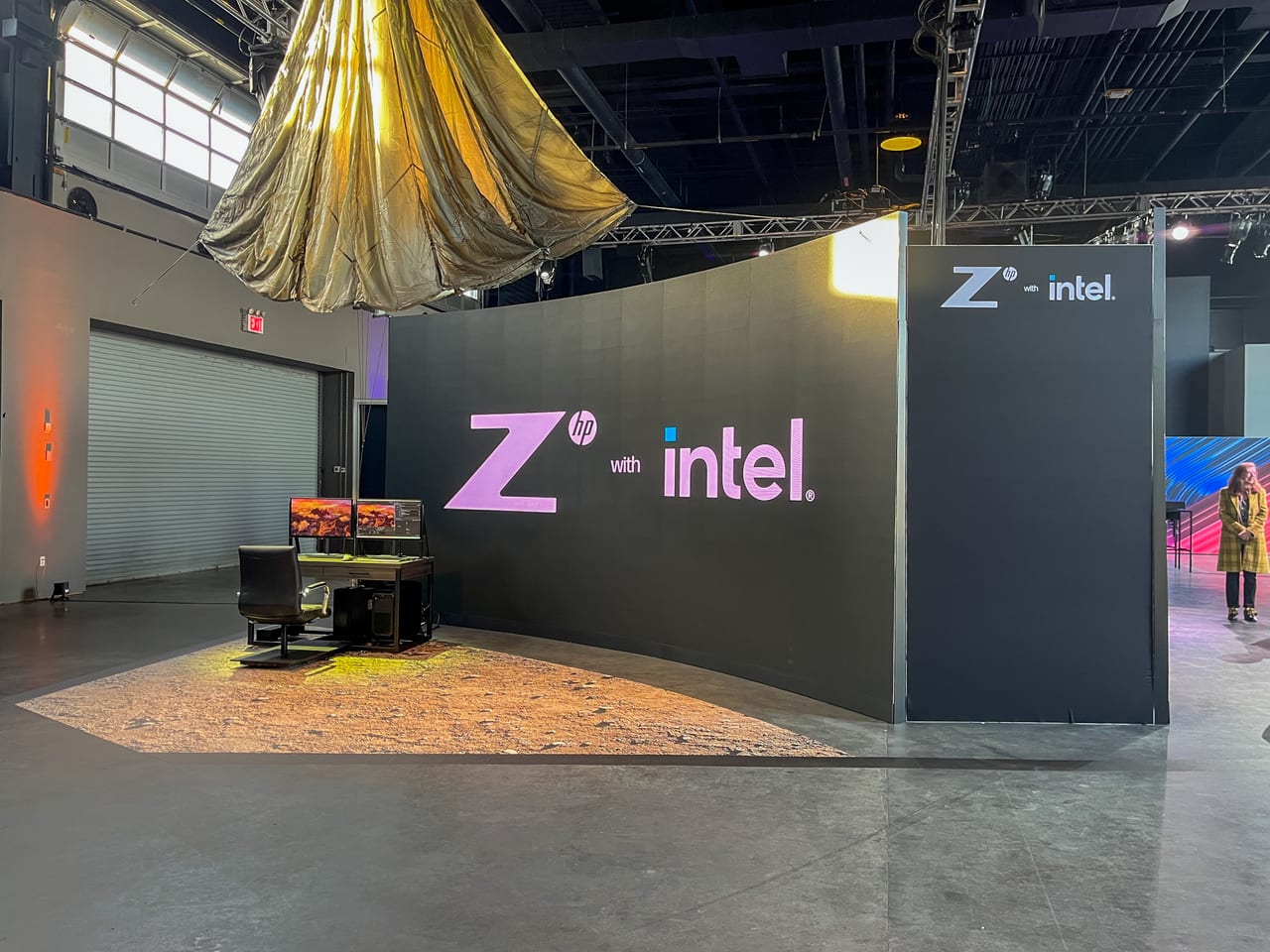
The Z8 Fury is a machine for people who render things, so the launch skipped the spec sheet and put guests inside the output.
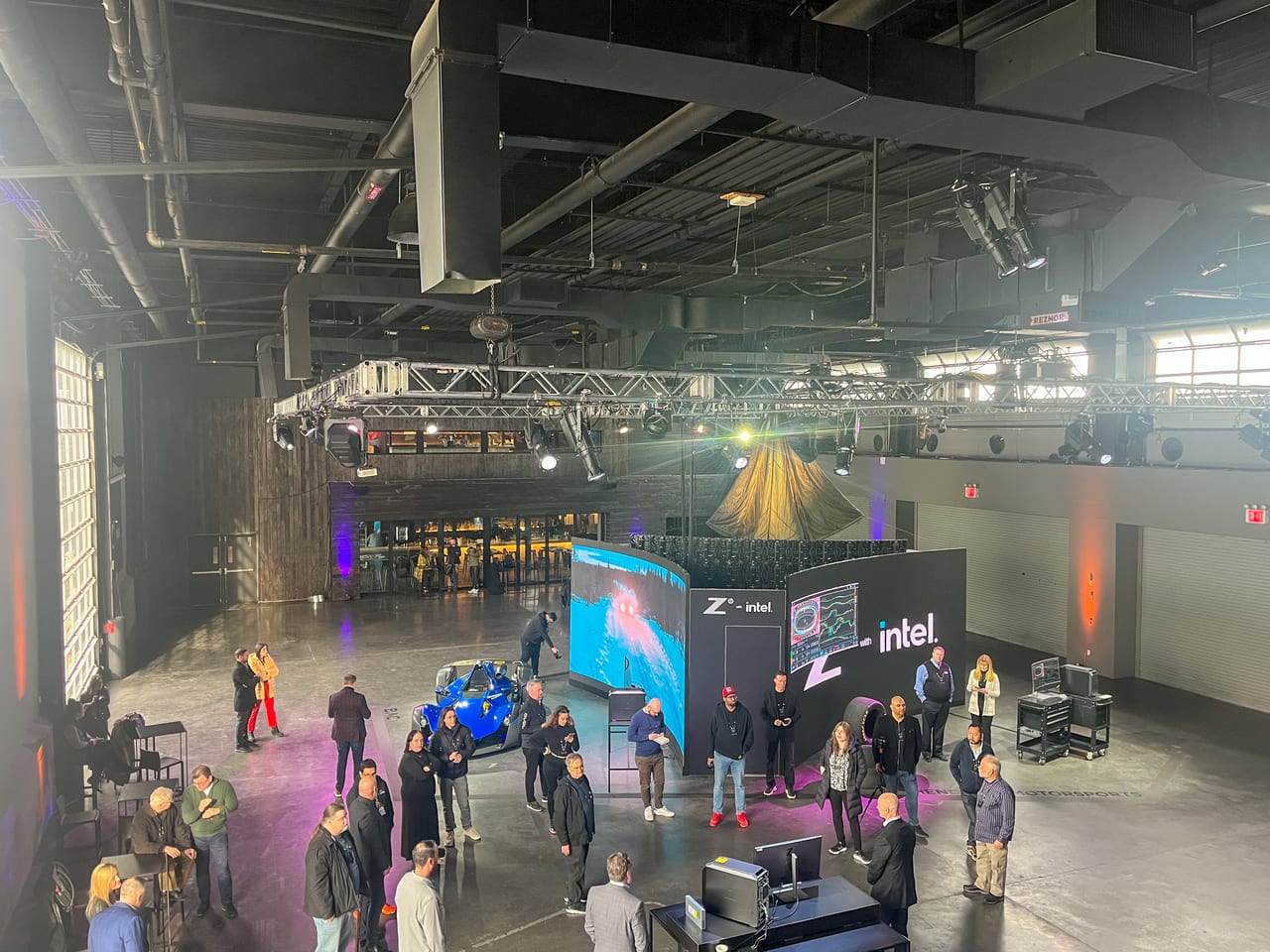
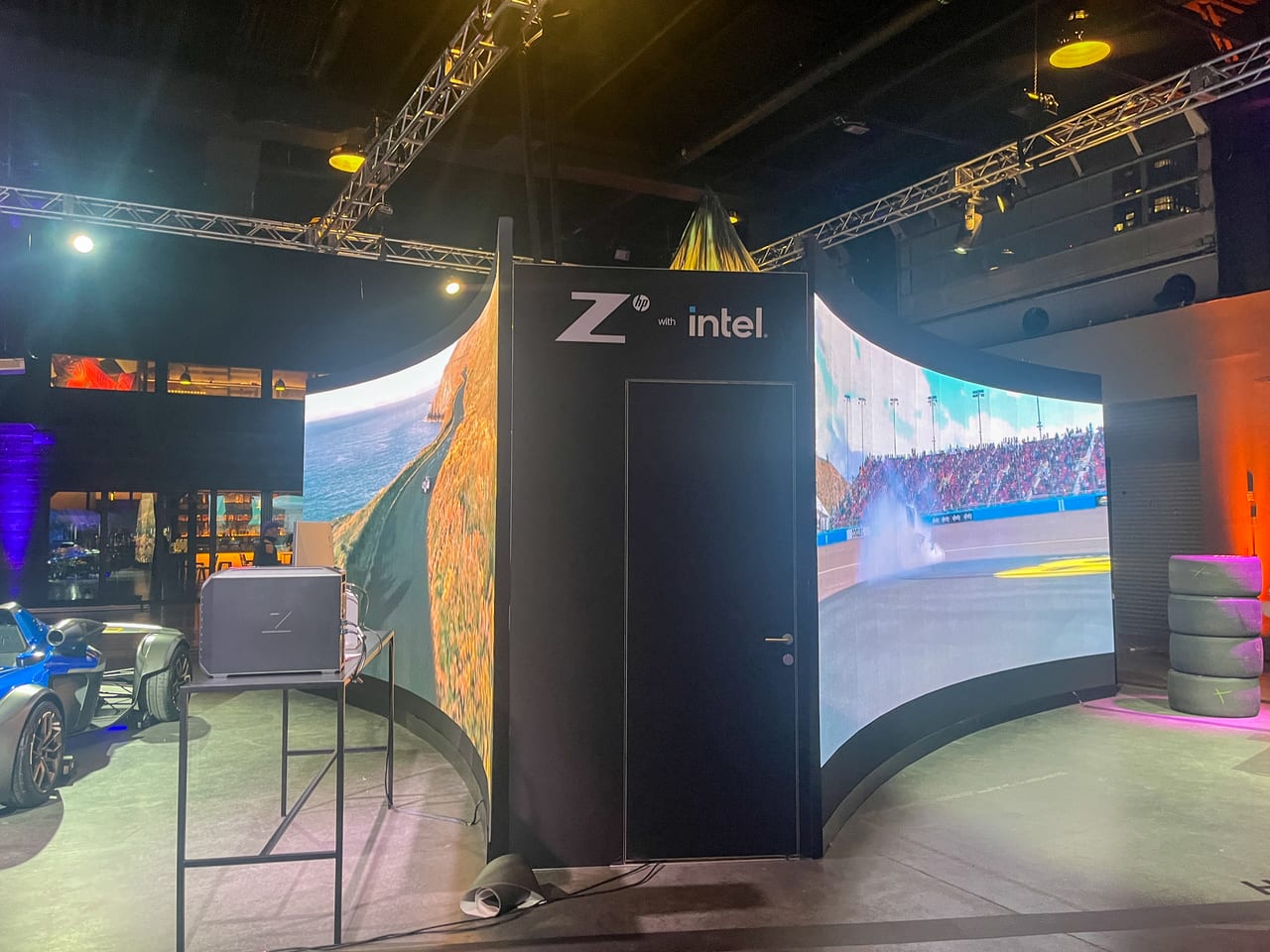
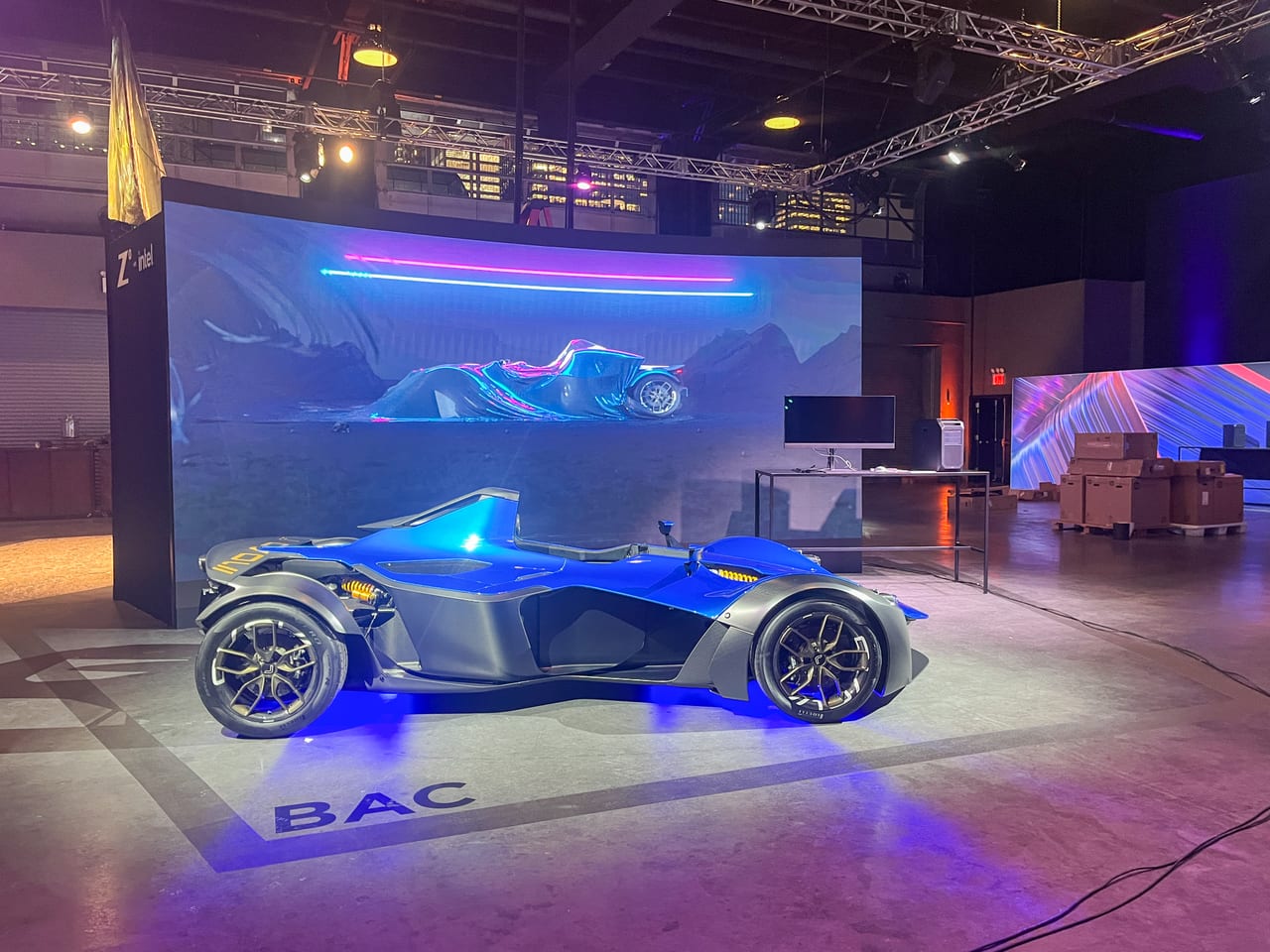
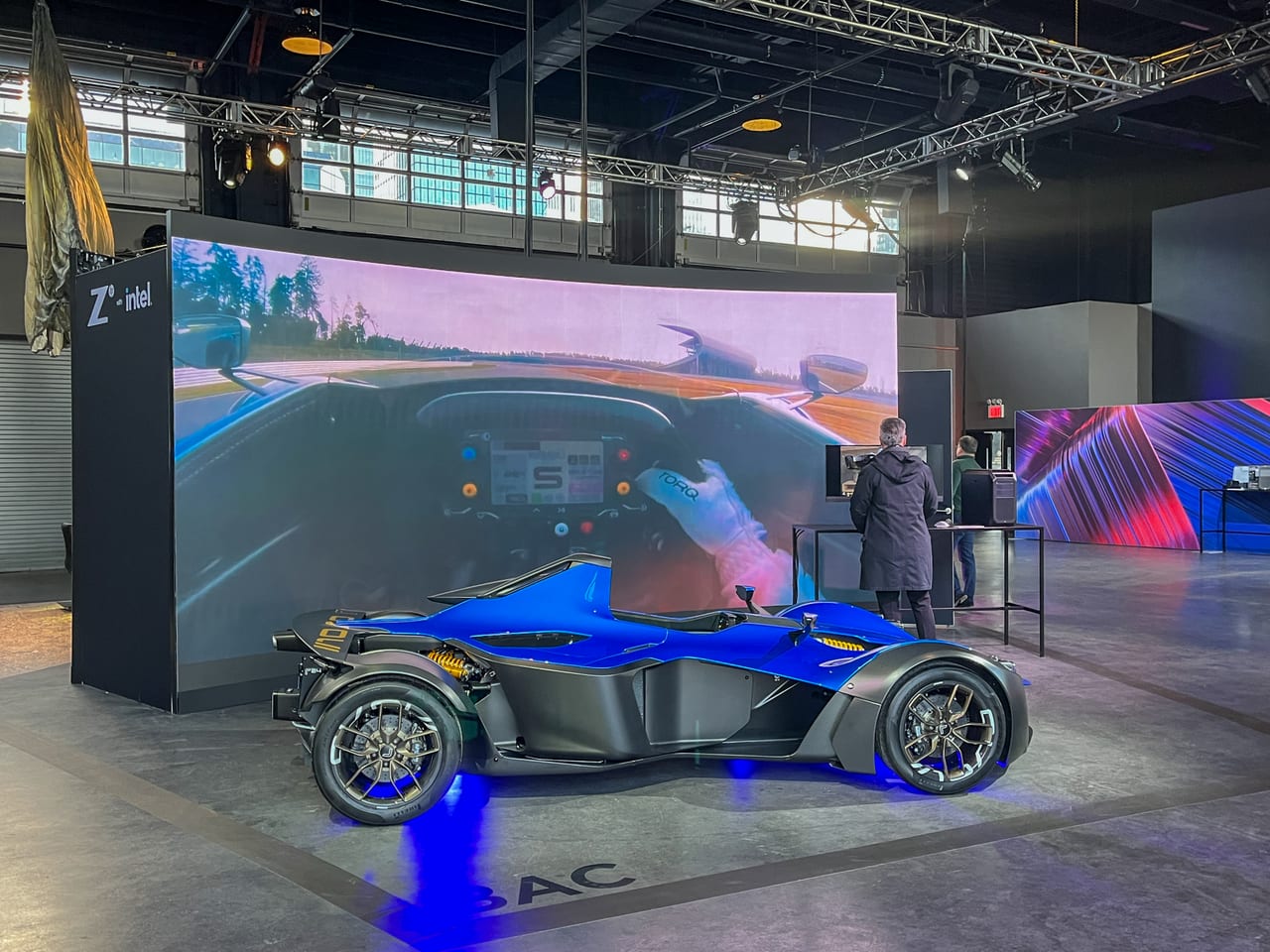
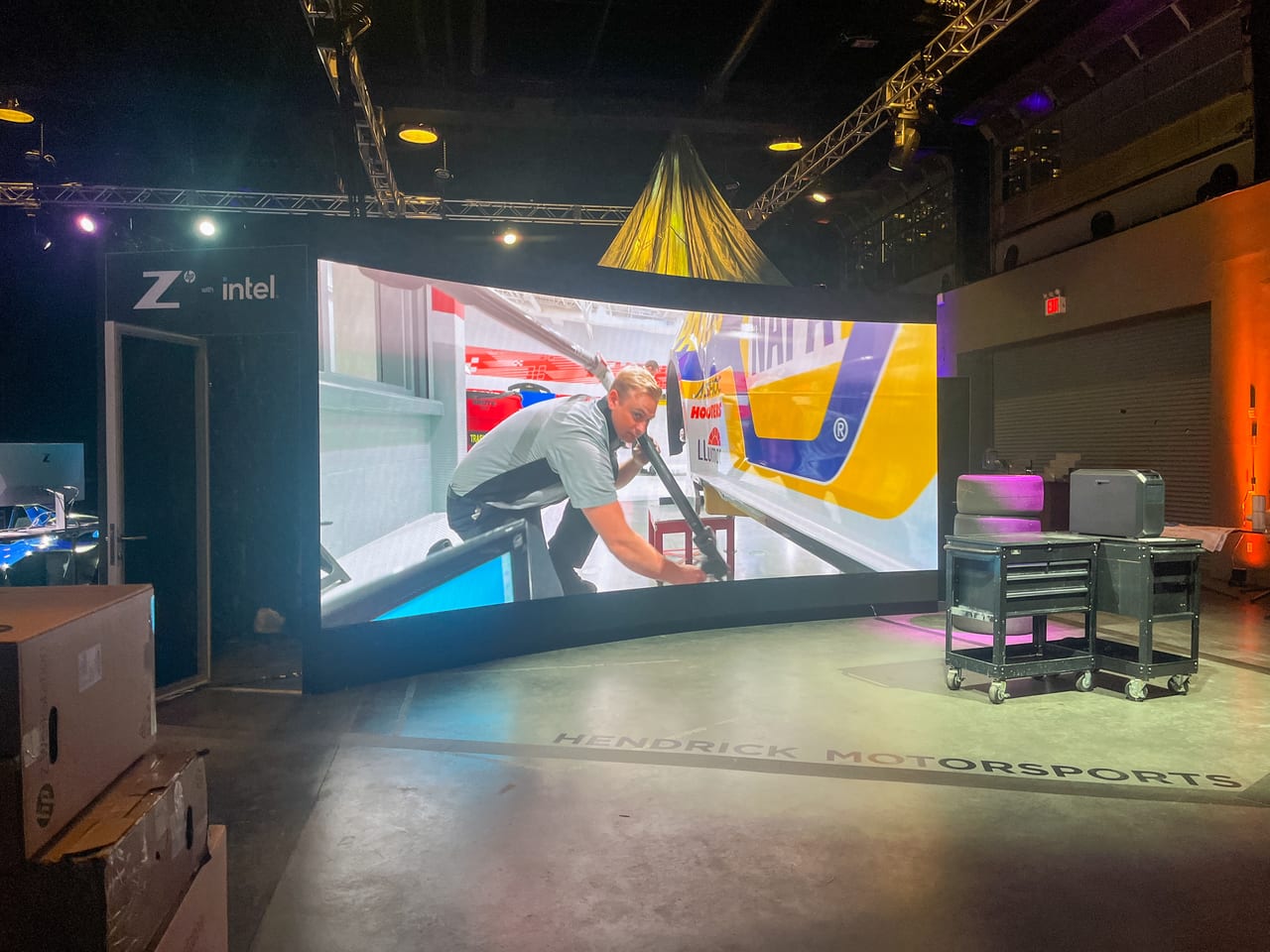
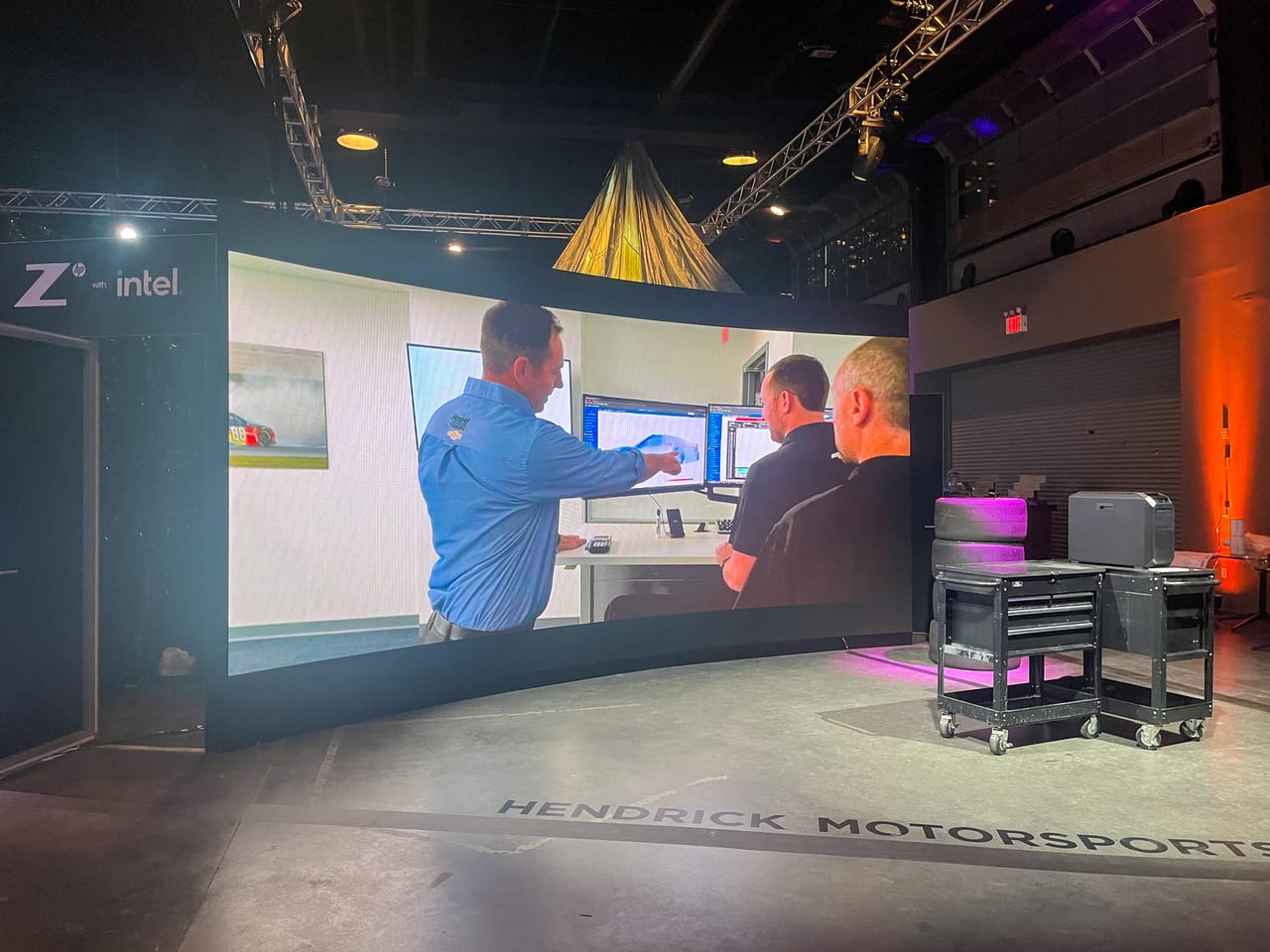
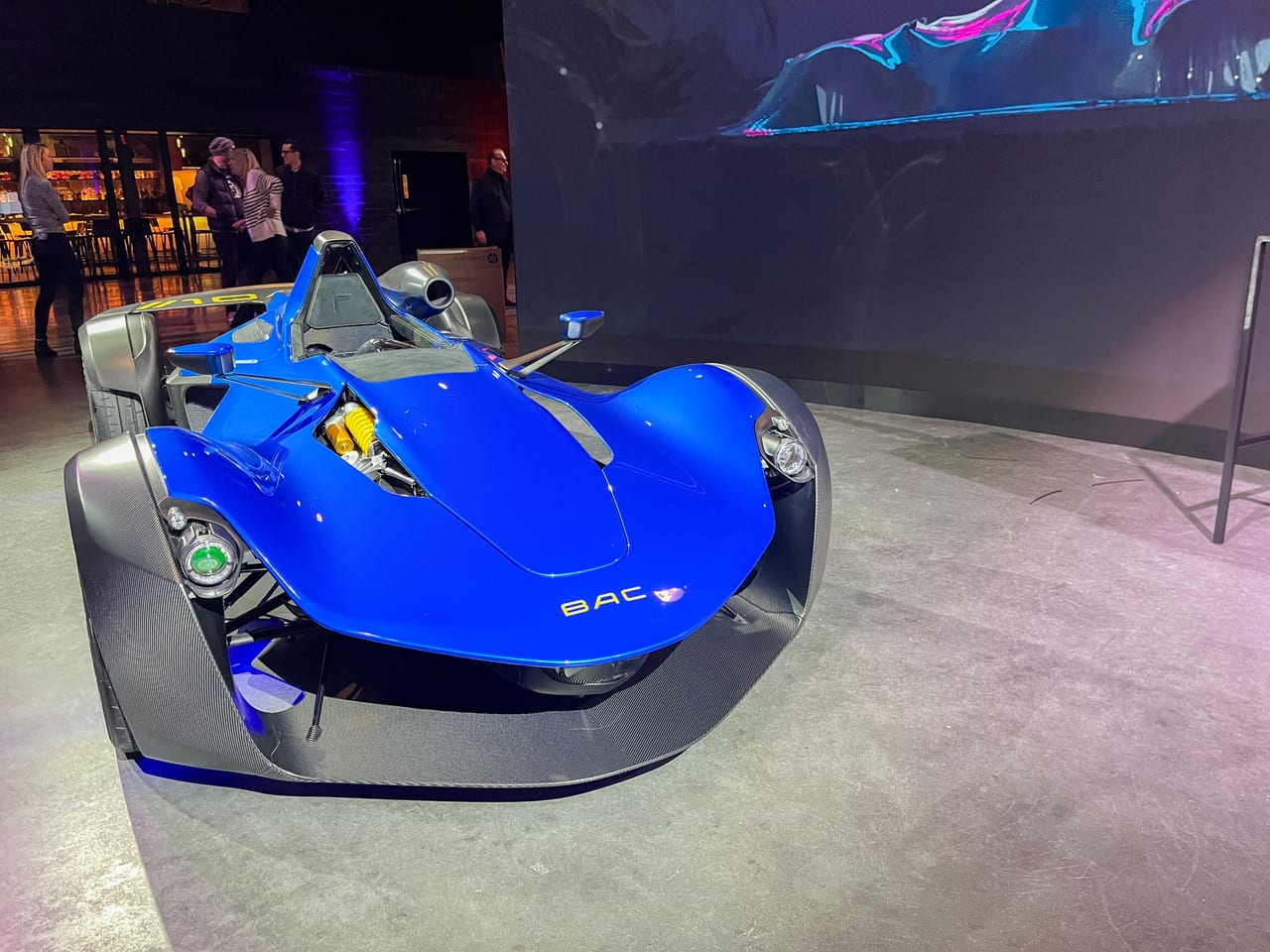
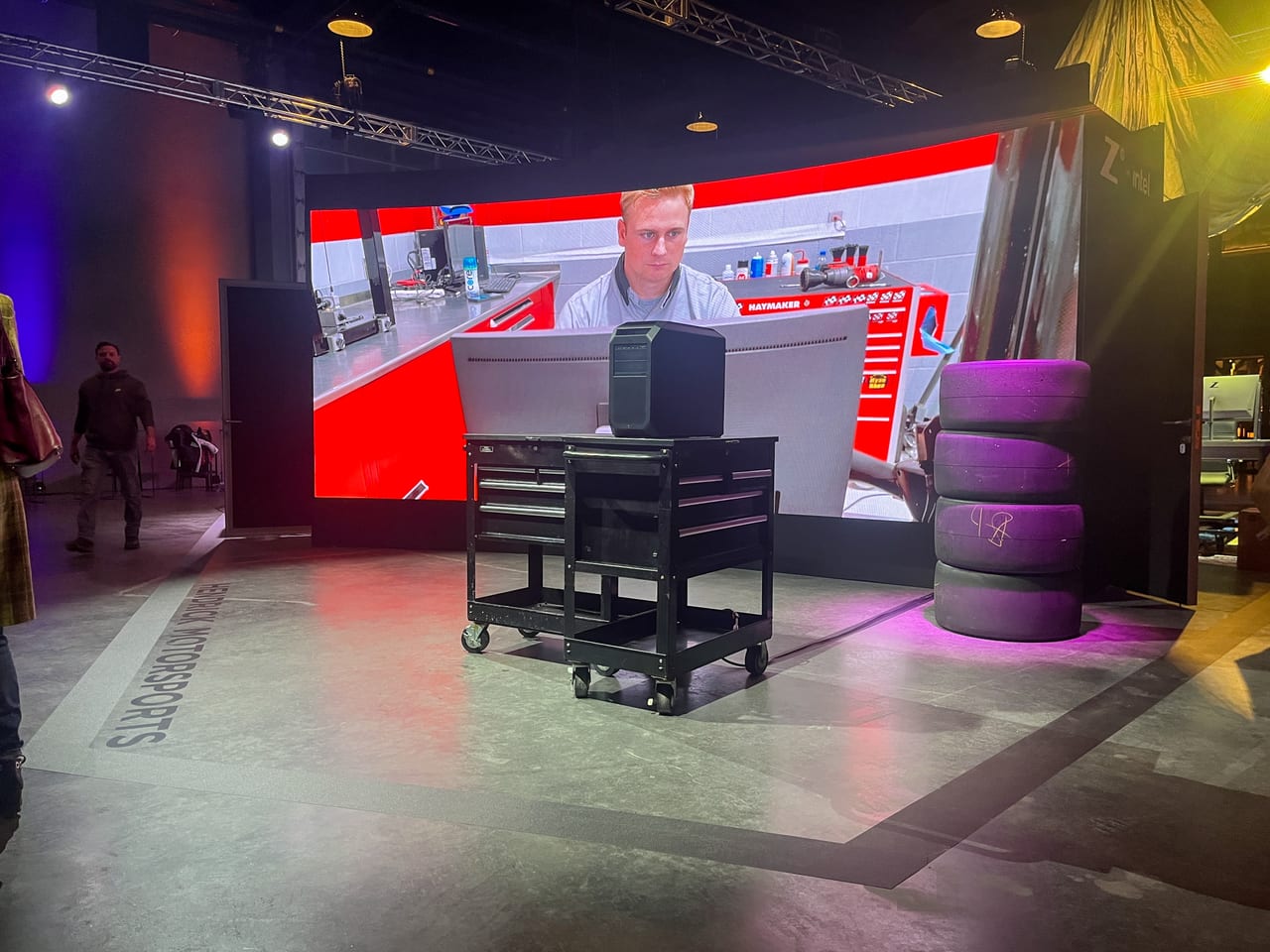
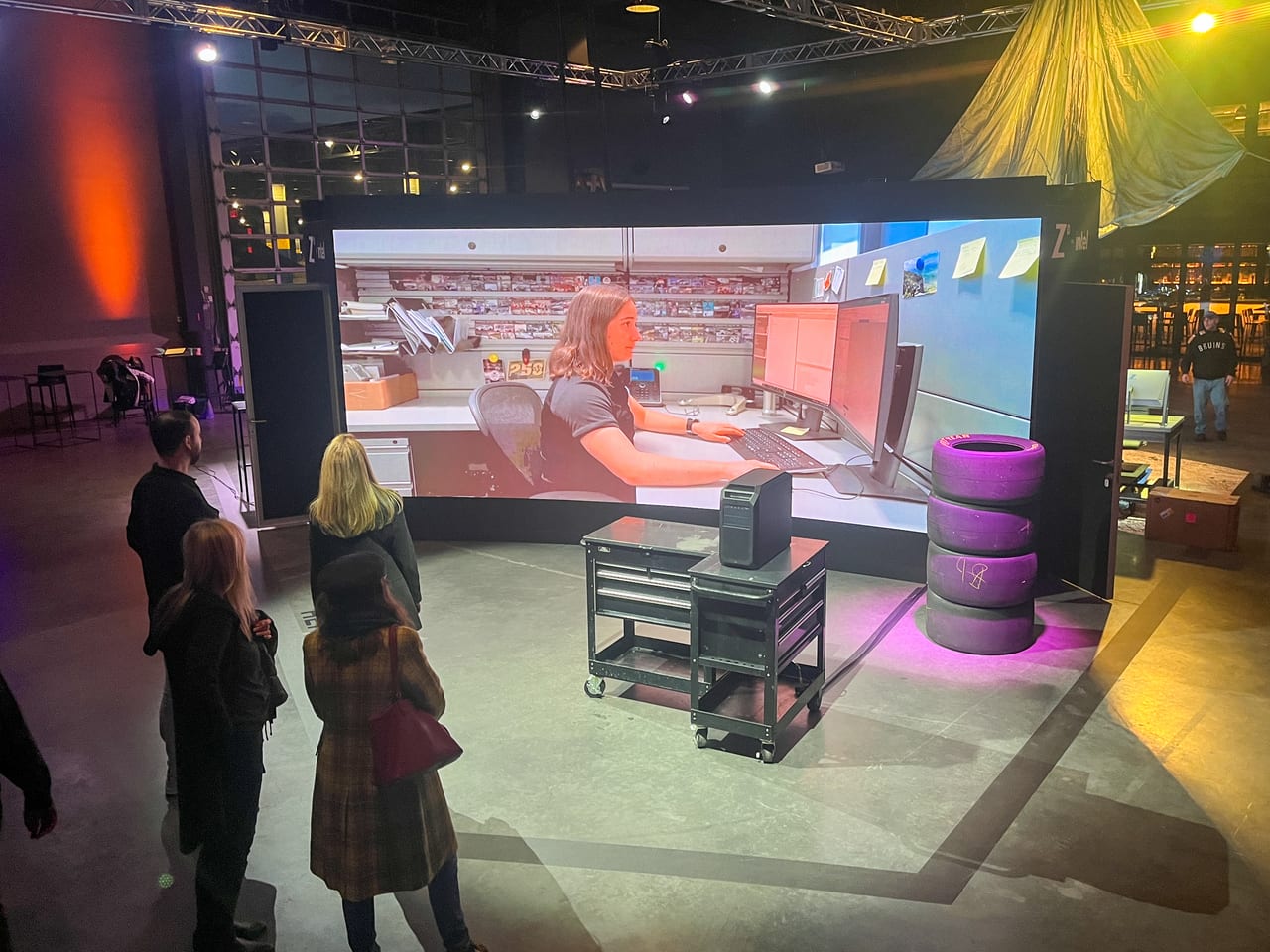
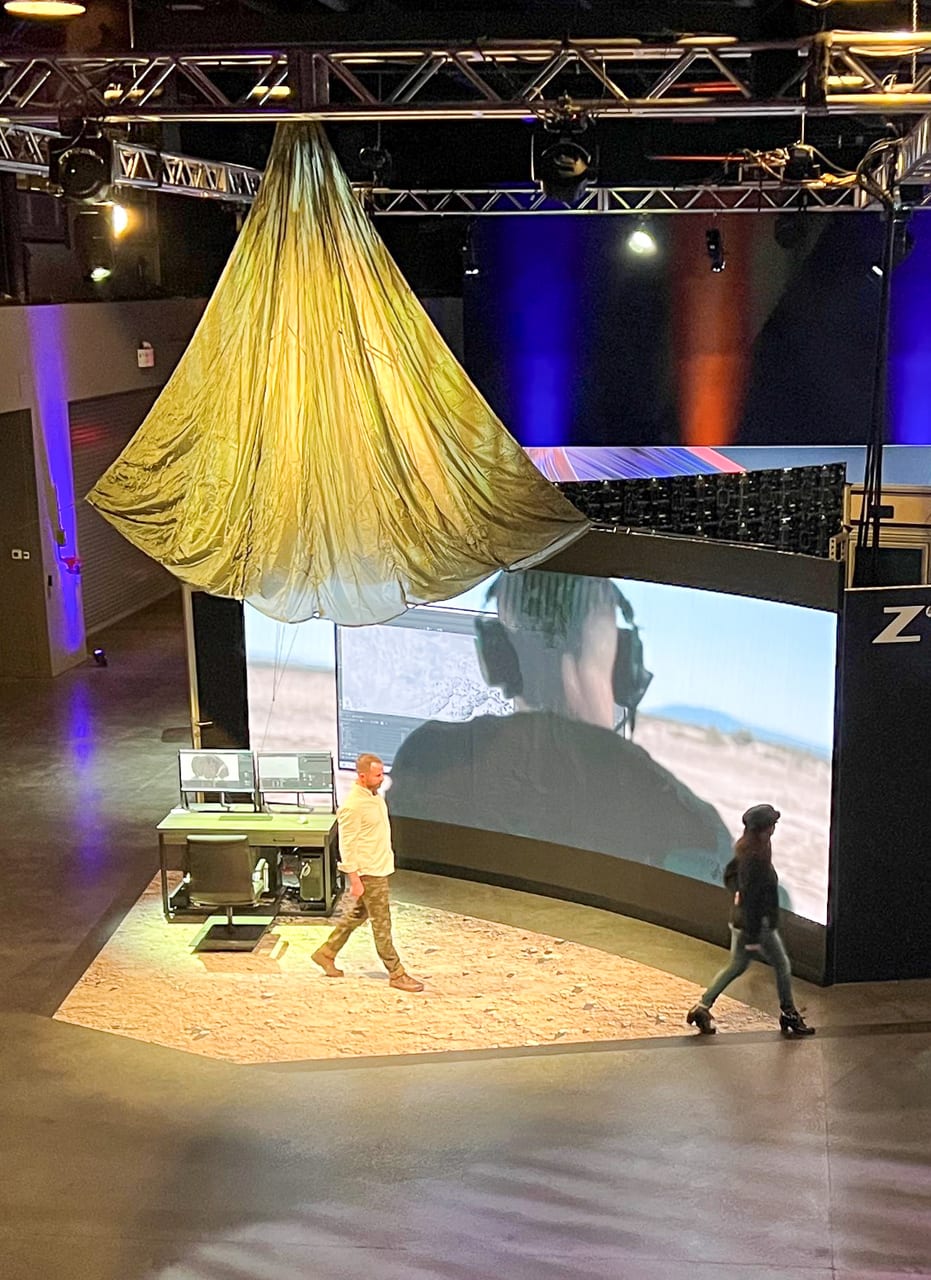
Three curved LED walls wrapped the floor at Classic Car Club Manhattan, each one running a world the workstation could produce. A Hendrick Motorsports race shop. The BAC track car under studio light. An off-road desert. A deep-water dive. In front of every wall sat a Z8 Fury and a monitor, so a guest could step from the picture straight to the machine that made it, and the floor graphics carried each theme all the way to the ground.
The complication was the address. Classic Car Club sits on Pier 76, a working Hudson River pier, and a working pier cannot hand you the power an eight-million-pixel room needs. We brought it in and built the distribution the whole environment ran on.
The curve is the hard part
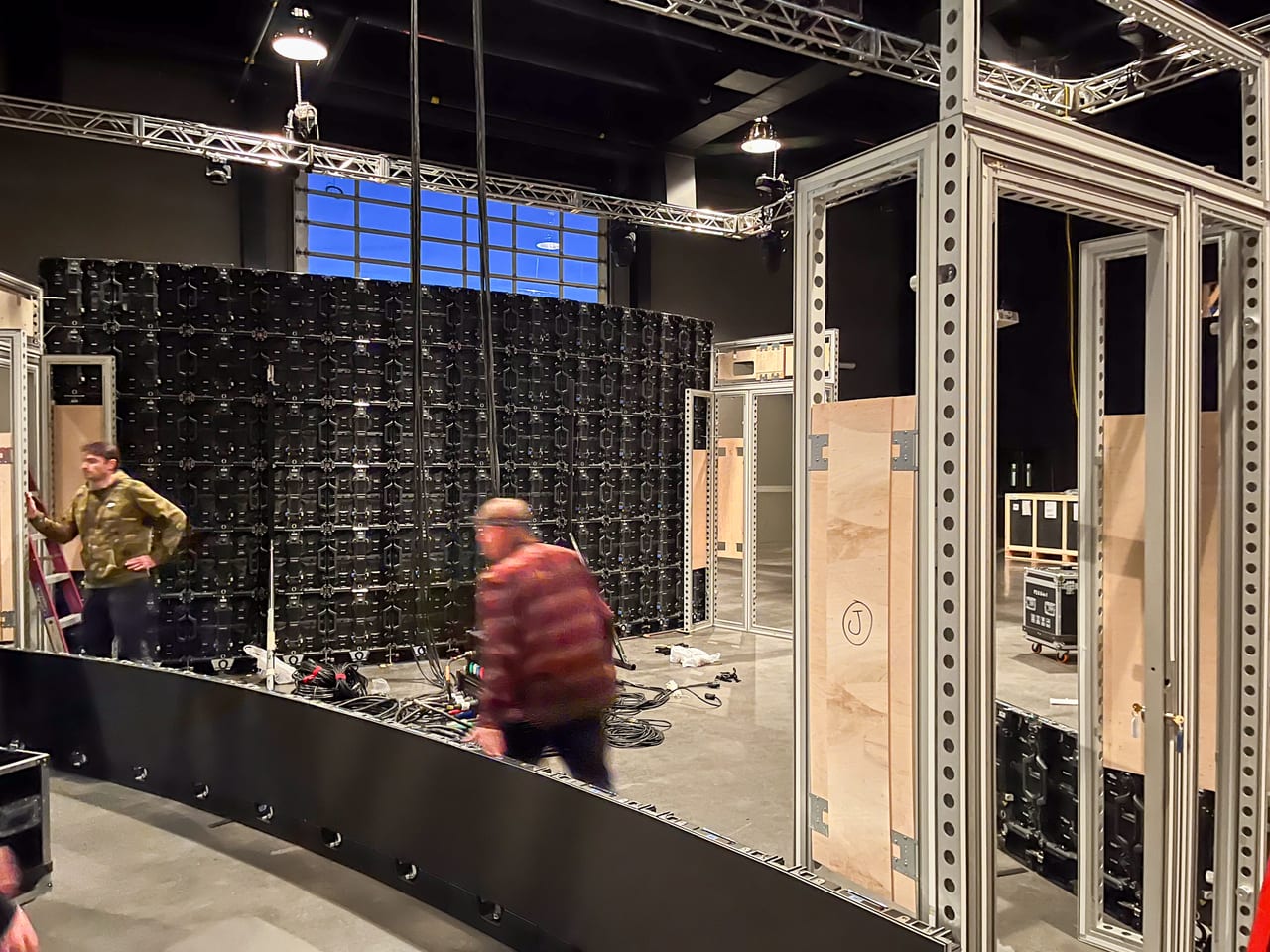
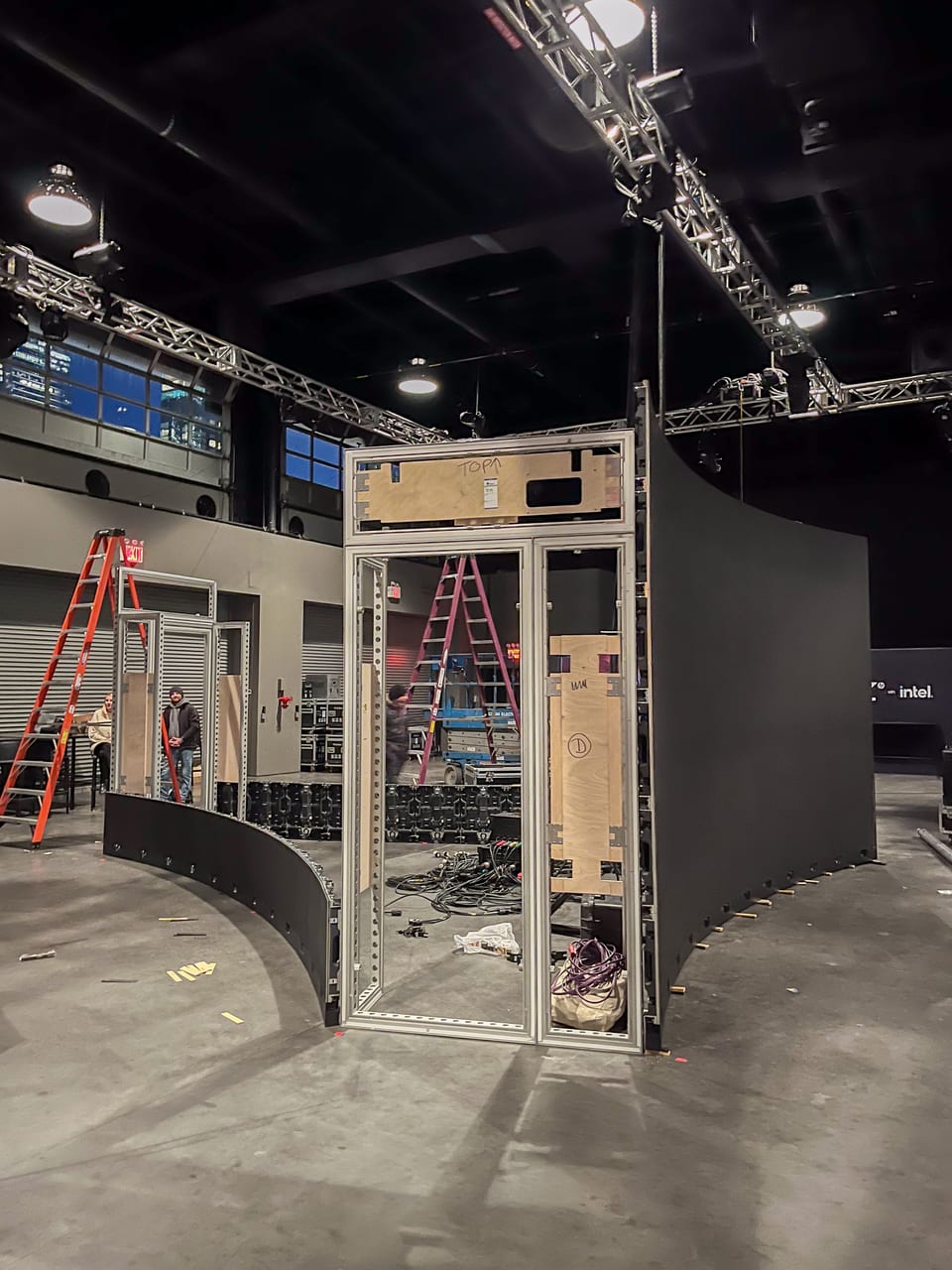
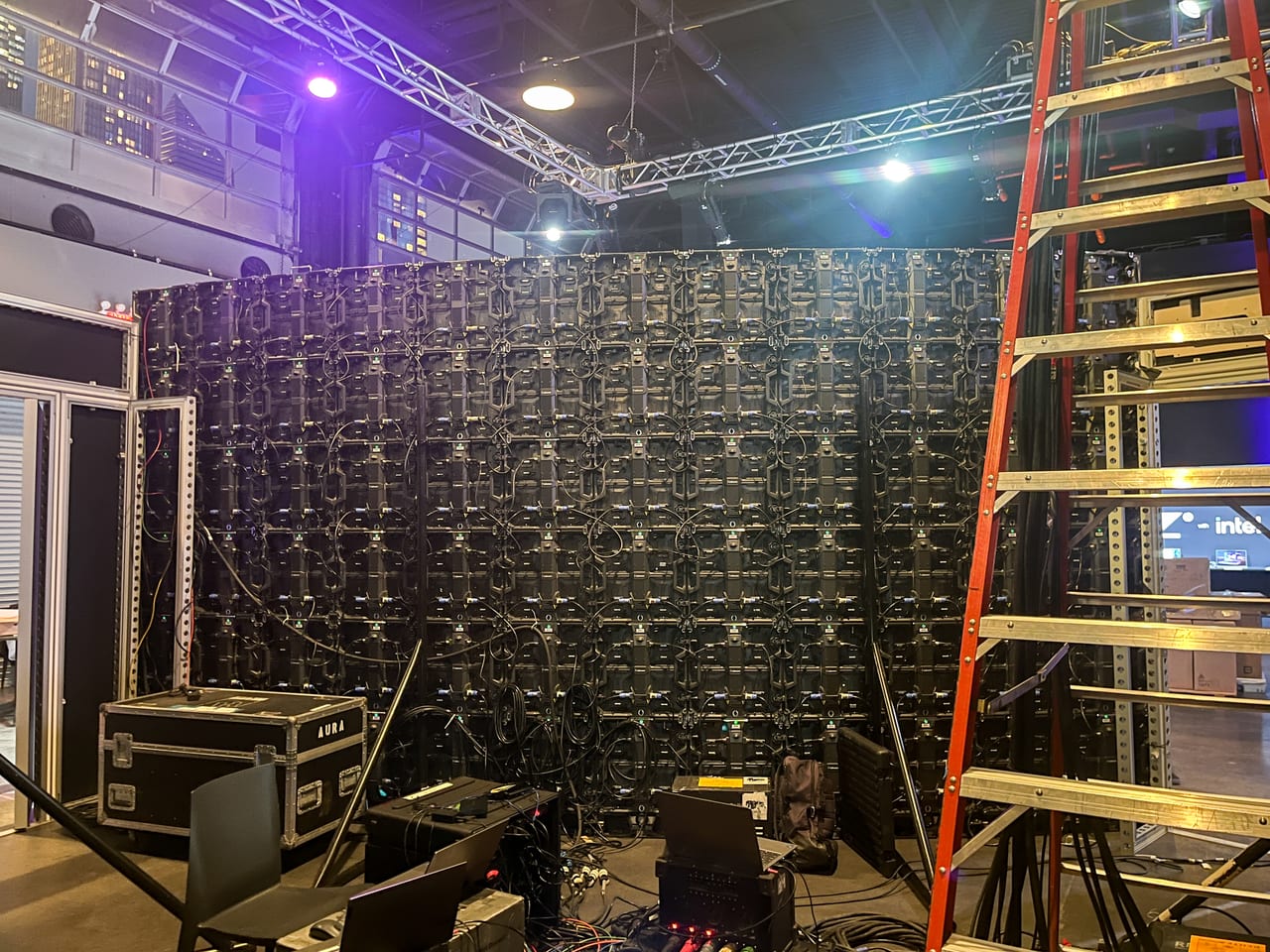
Flat walls are forgiving. A curve is seventy-two tiles stacked on ground support and trued into an arc before a single pixel lights, and a frame that sits a few millimeters proud will show as a seam from across the room. We built three of them, 216 tiles in all.
Then it has to look like one room. We framed the walls and the 46-foot graphics wall in beMatrix, ran processing and cable, and color-matched every panel so four separate worlds read as though they came off the same machine.
Load-in was the day before doors, five of our technicians on it. By the time the first guest walked in, an empty pier floor read as a finished set.
Next deep dive
G2E 2022