Thirty-seven booths on our network, twelve on our A/V, and a game our own developers wrote: step on the mat, a depth camera finds your hands, and you swipe threats out of the water. The biggest Black Hat floor we have run.
By the numbers
- 37
- Booths on our network
- 187
- Hardwired drops
- 495
- LED tiles built
- 83
- Technician-days
The biggest floor we have run
Black Hat takes over Mandalay Bay for six days, but the Business Hall is the short window everything else has been building toward. In 2026 a growing share of it ran on us: hardwired internet for thirty-seven exhibitors, booth A/V and LED for twelve, and thirteen technicians on the floor from the first rigging call on July 31 to the last case out the door on August 7.
Every number moved from last year. Five more booths on the network, thirty-five more drops, ninety more megabits of bandwidth, close to six times the LED. And for the first time at this show, a game our own developers wrote.
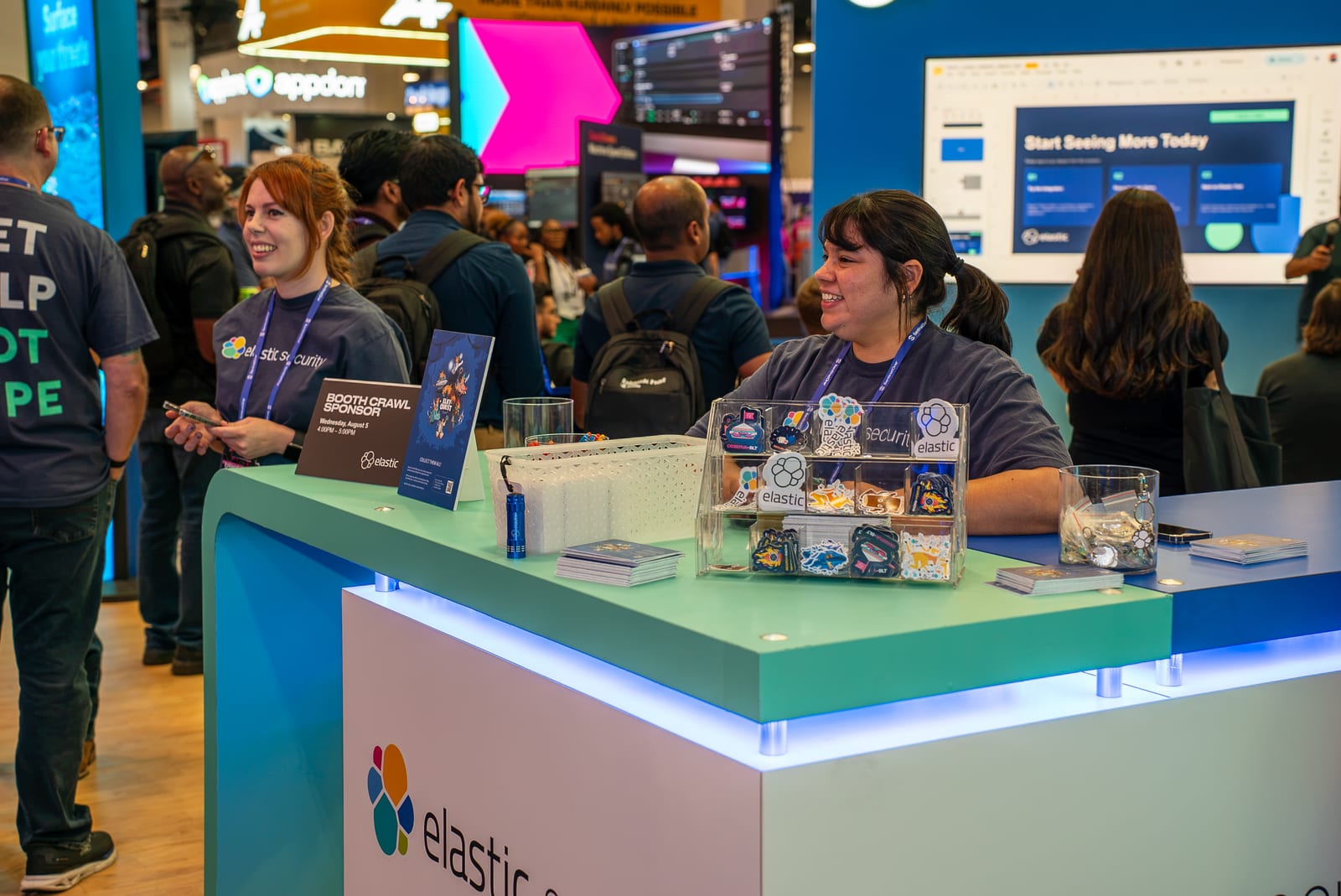
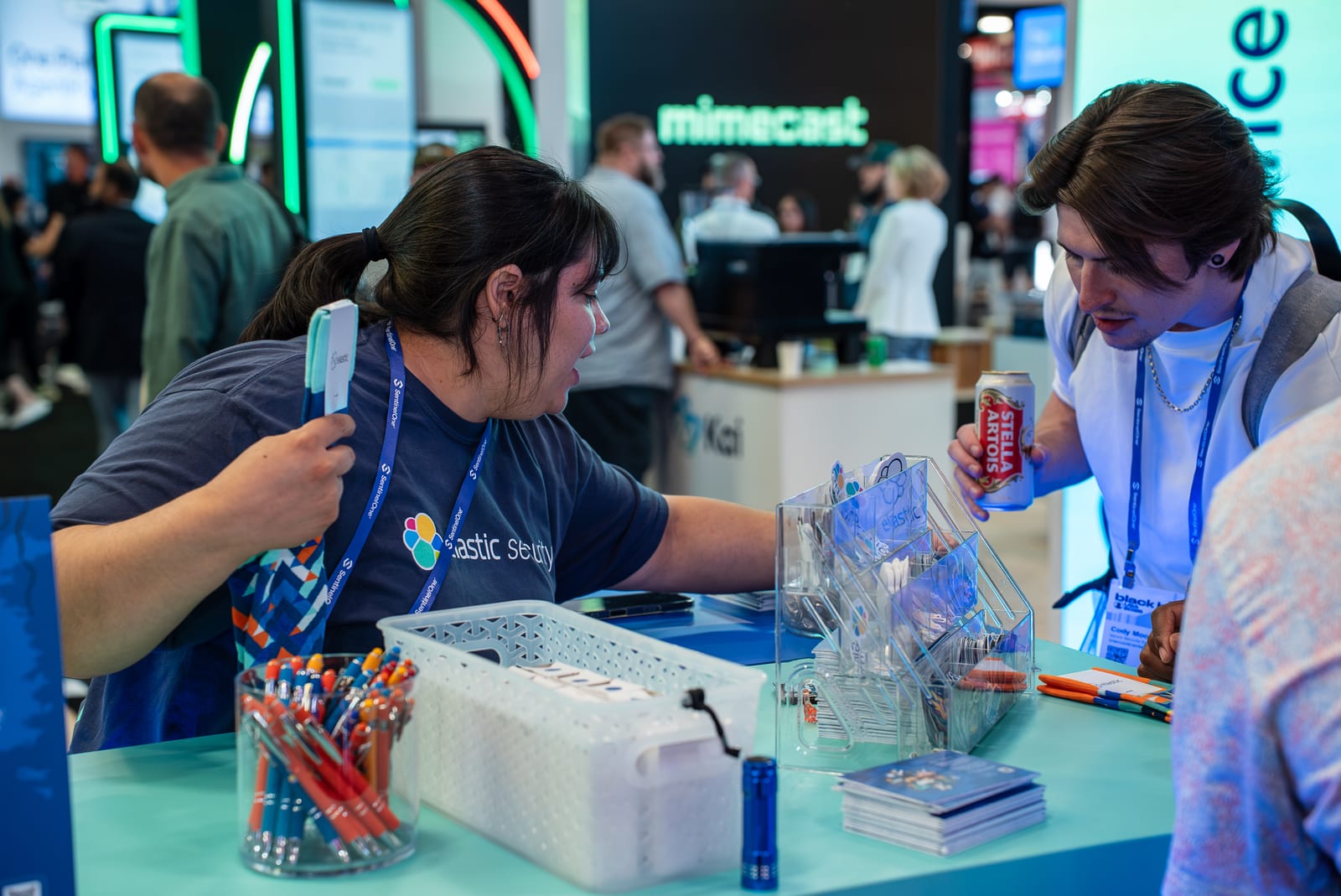
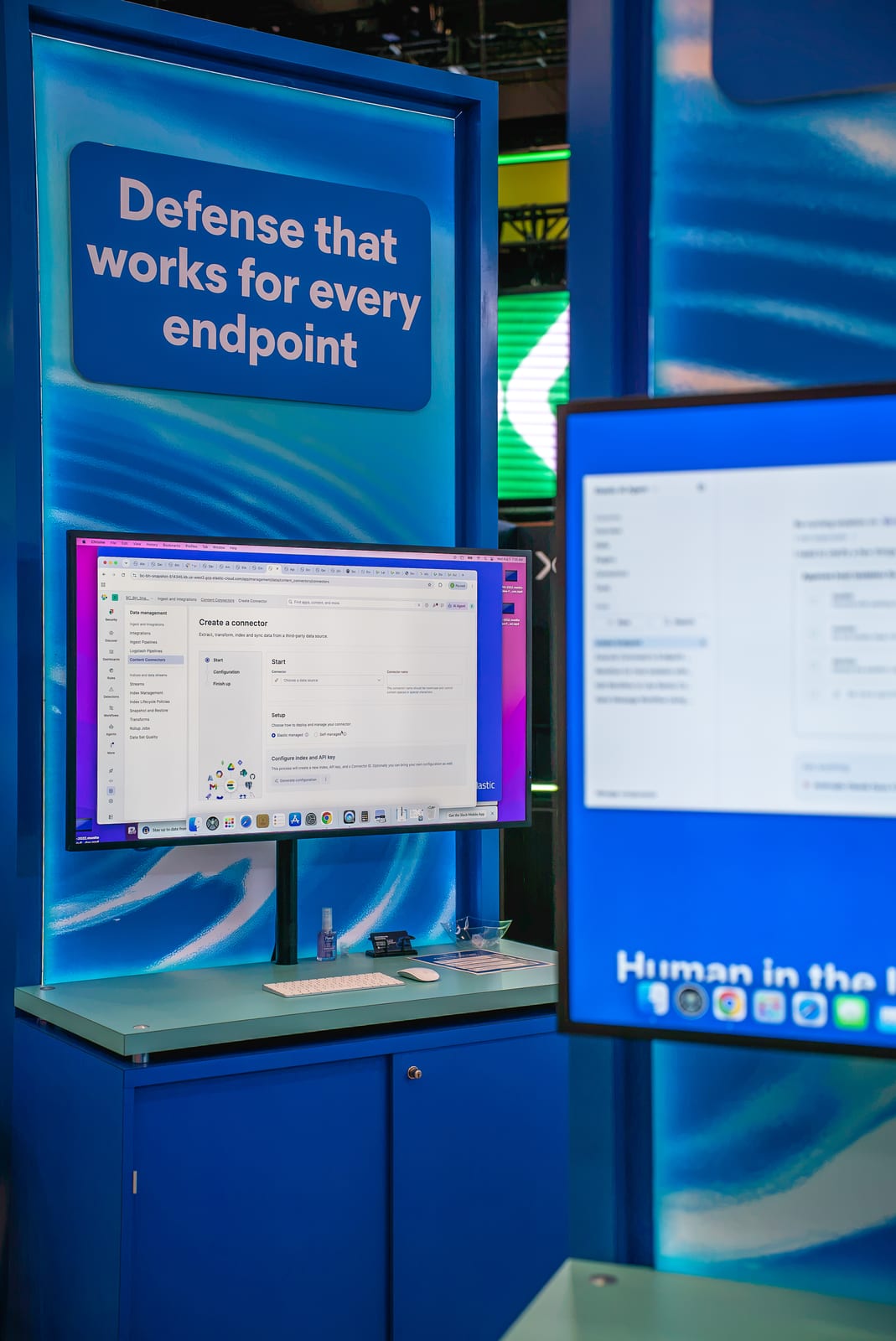
Elastic: hands in the water
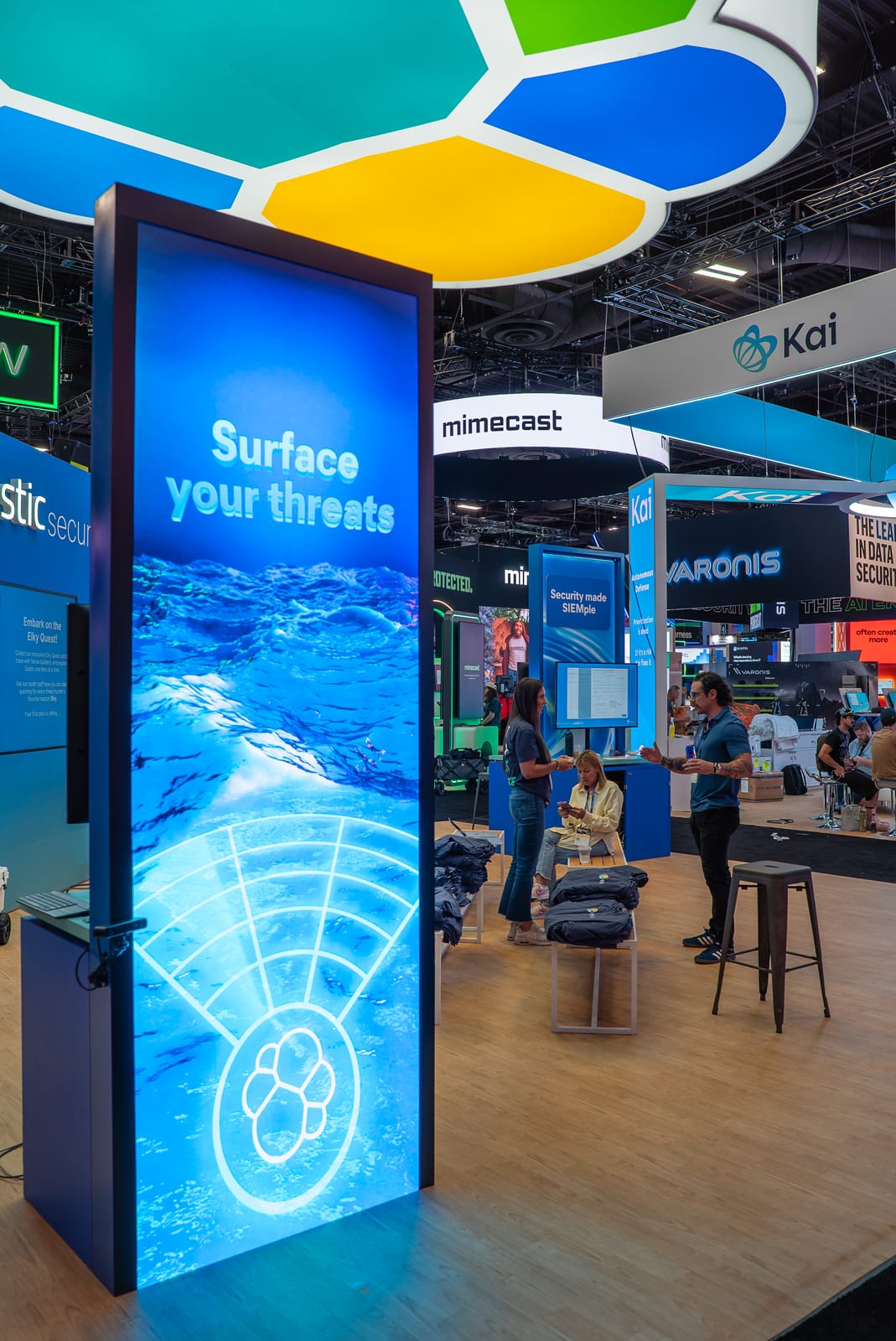
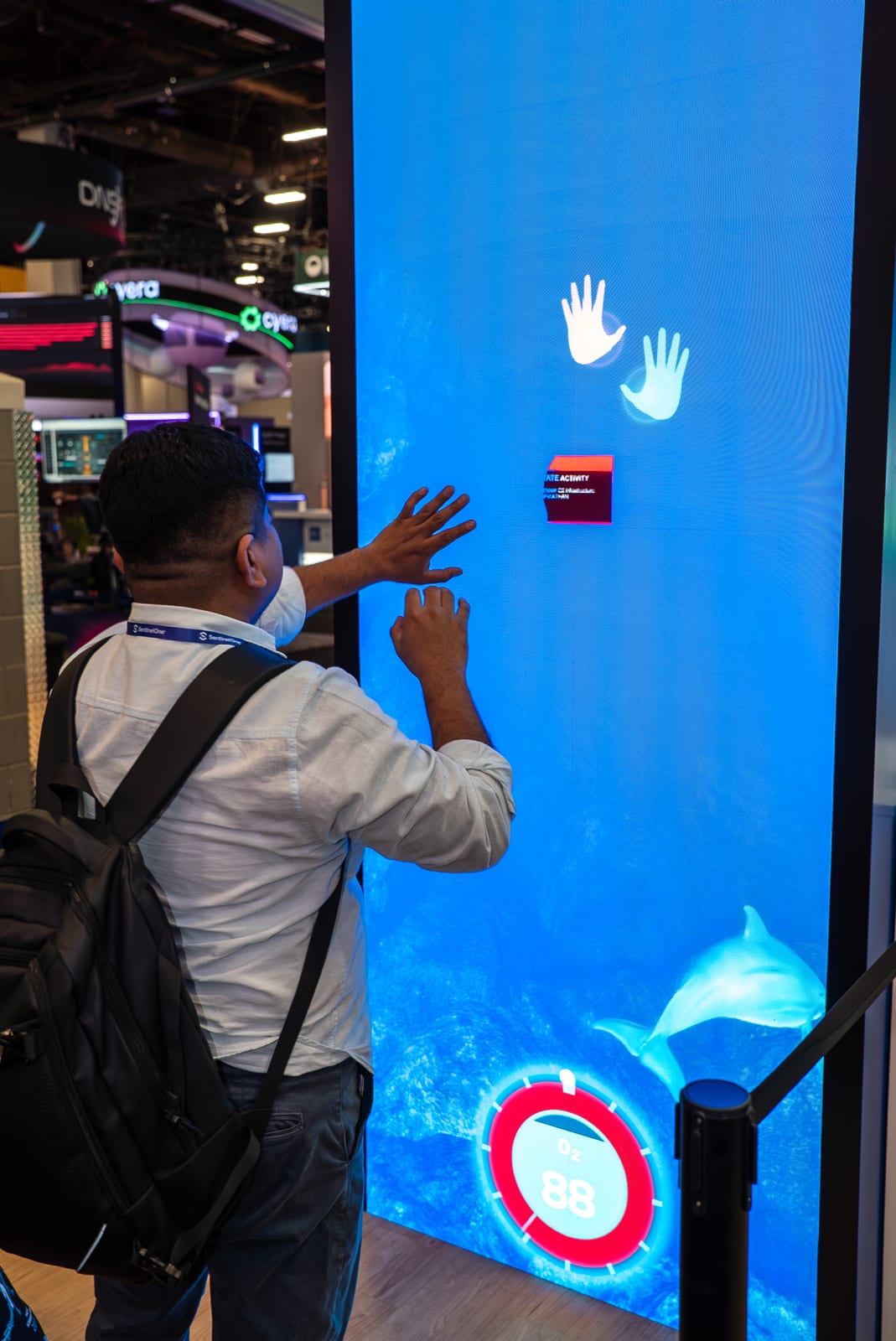
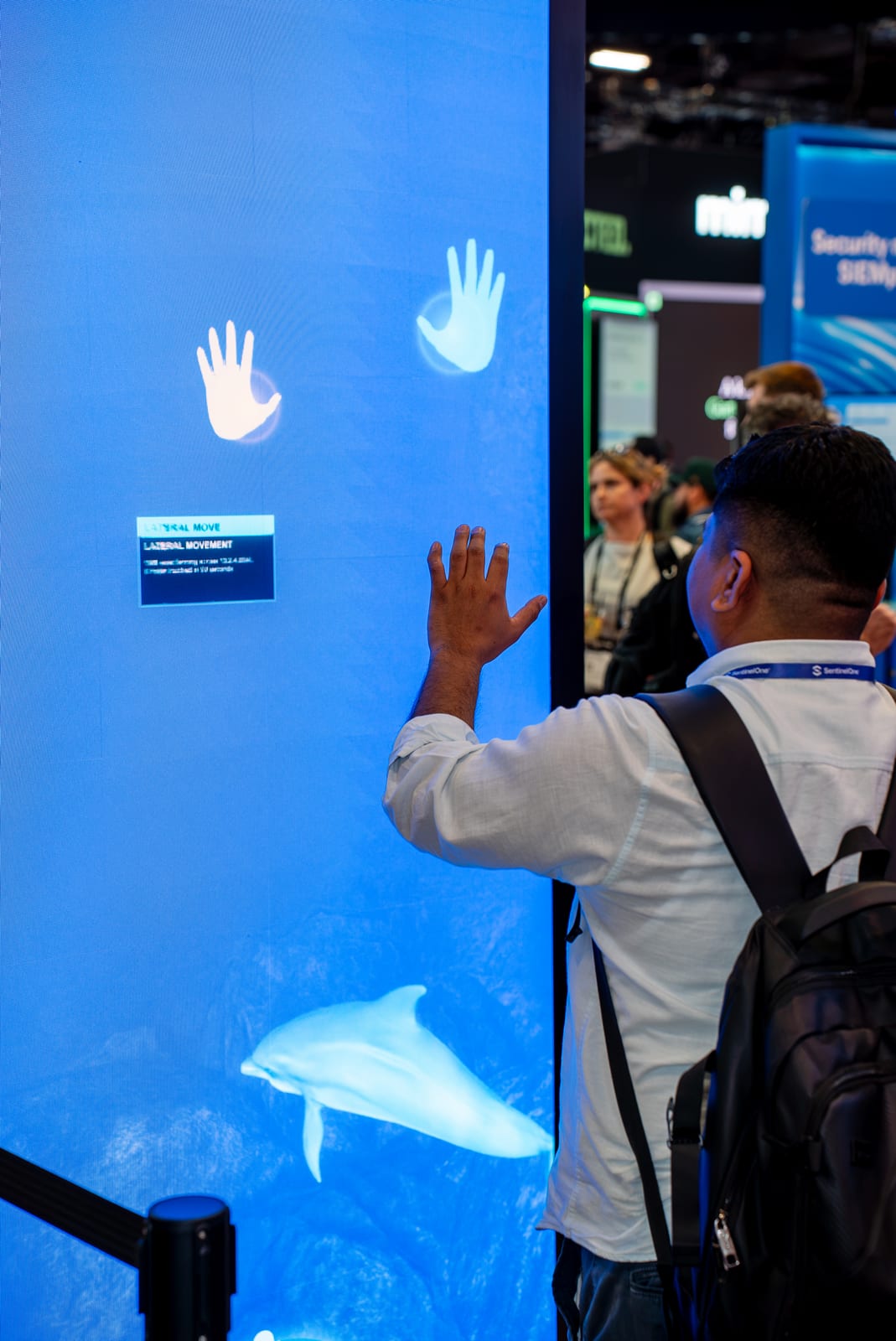
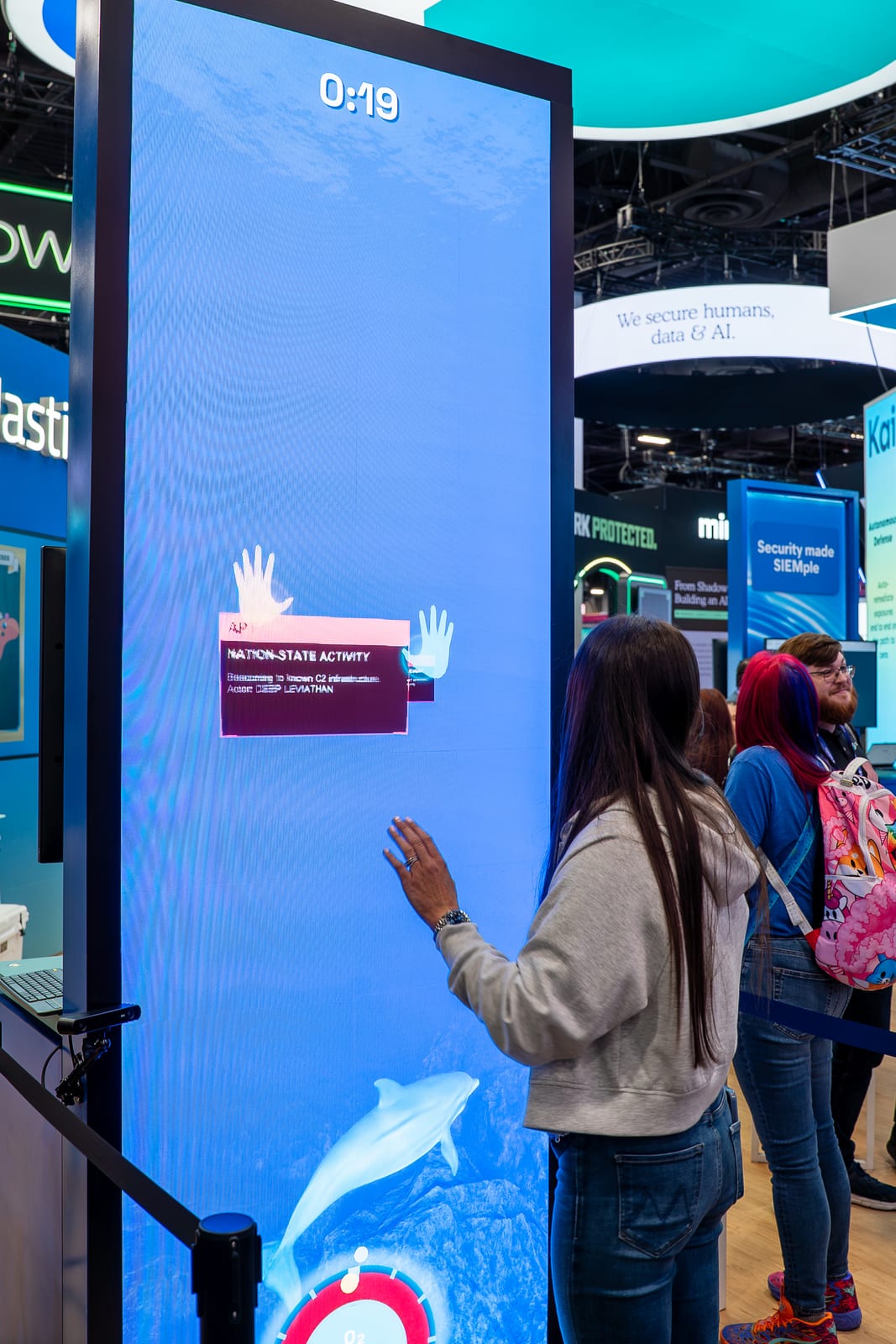
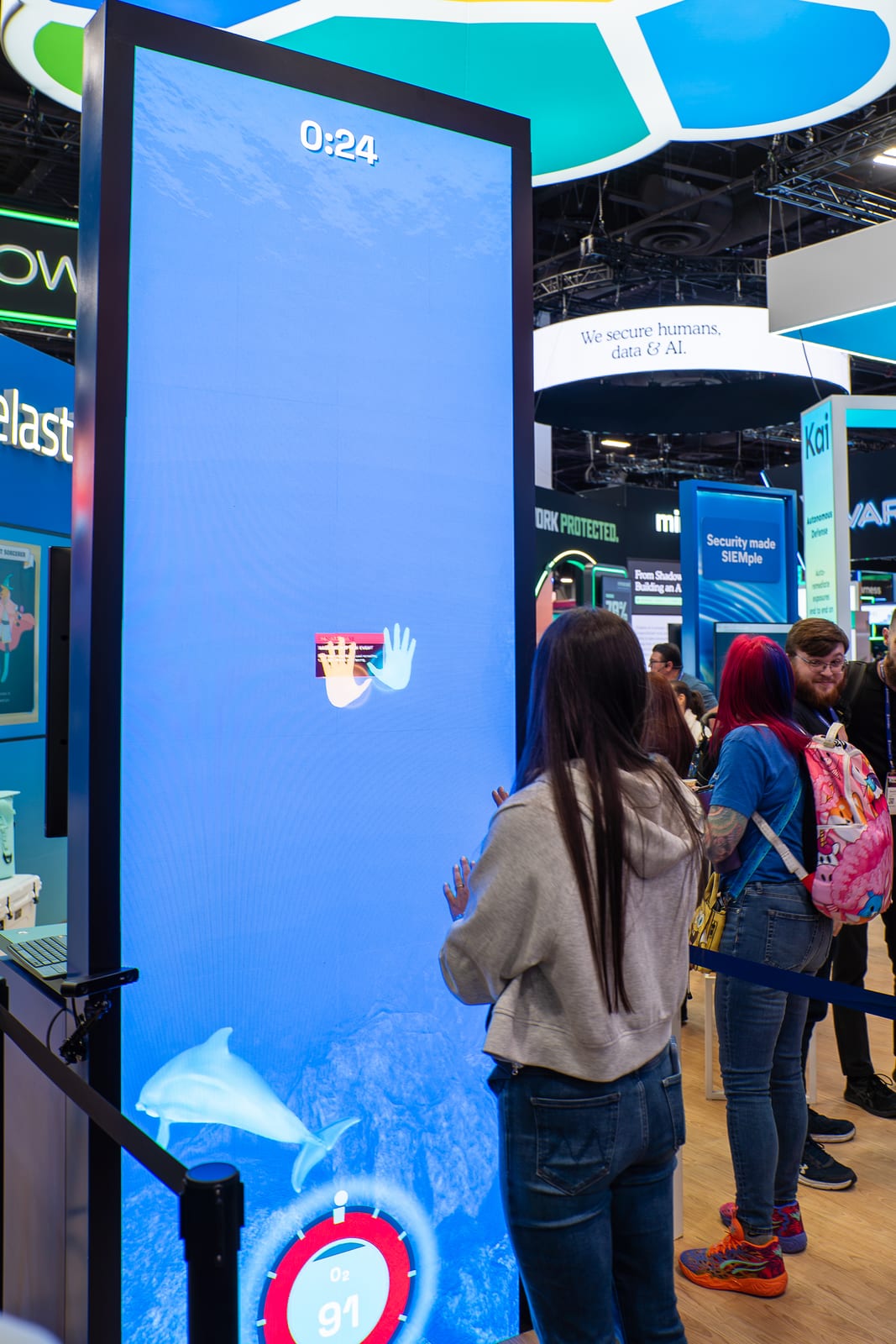
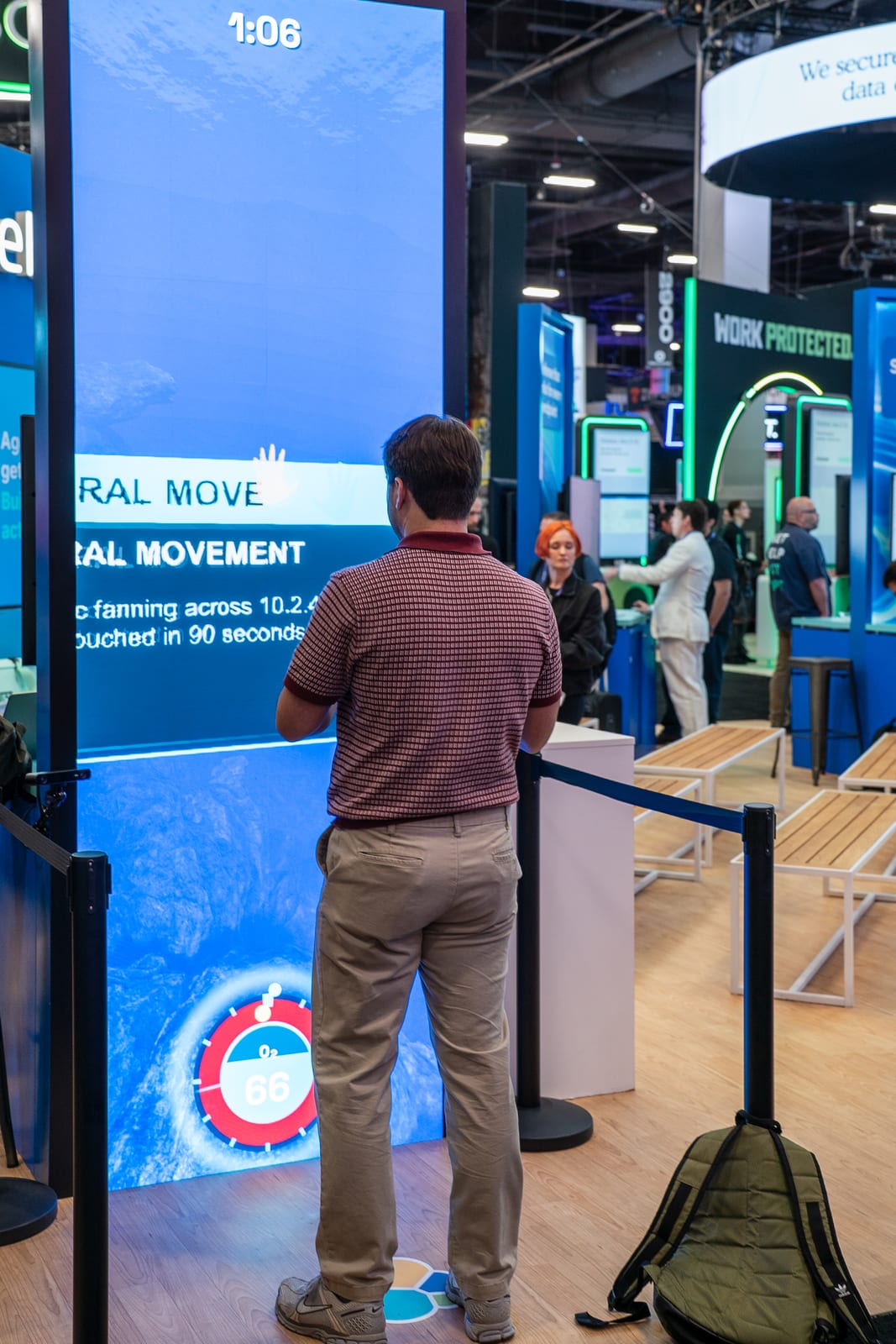
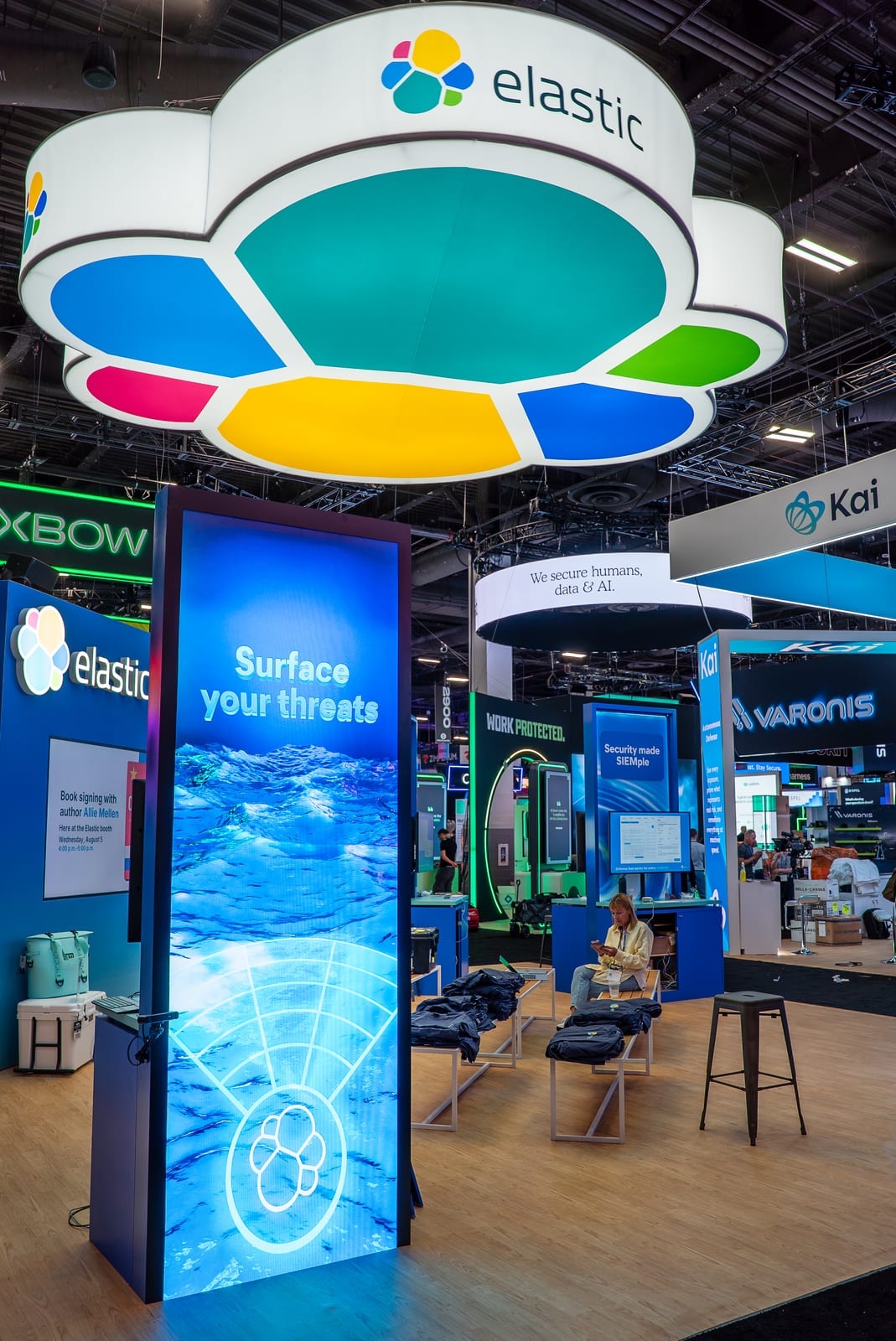
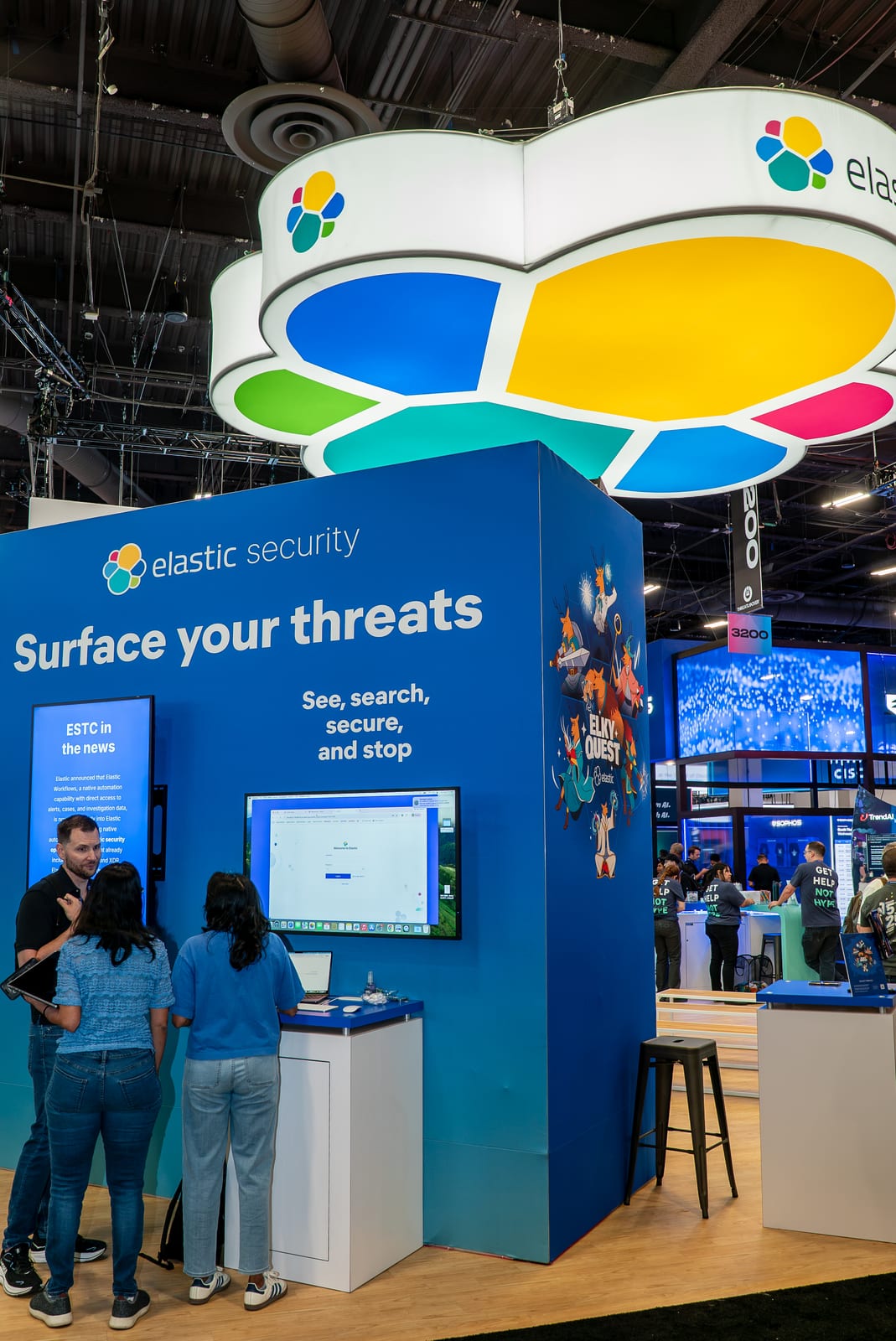
Elastic's booth line was "Surface your threats." Rather than print it on a wall, we built a game that made people do it.
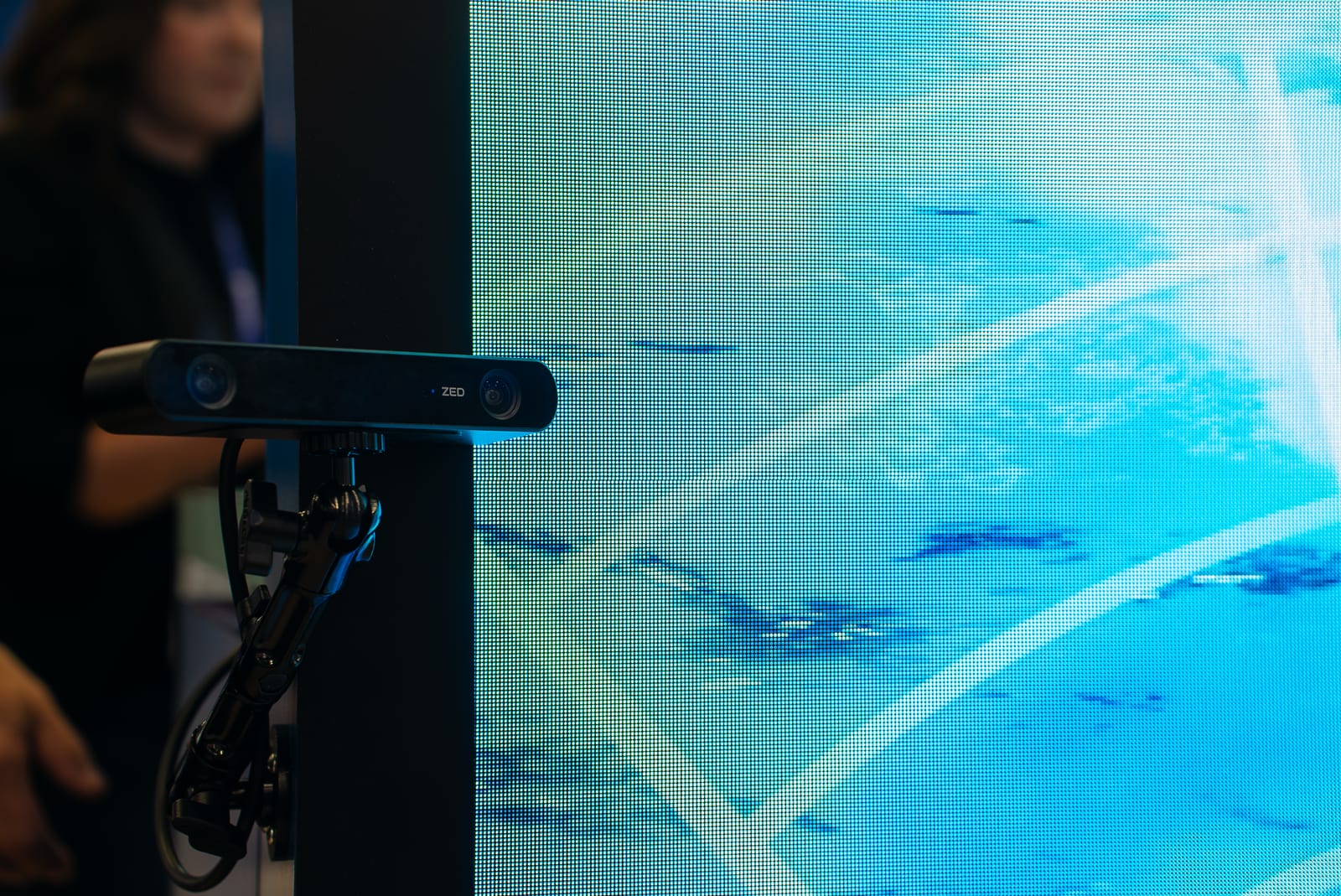
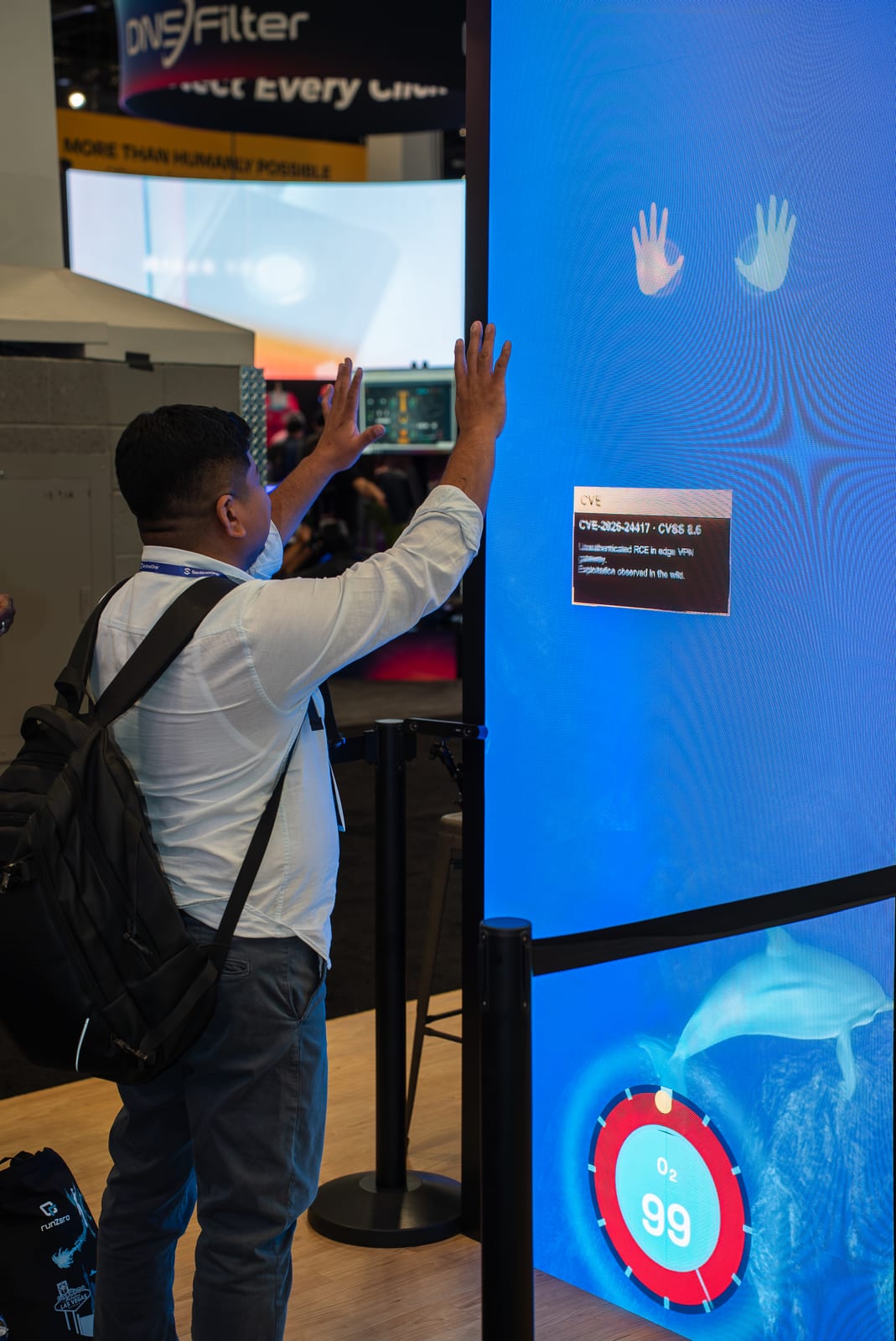
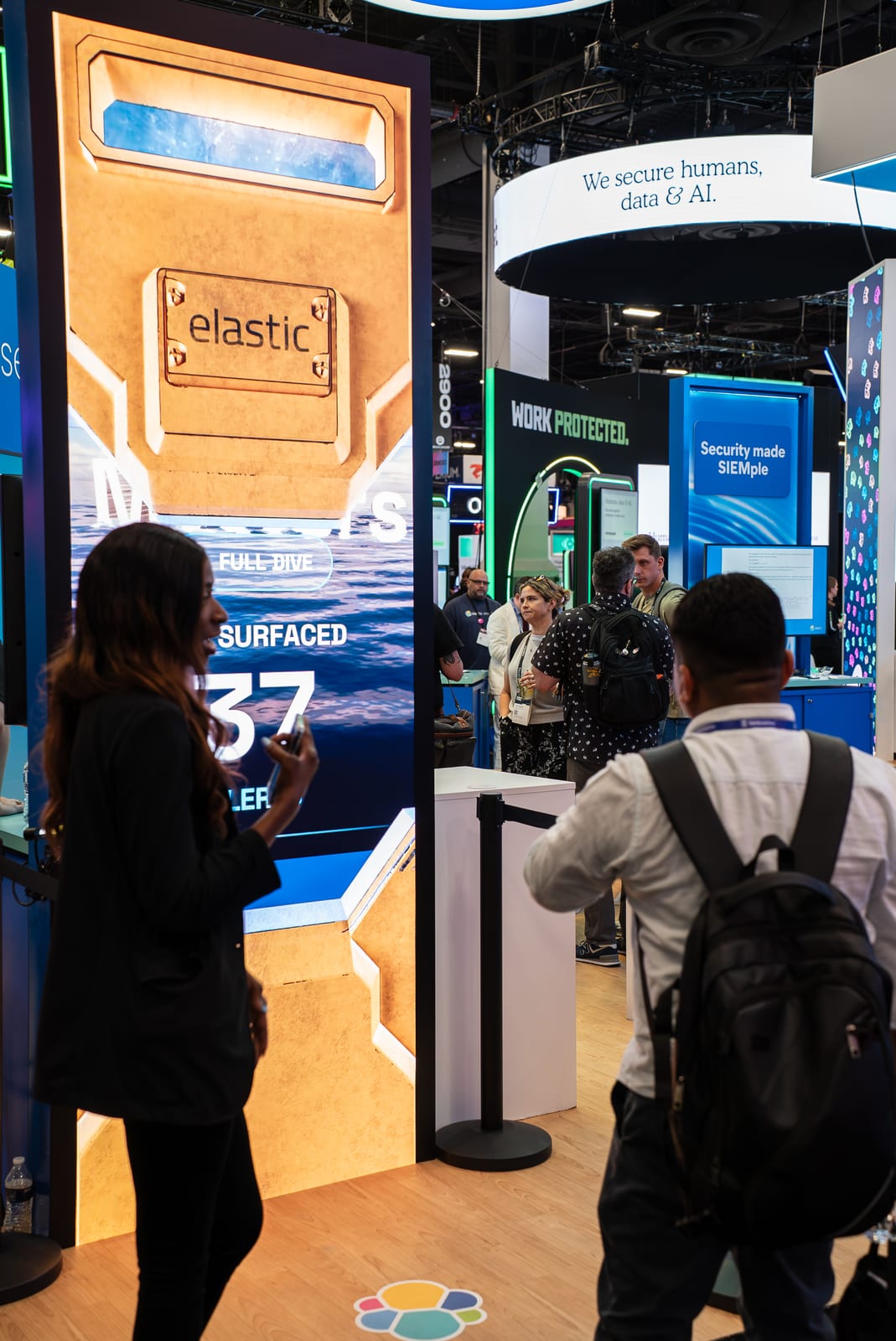
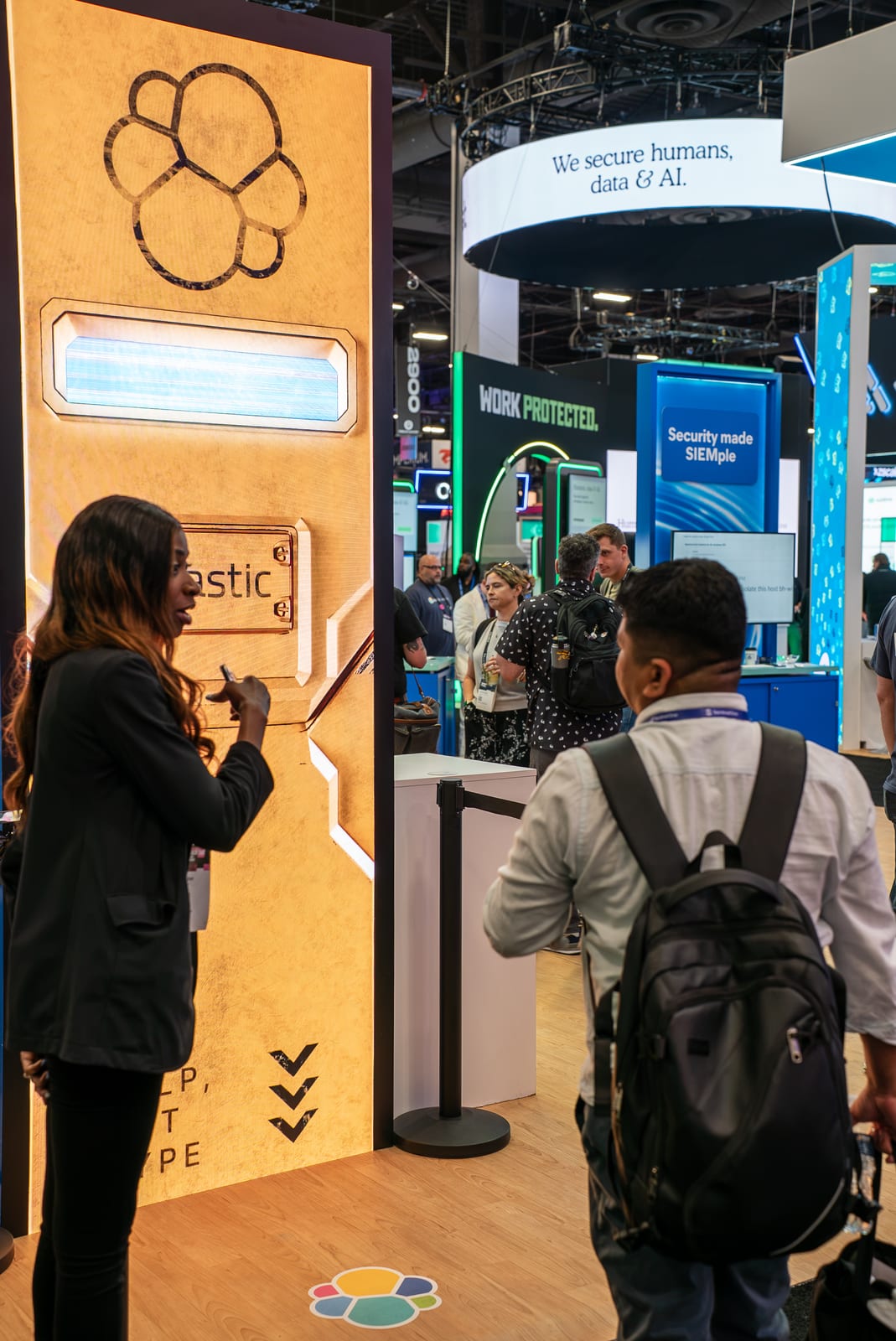
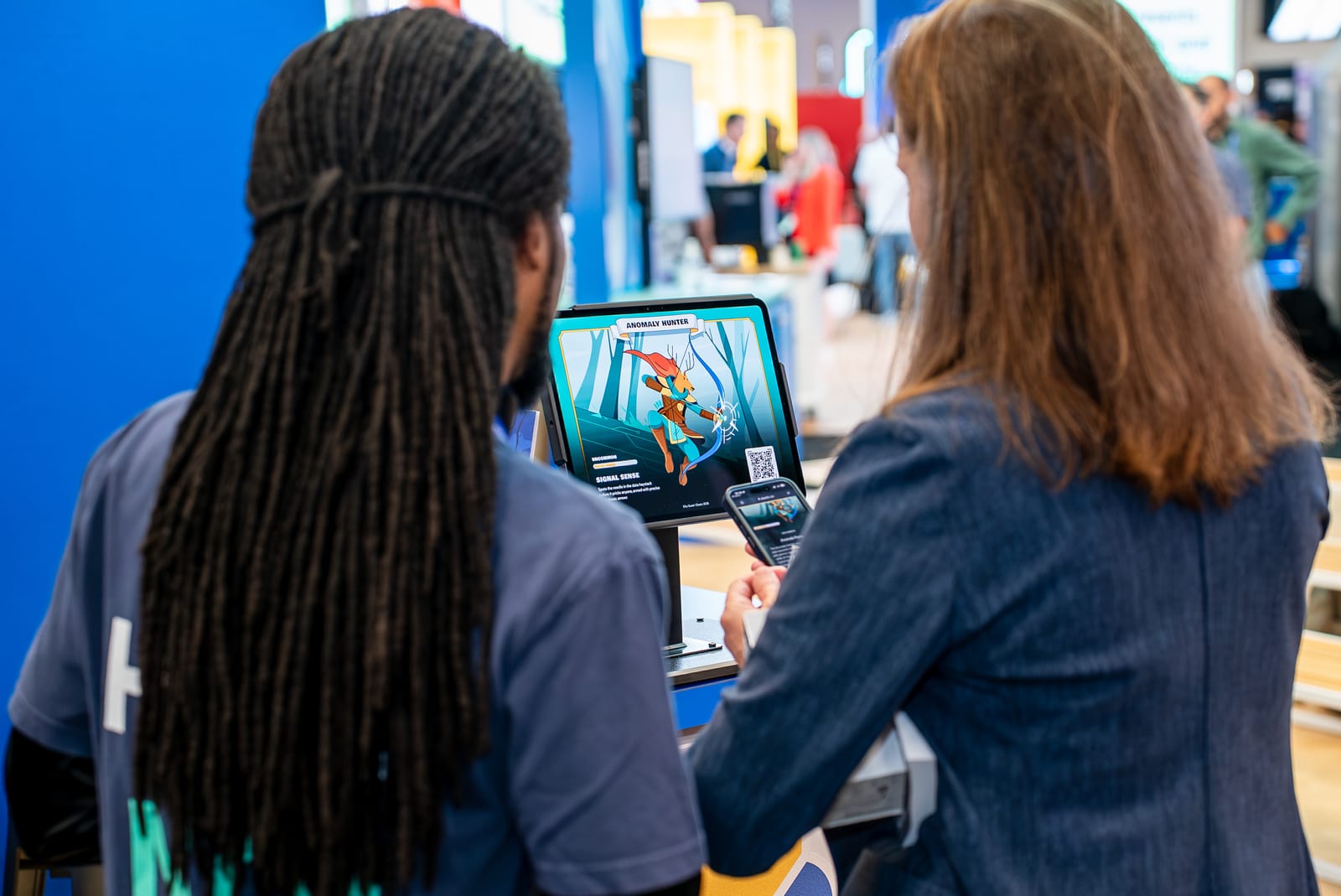
The screen is a 2x6 LED wall, twelve tiles stacked into a portrait canvas at 640 by 1920, running an underwater scene. Step onto the mat and a pressure sensor wakes the game. A depth camera finds your hands and our Unity build paints them onto the wall as two glowing outlines. Threats rise up through the dark water, you swipe them away, and the clock runs.
The idea is the easy part. Keeping hand tracking honest under show lighting, with a crowd standing behind whoever is playing, is the part that decides whether an activation works or embarrasses everybody. We wrote it in house and put two developers on site through the build and all three show days to hold it there.
Elastic: the rest of the booth
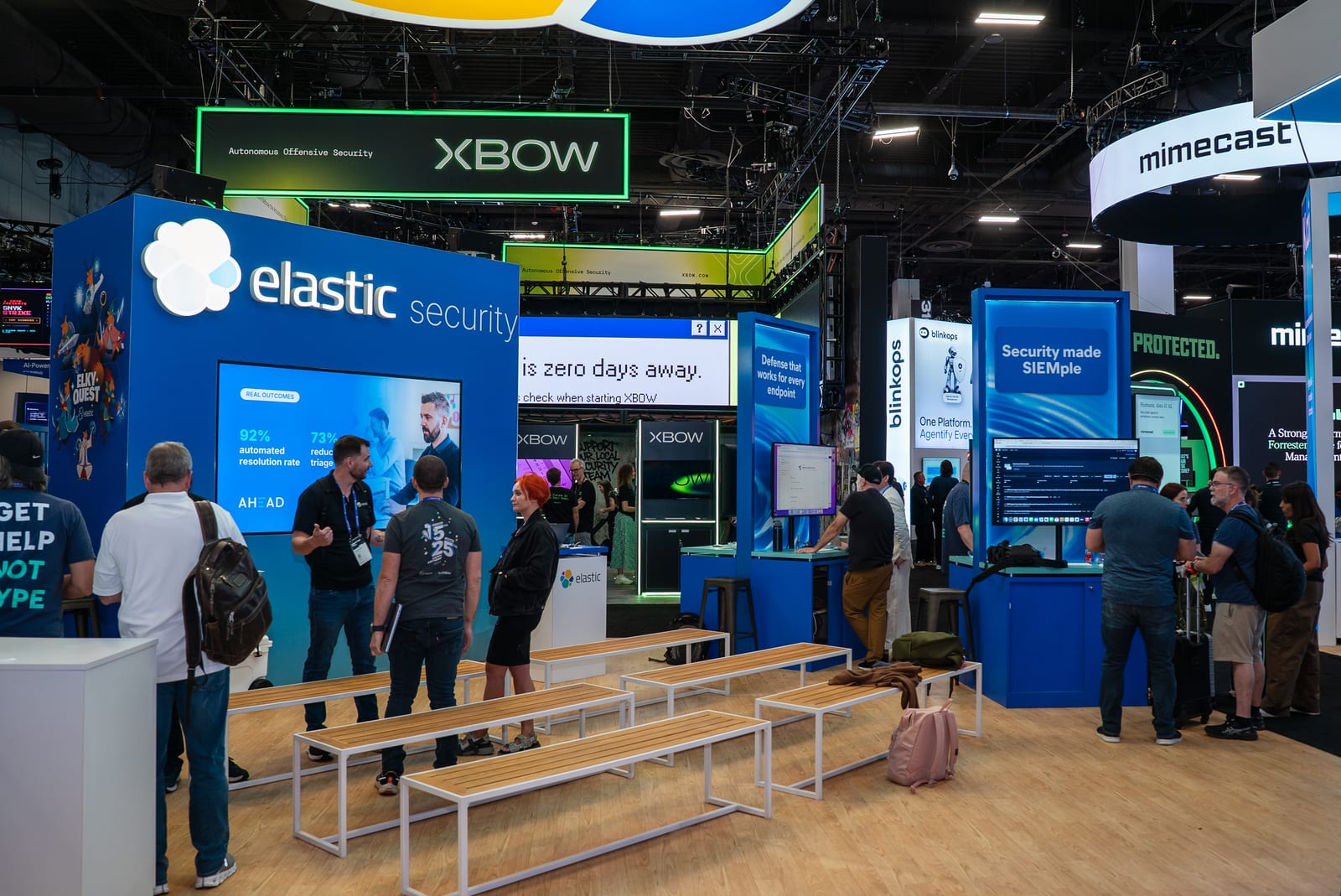
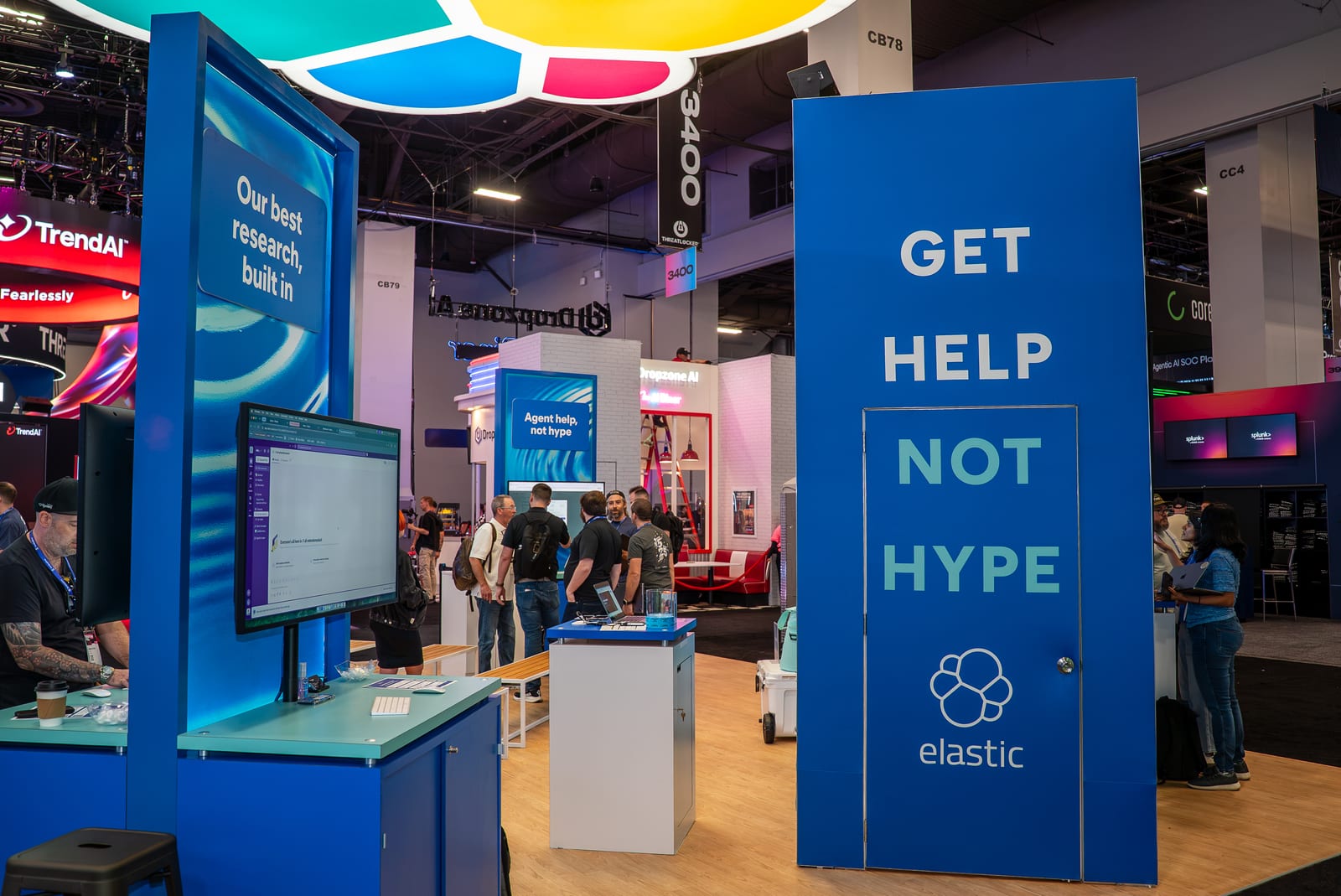
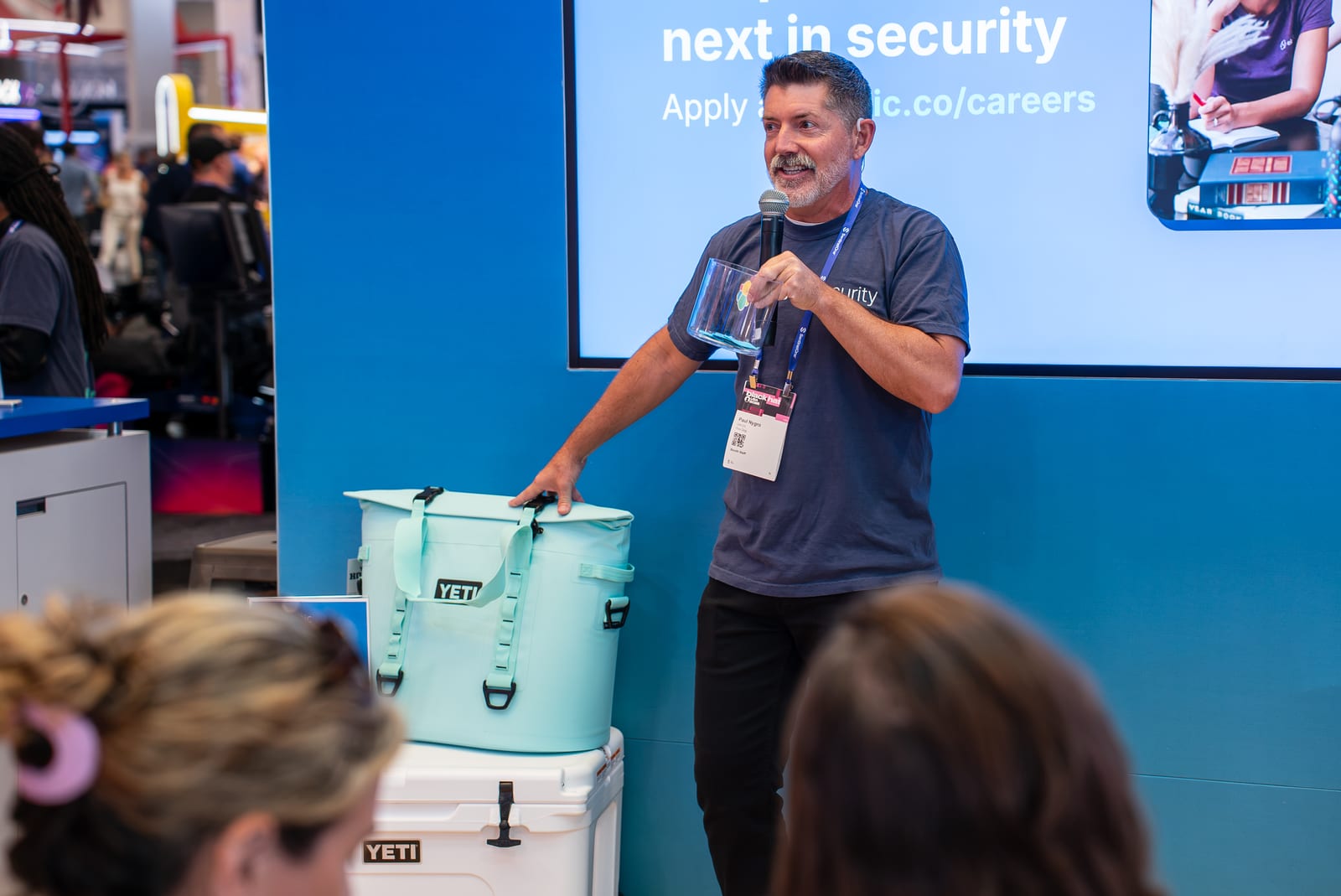
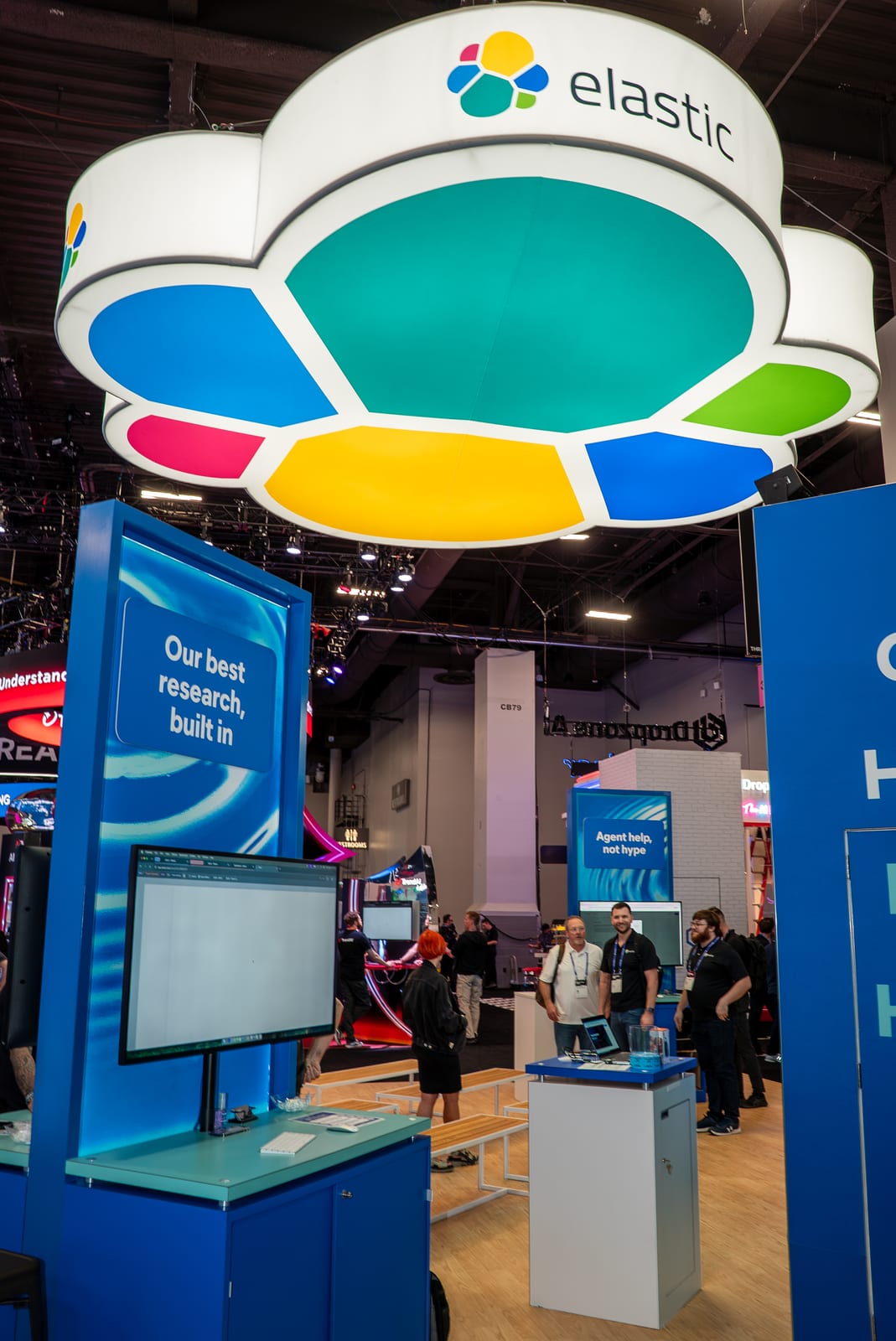
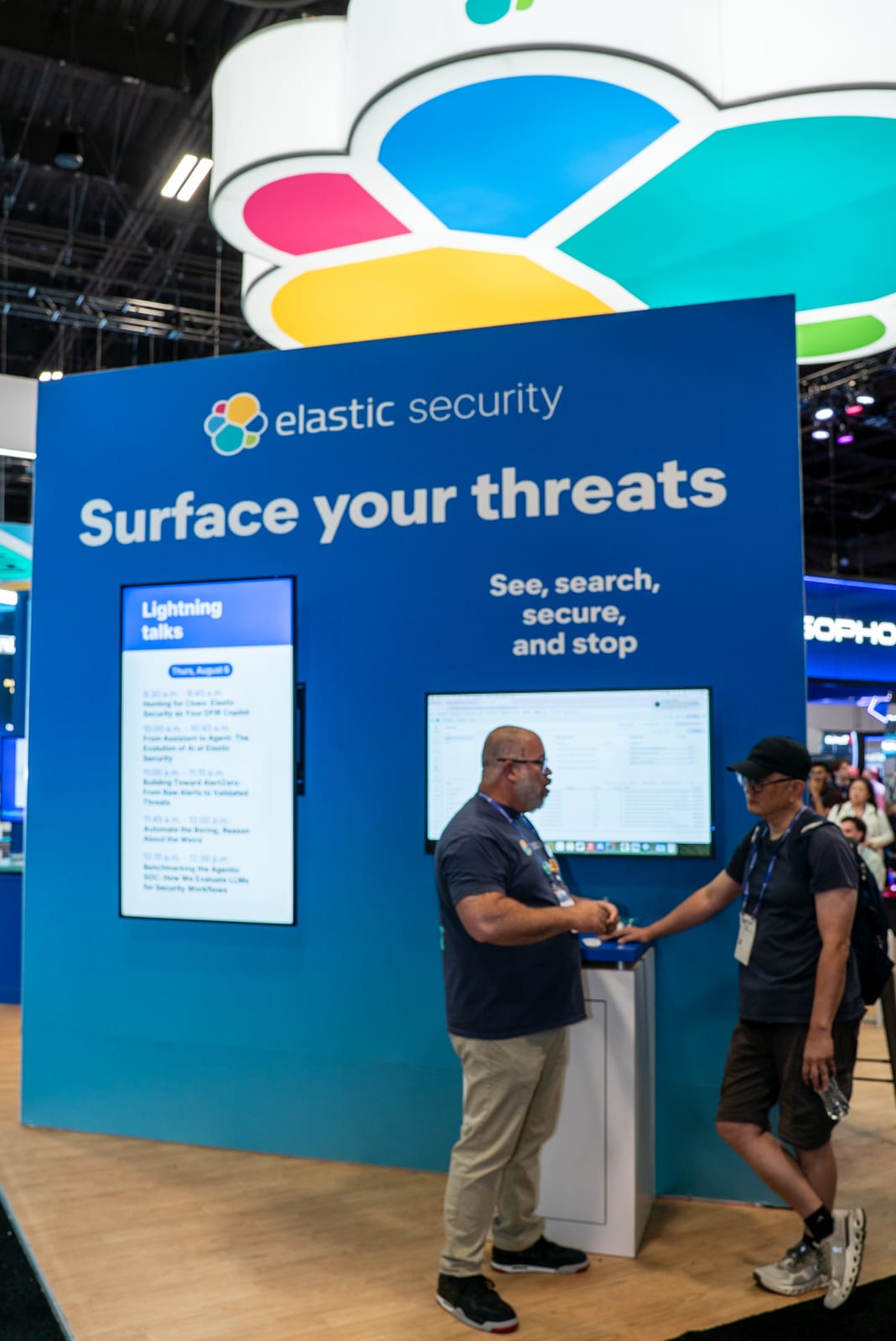
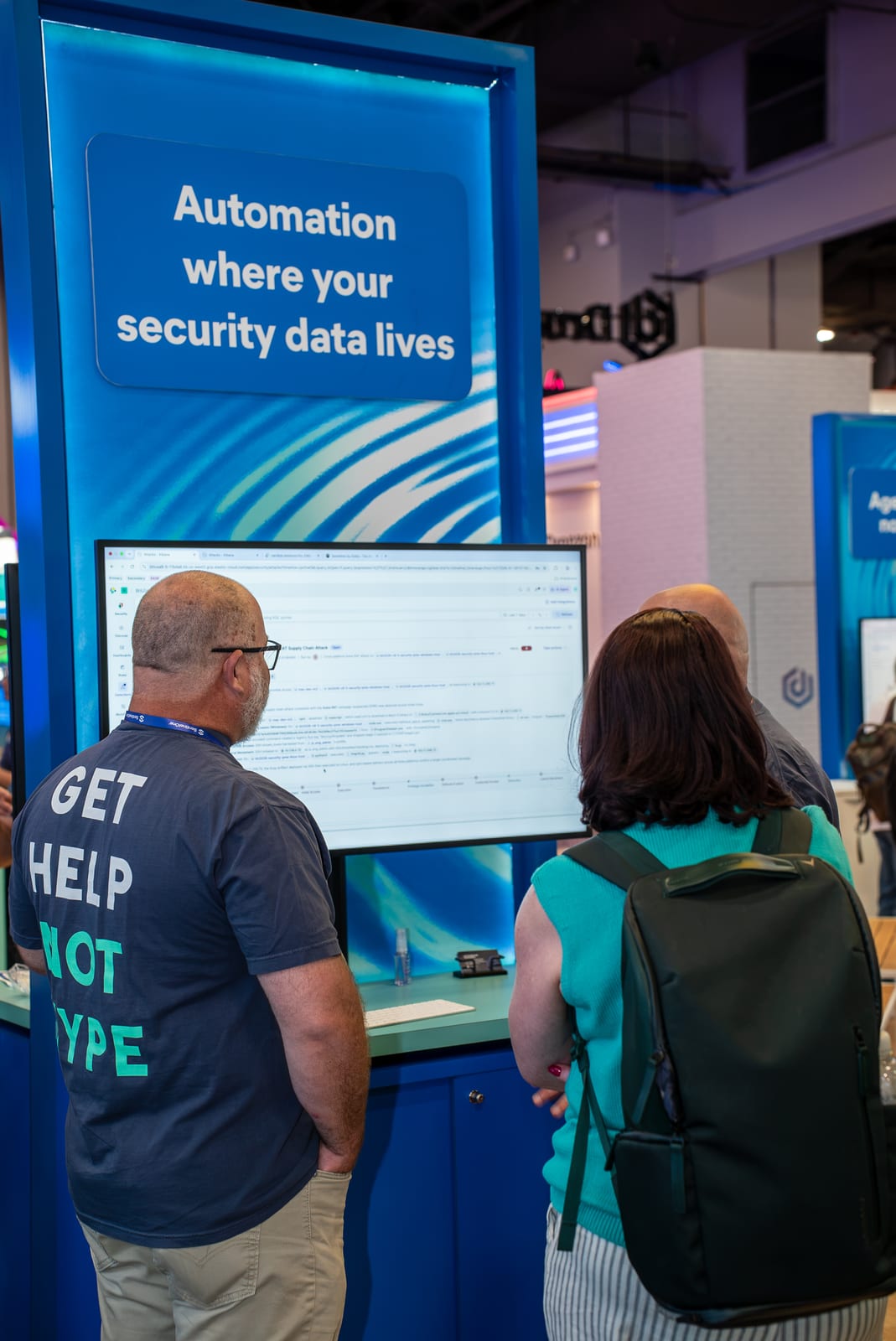
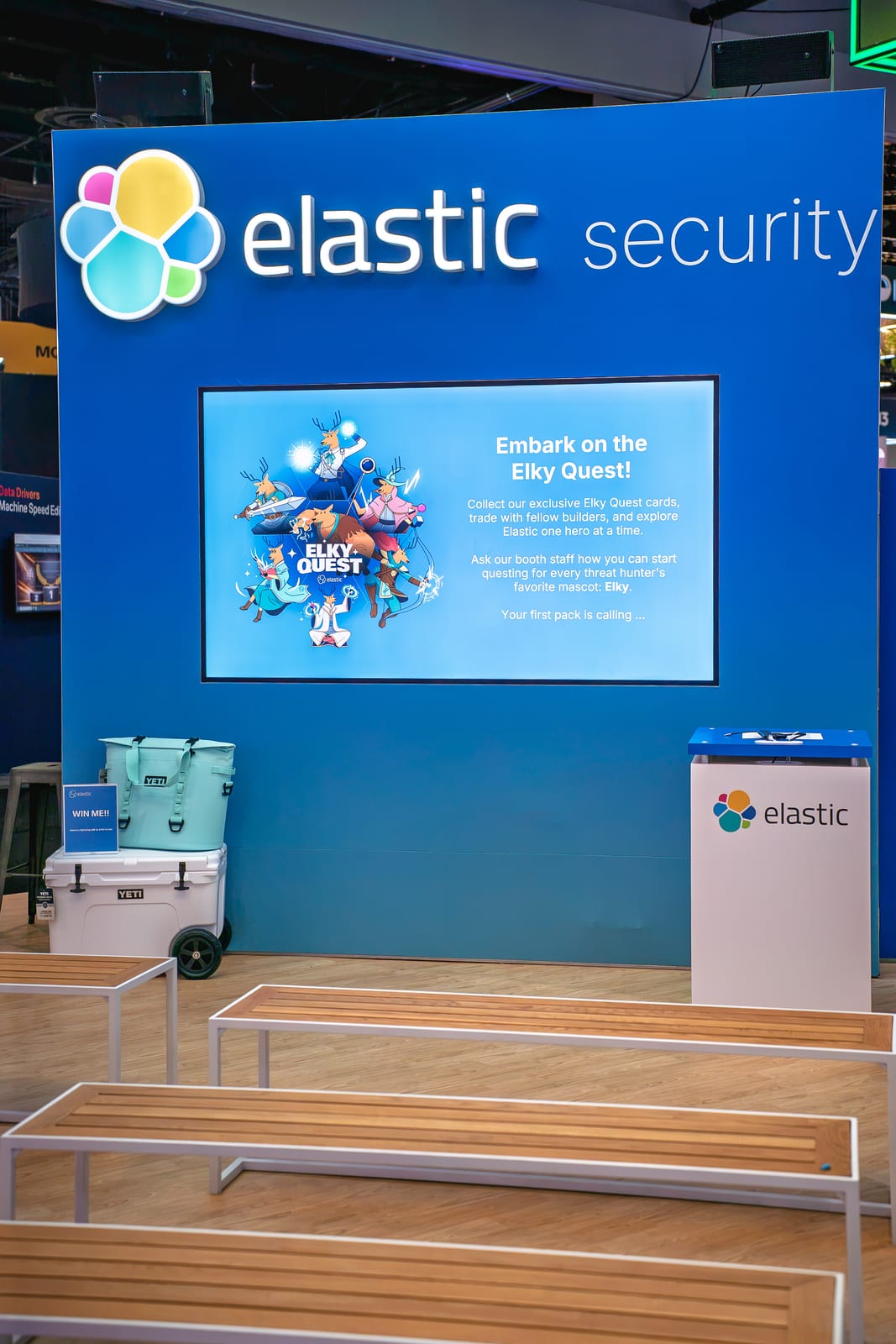
The game sat inside a full Elastic build: a 98-inch screen anchoring the theater, six monitors on the demo pedestals, a 65-inch carrying the session schedule, and enough audio for a presenter to hold the room over the noise of the hall.
We ran their network too, a dedicated uplink and six hardwired drops. And because nobody should meet a 98-inch panel for the first time on show day, we shipped one to the fabricator ahead of time and prefit it.
ReliaQuest: the most LED we built all week
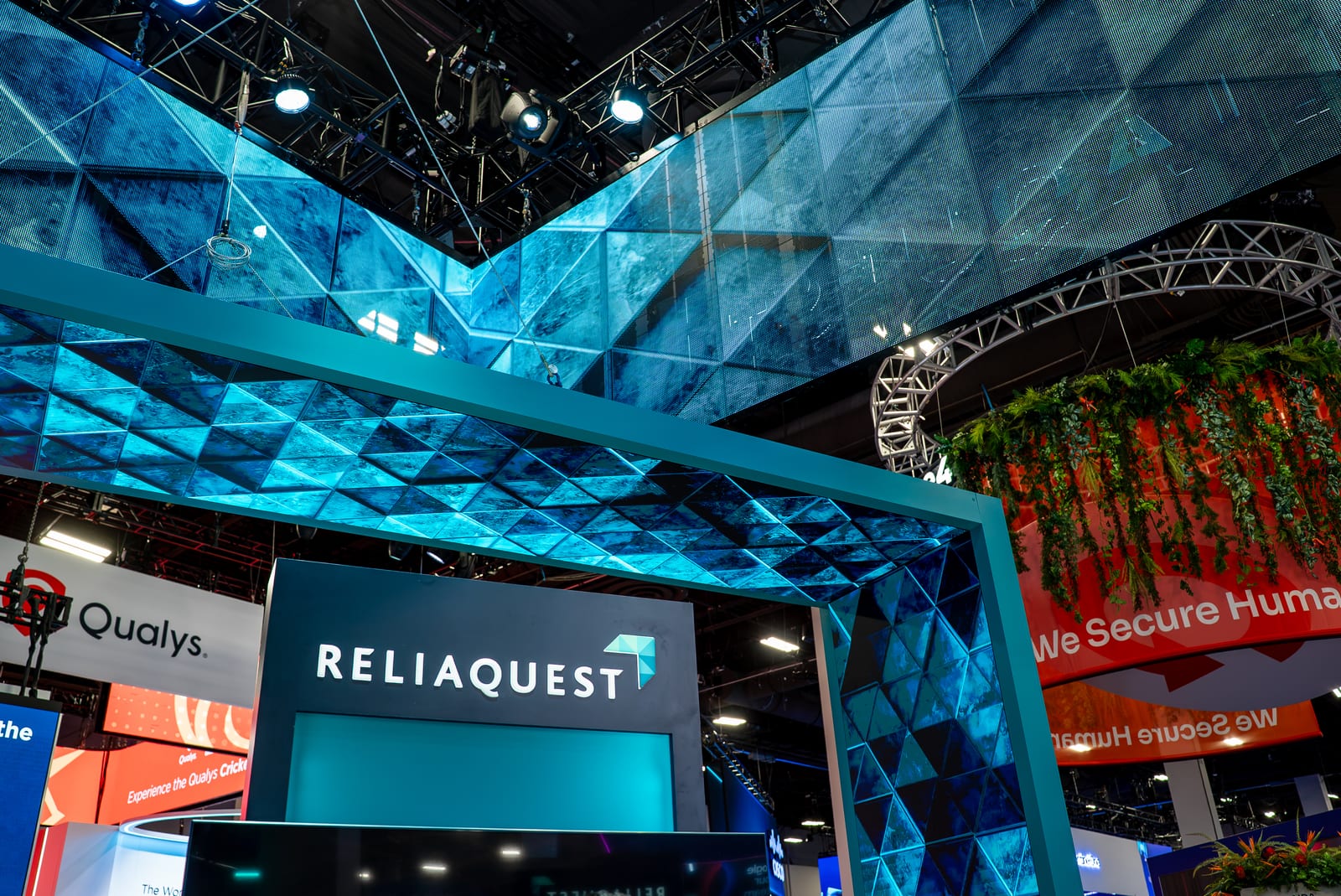
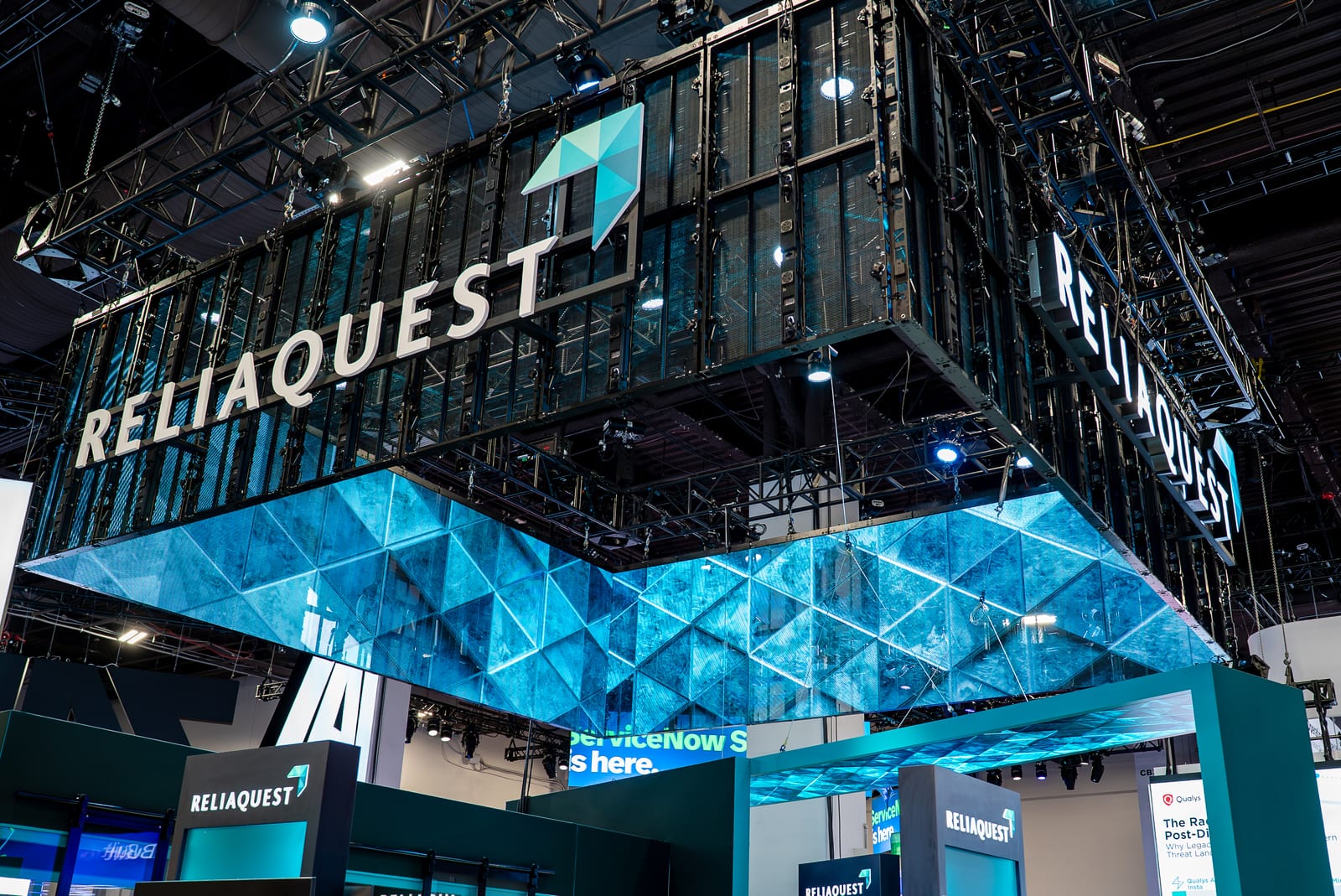
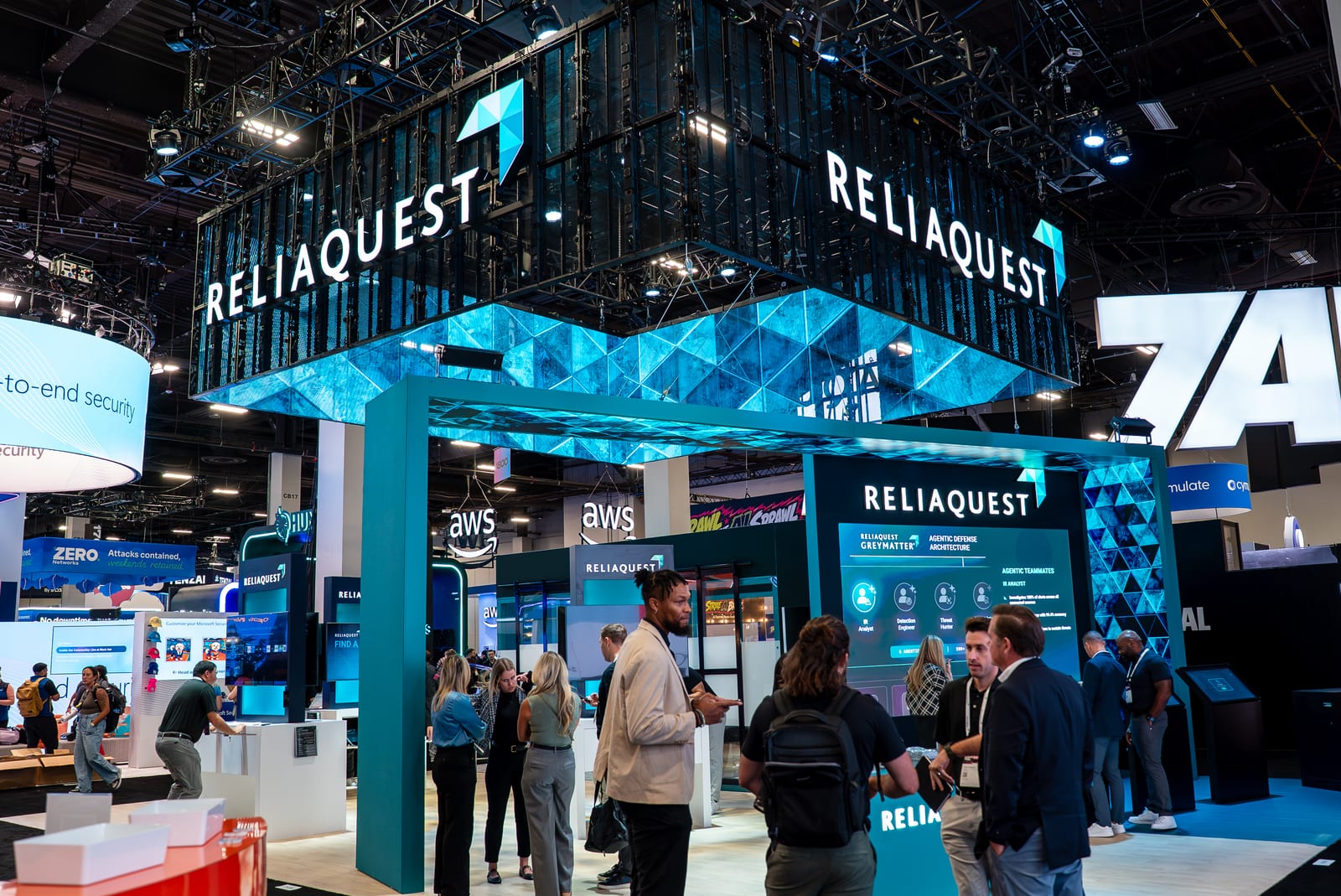
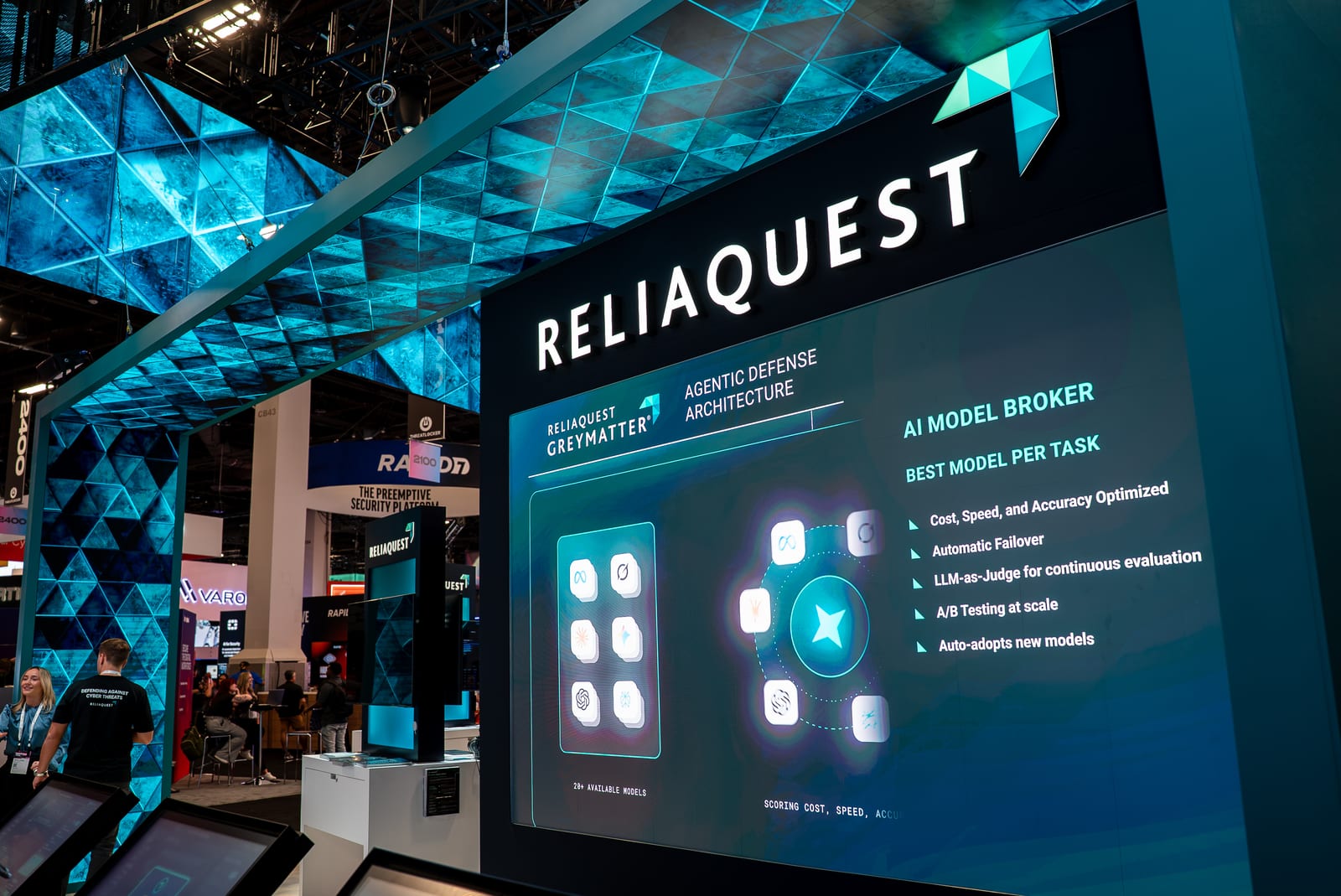
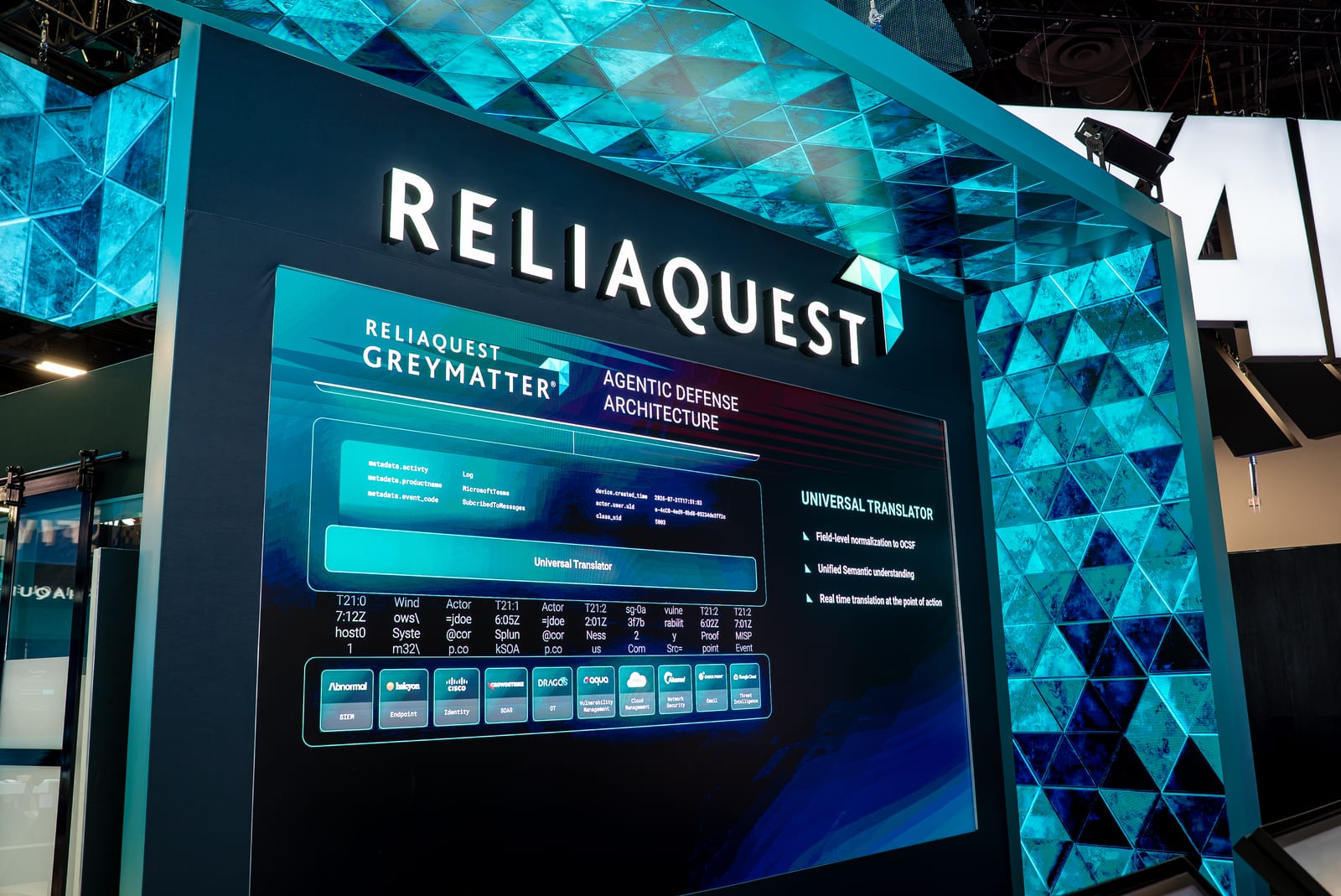
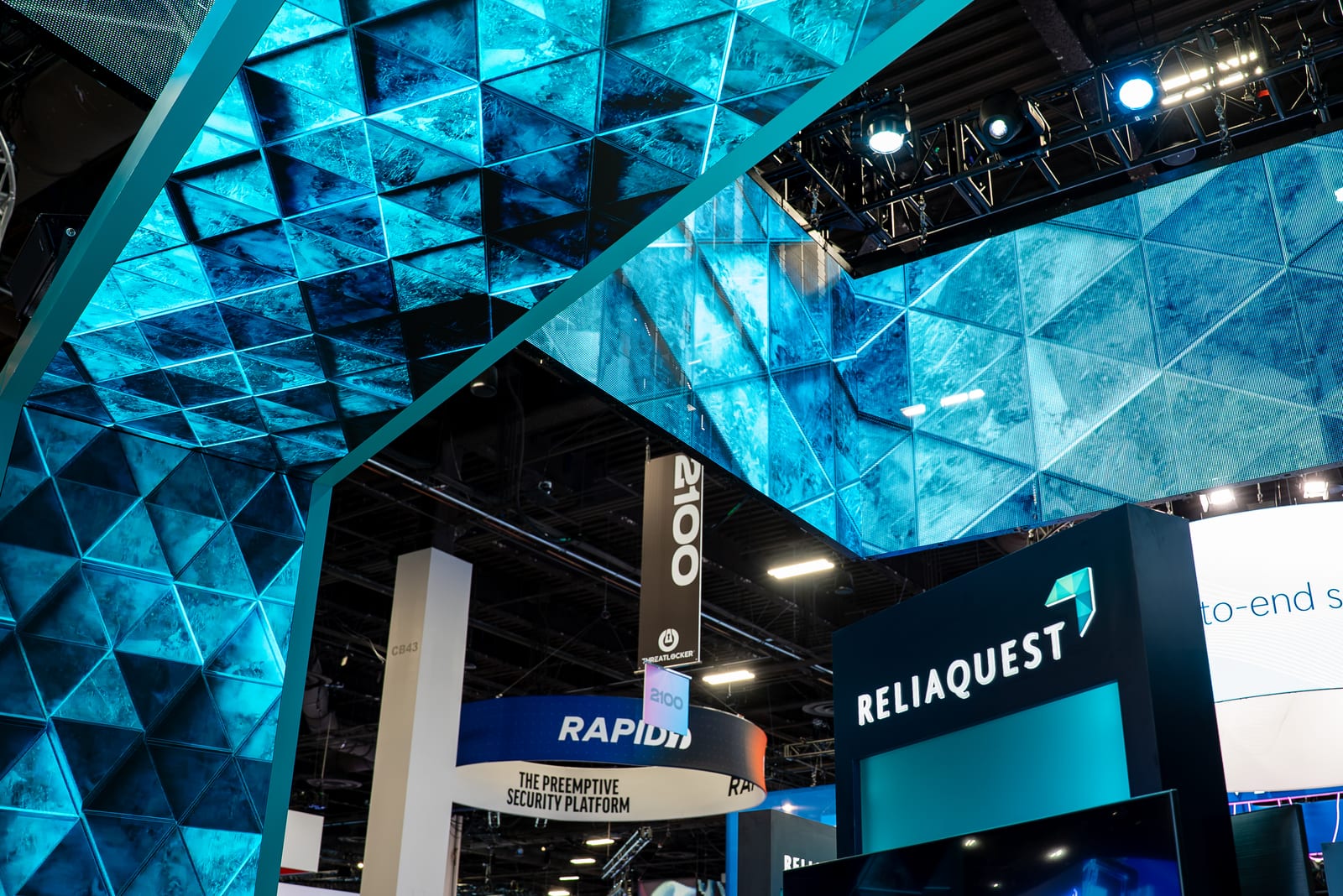
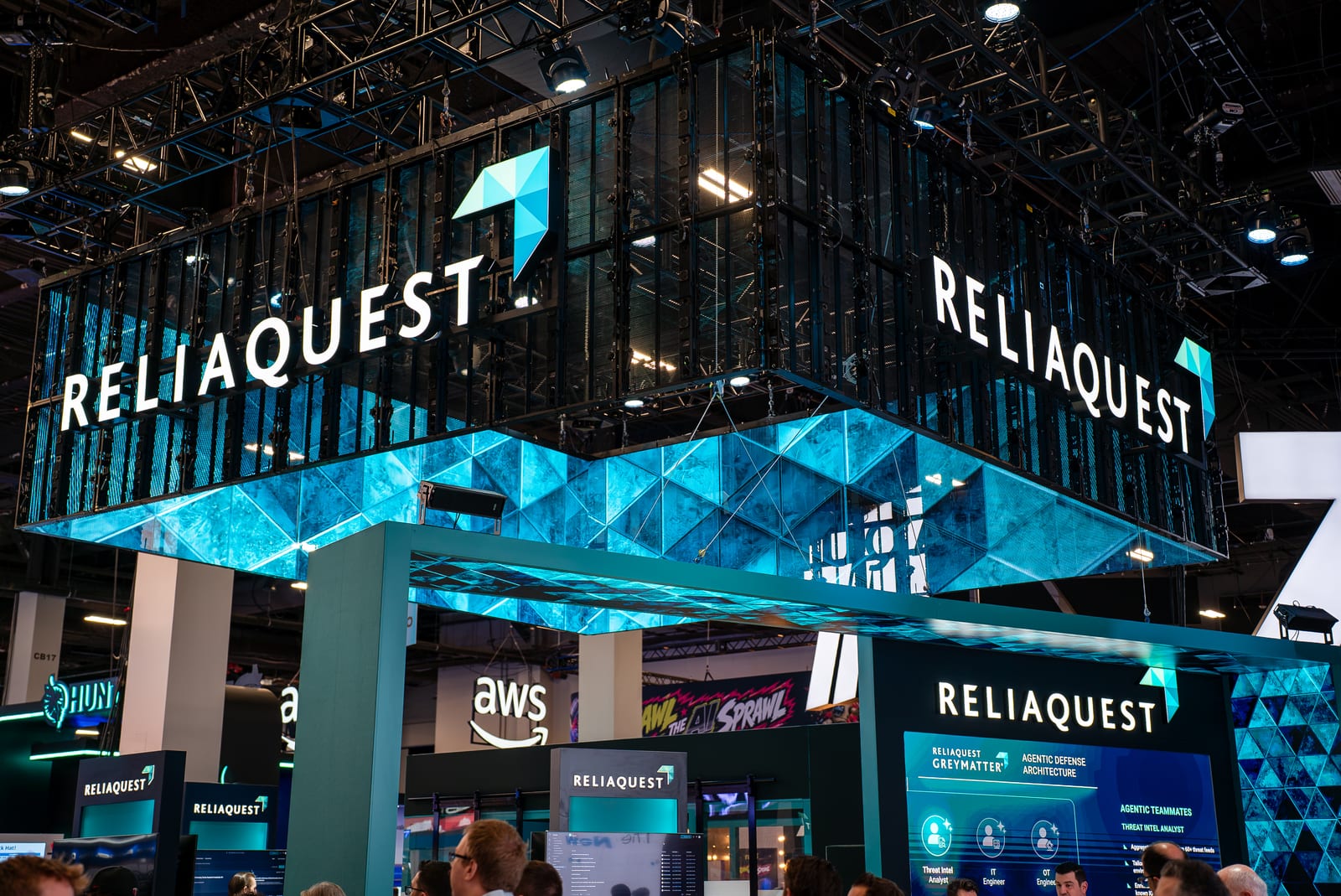
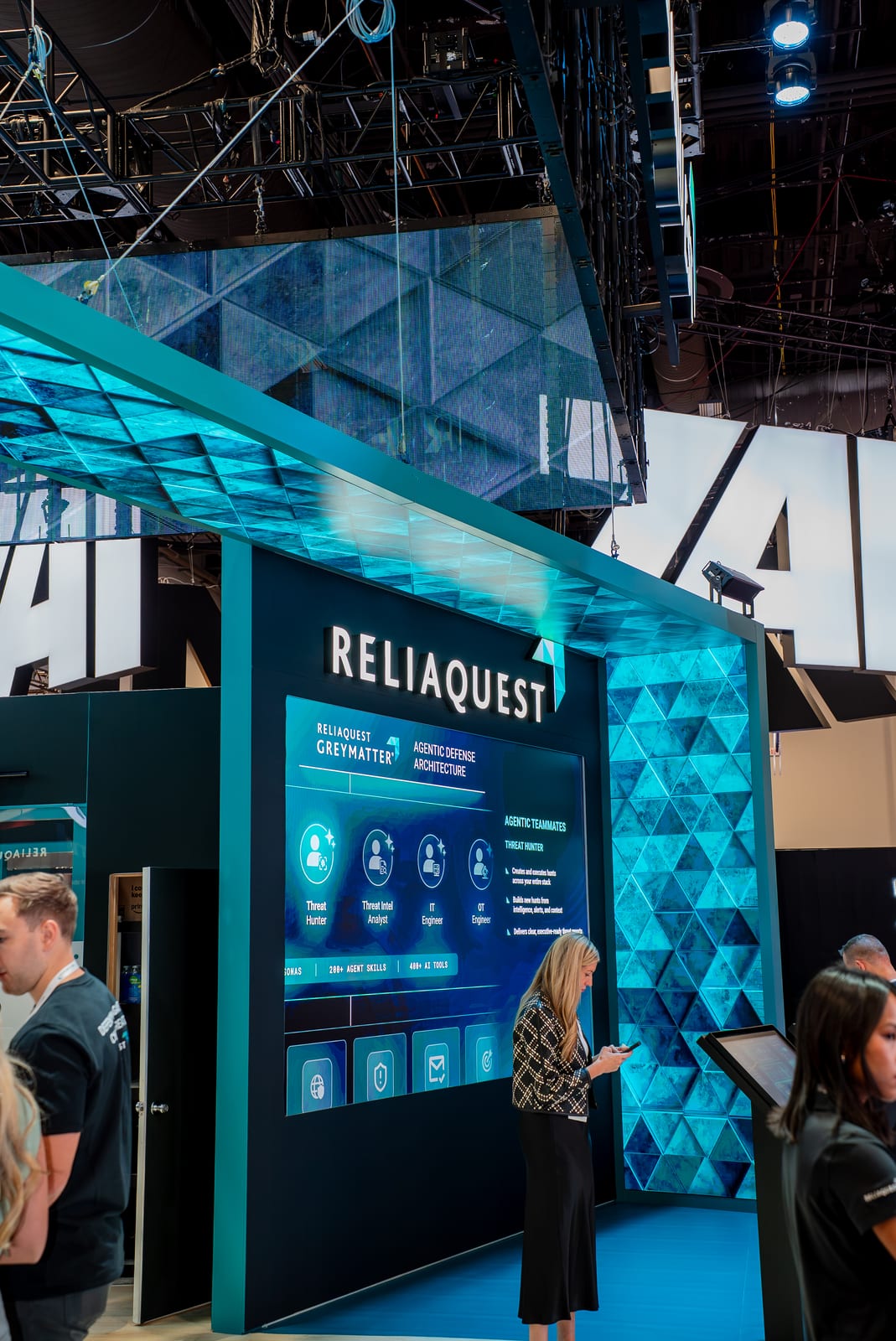
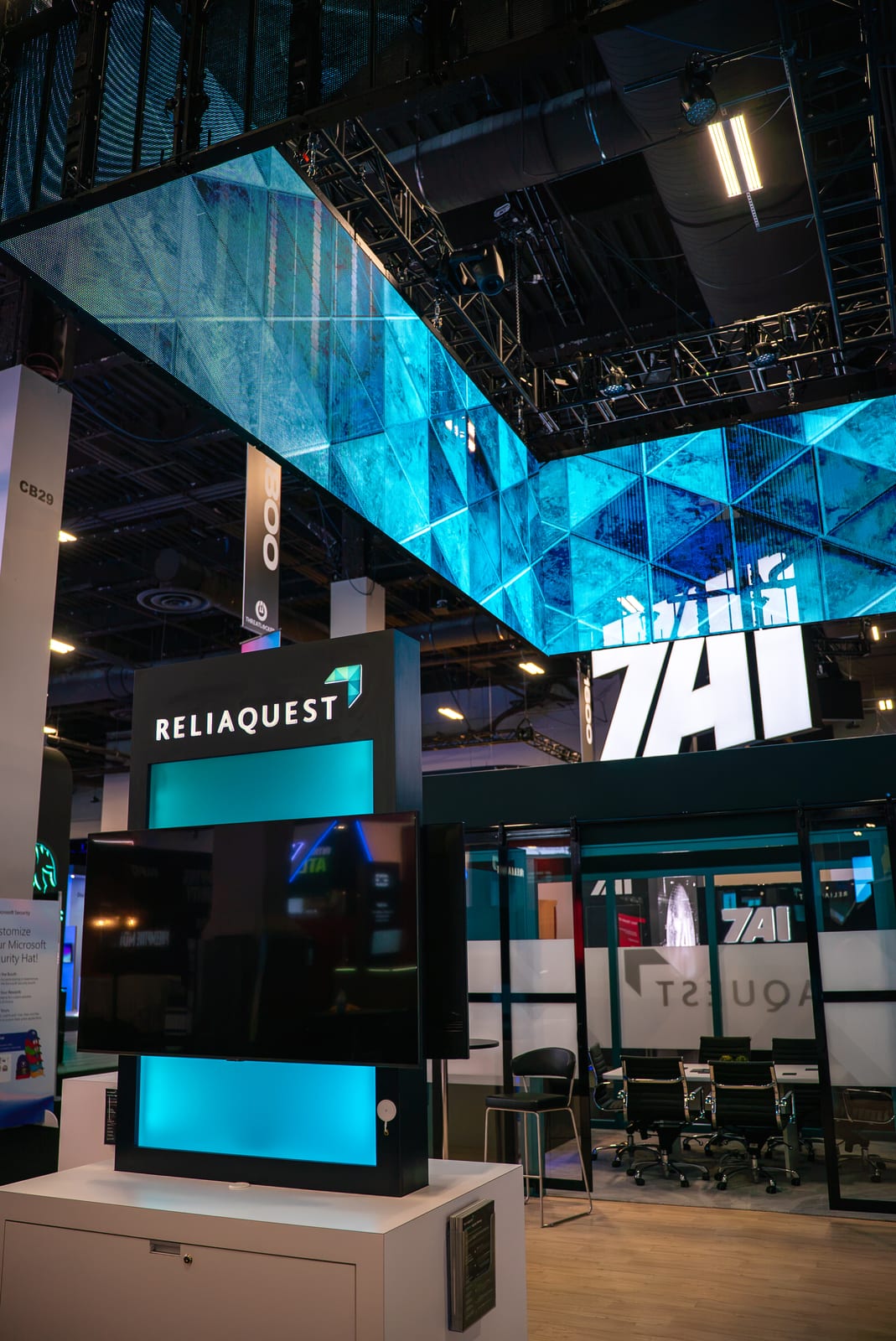
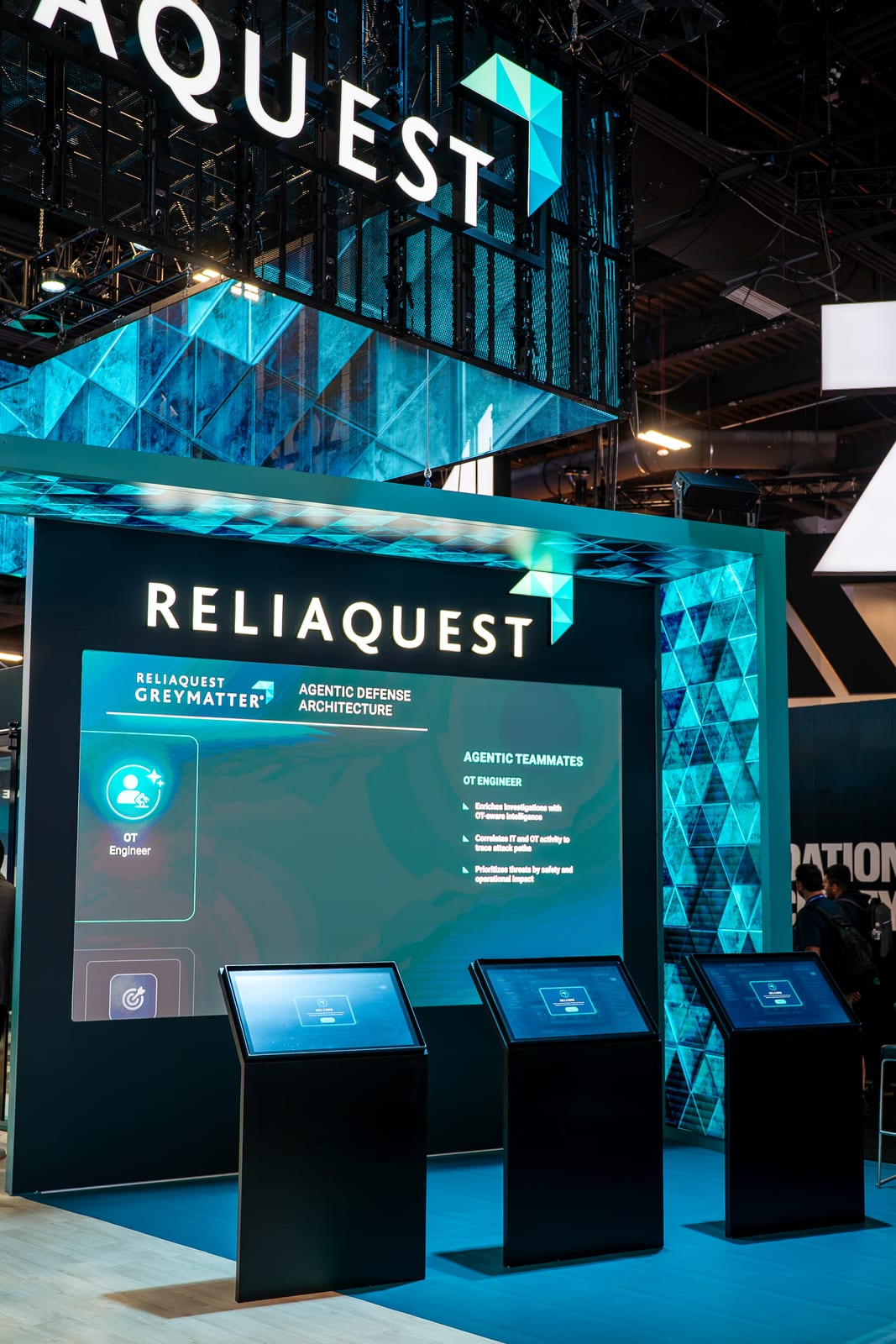
ReliaQuest took the biggest LED package on our list, one hundred forty-six tiles across three structures that all had to read as one booth.
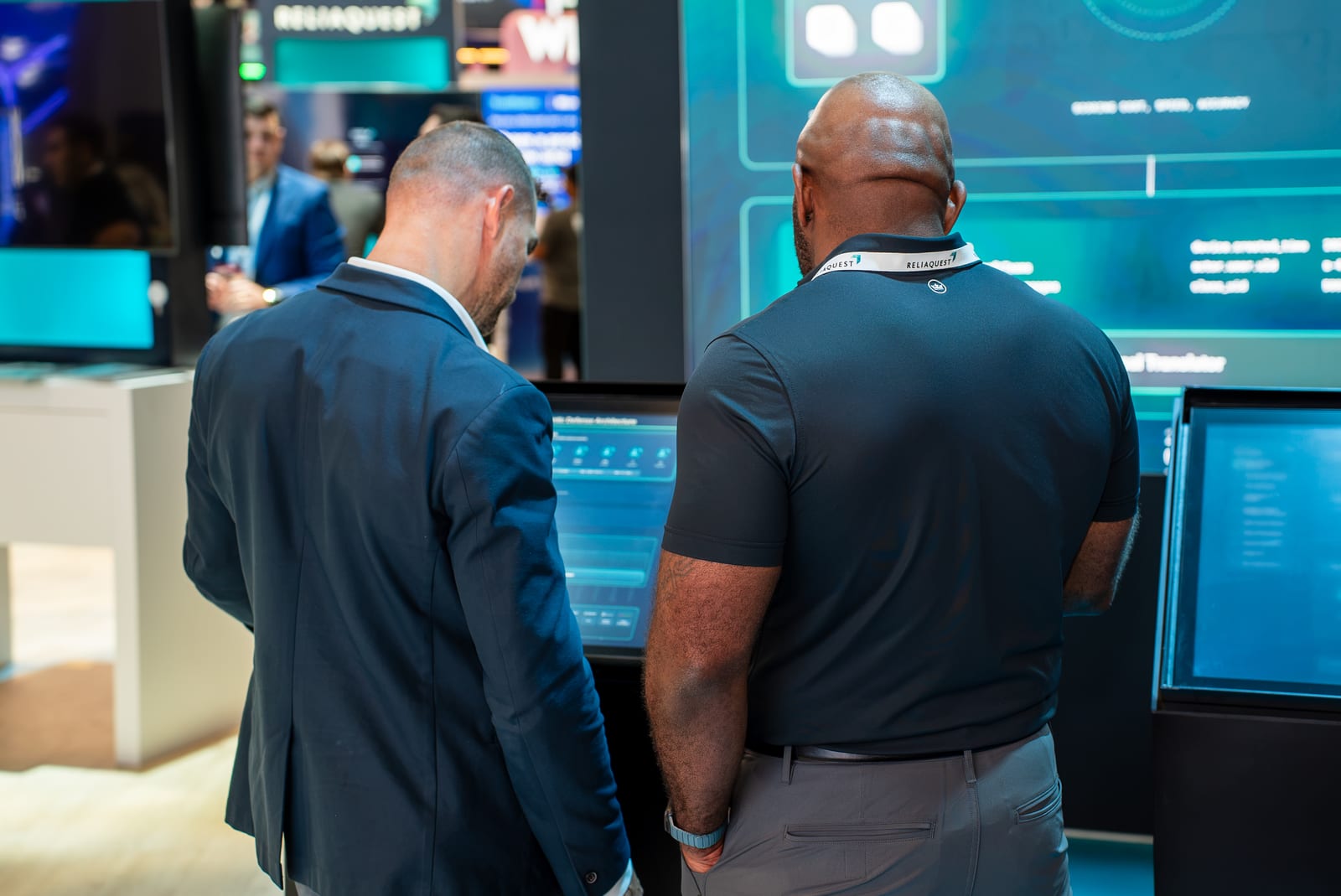
A four-sided banner flew overhead in clear LED so the brand held that end of the aisle from any direction. An archway framed the entrance. Inside, a seven by four wall carried the GreyMatter demos, with kiosk screens and an 85-inch touchscreen around it, and a lighting package that came with its own design and theatrical labor.
Our lead LED tech lived on it for eight days. ReliaQuest also ran a meeting room offsite at the Four Seasons, so we covered that too.
Sophos: a two-level landmark
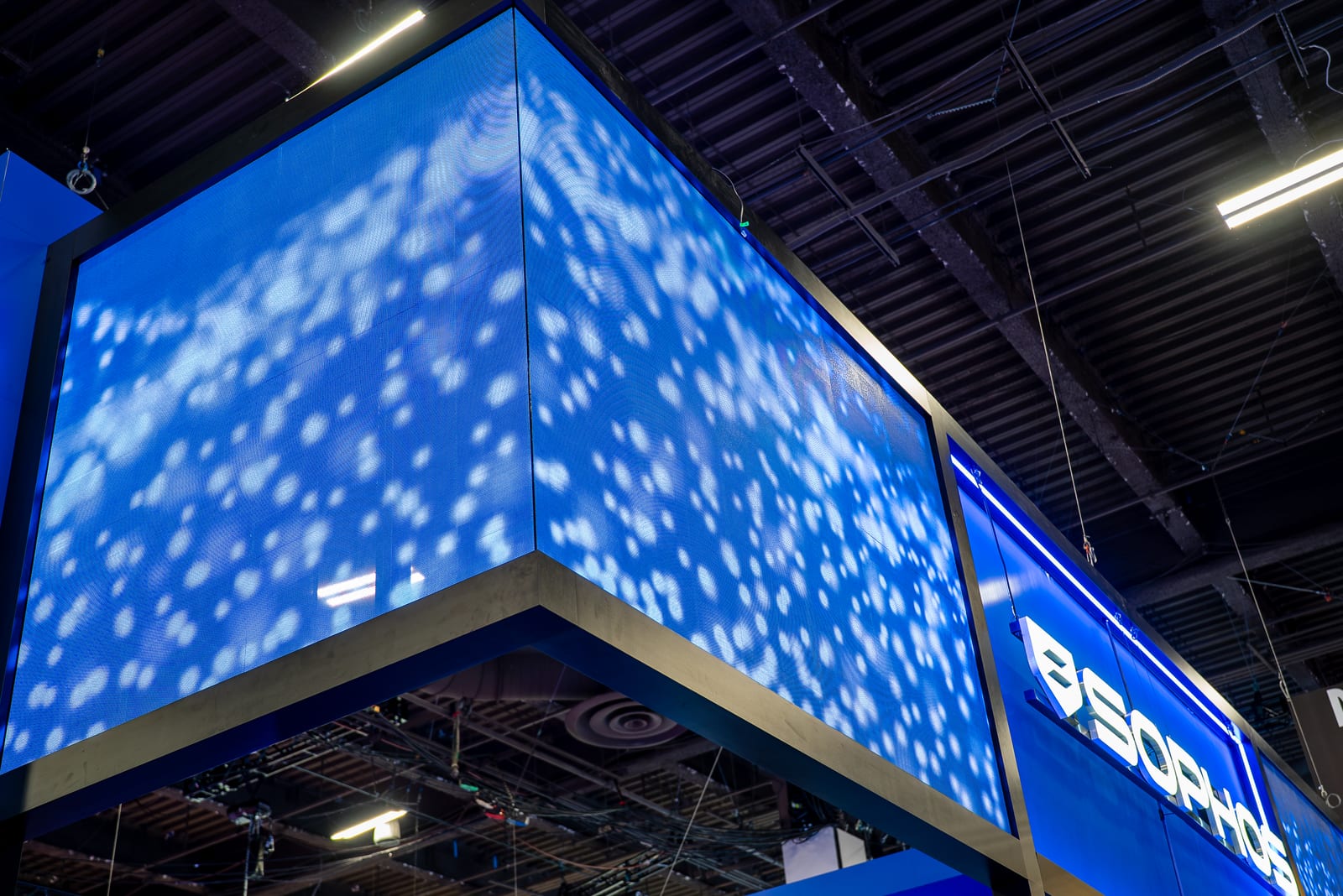
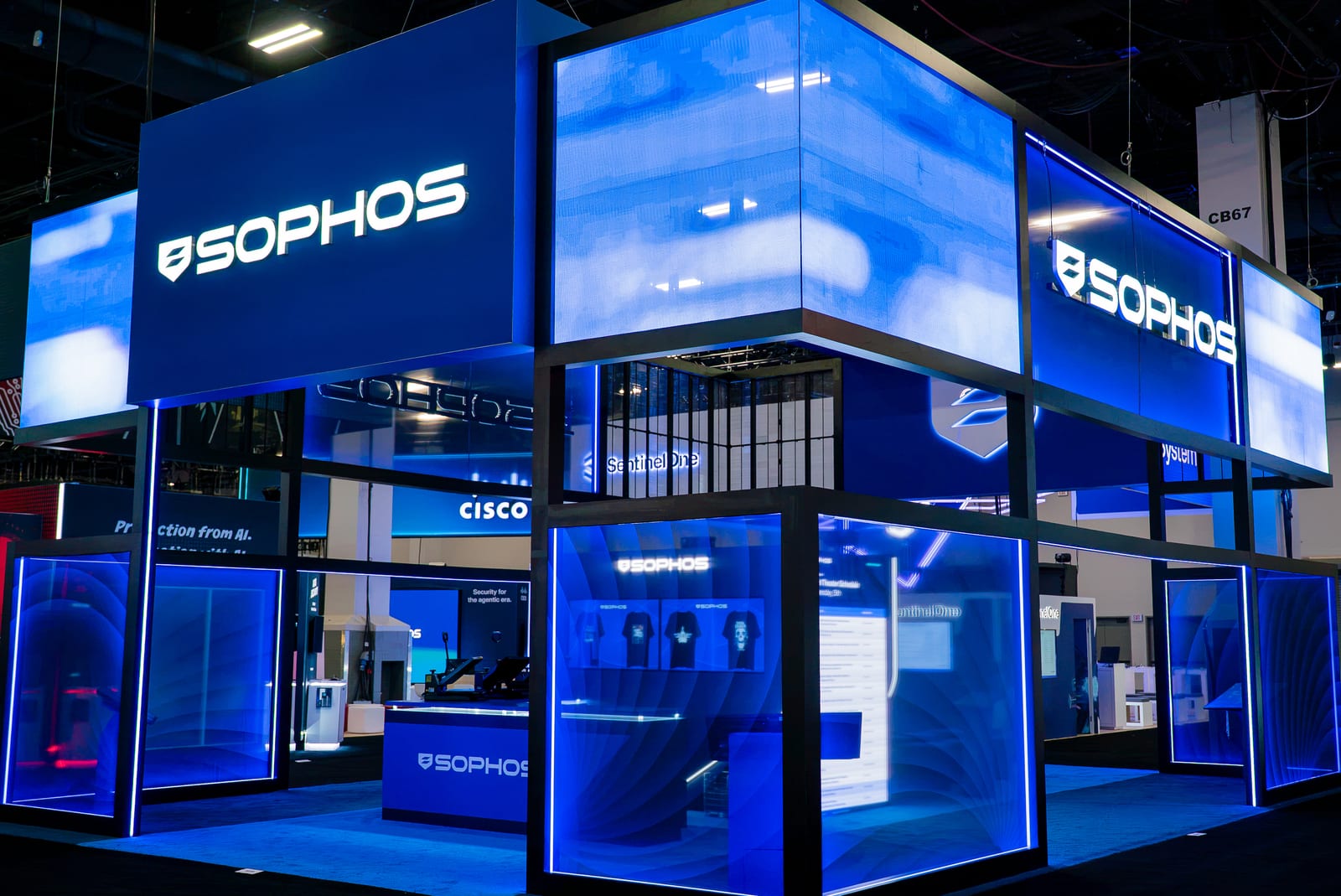
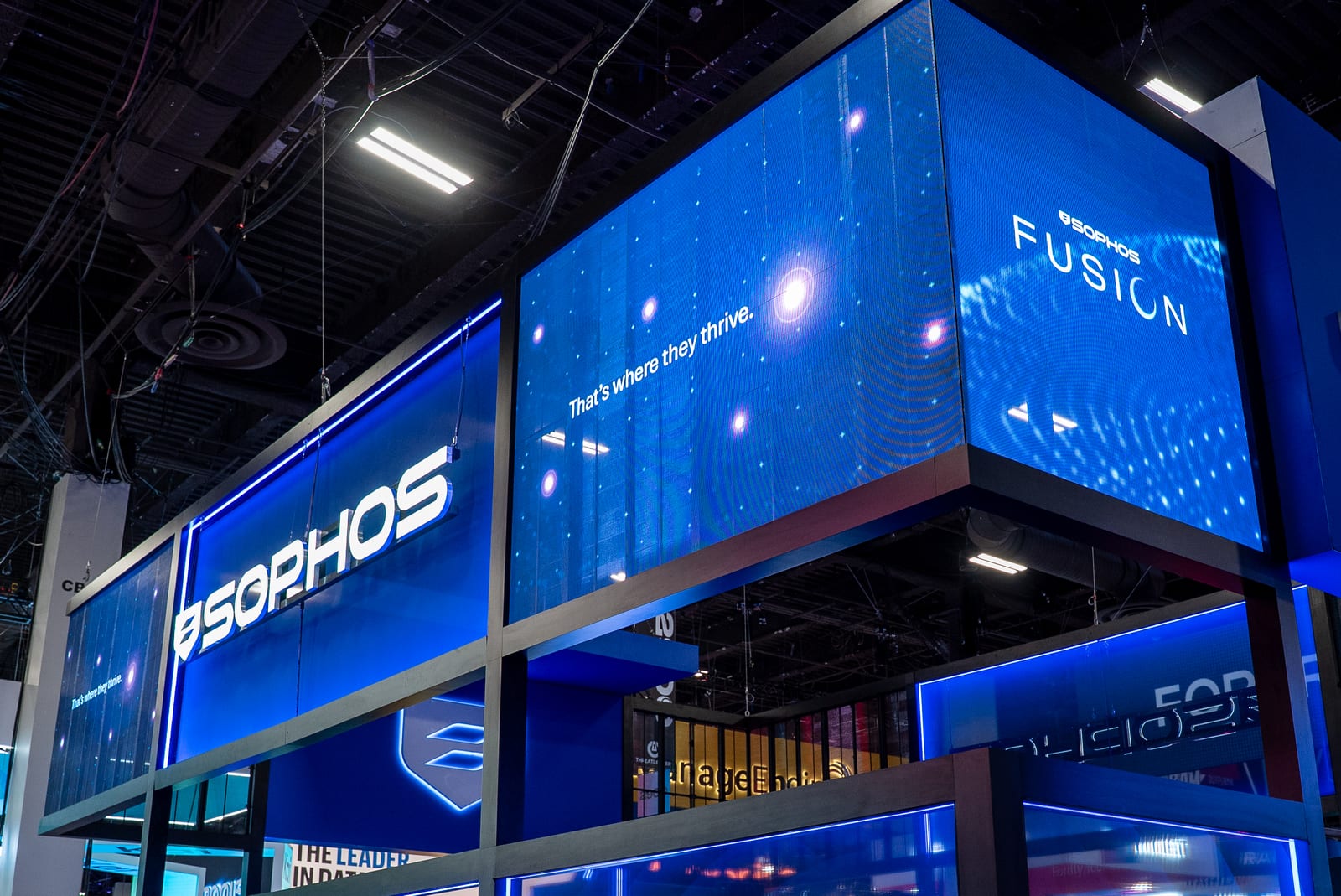
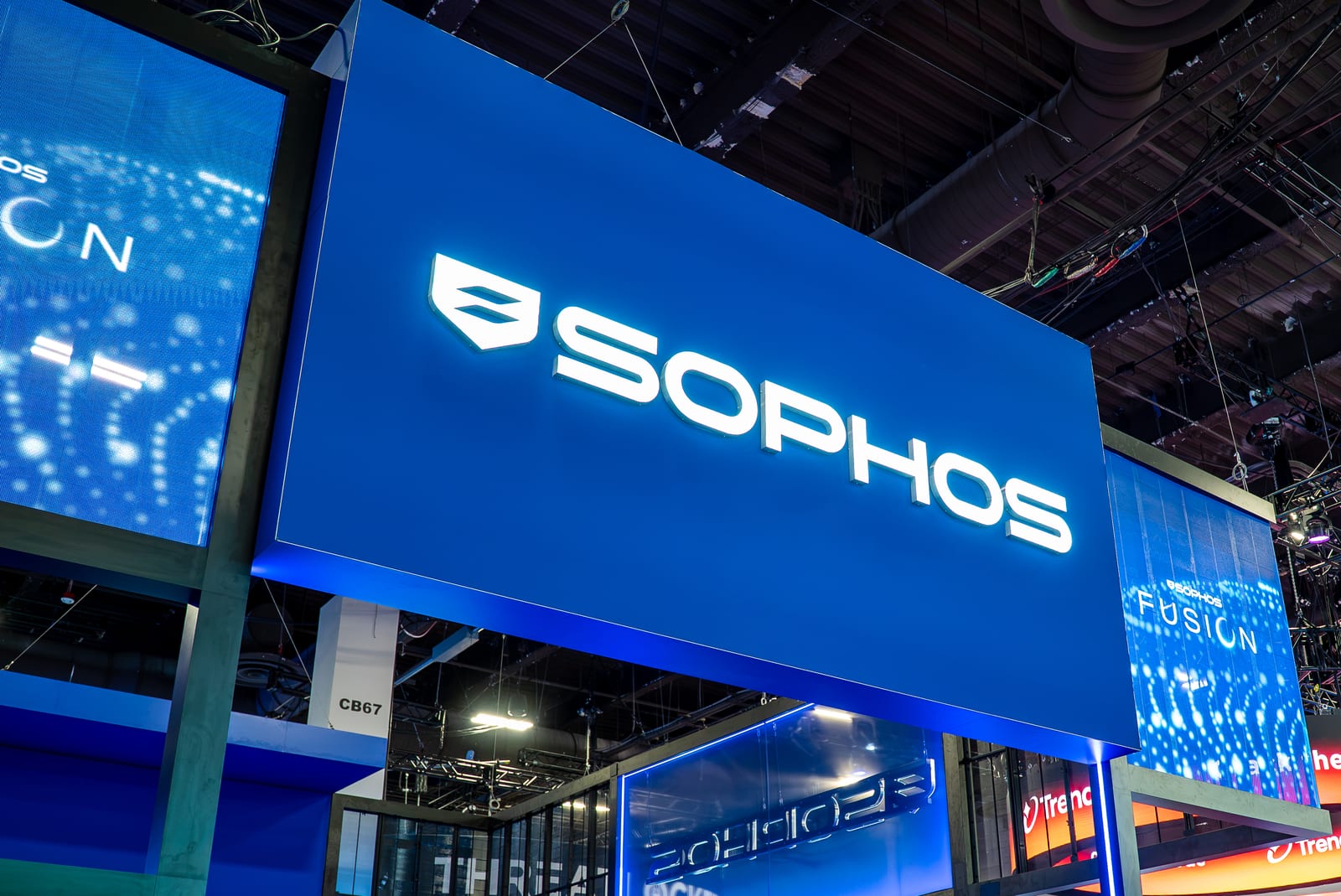
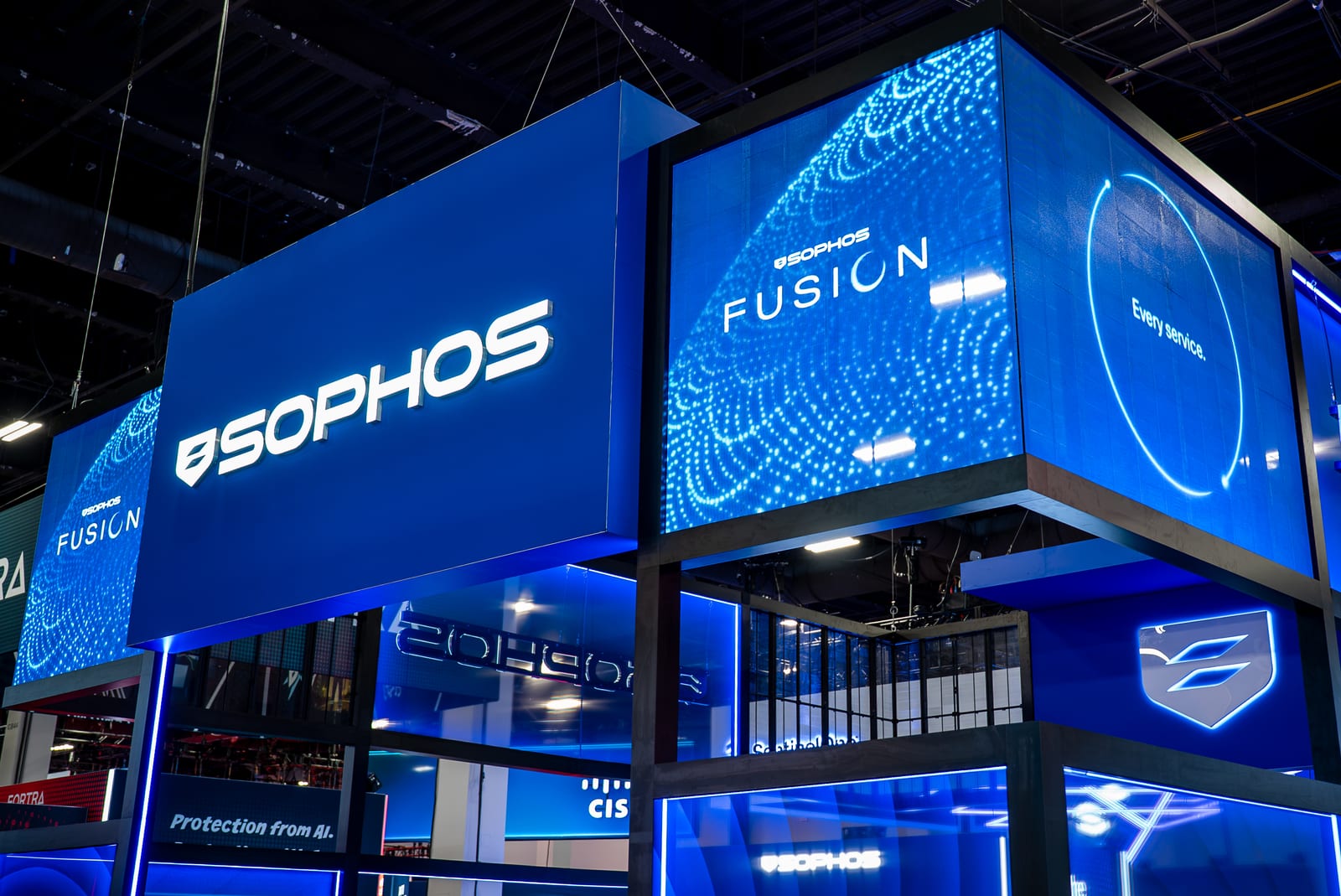
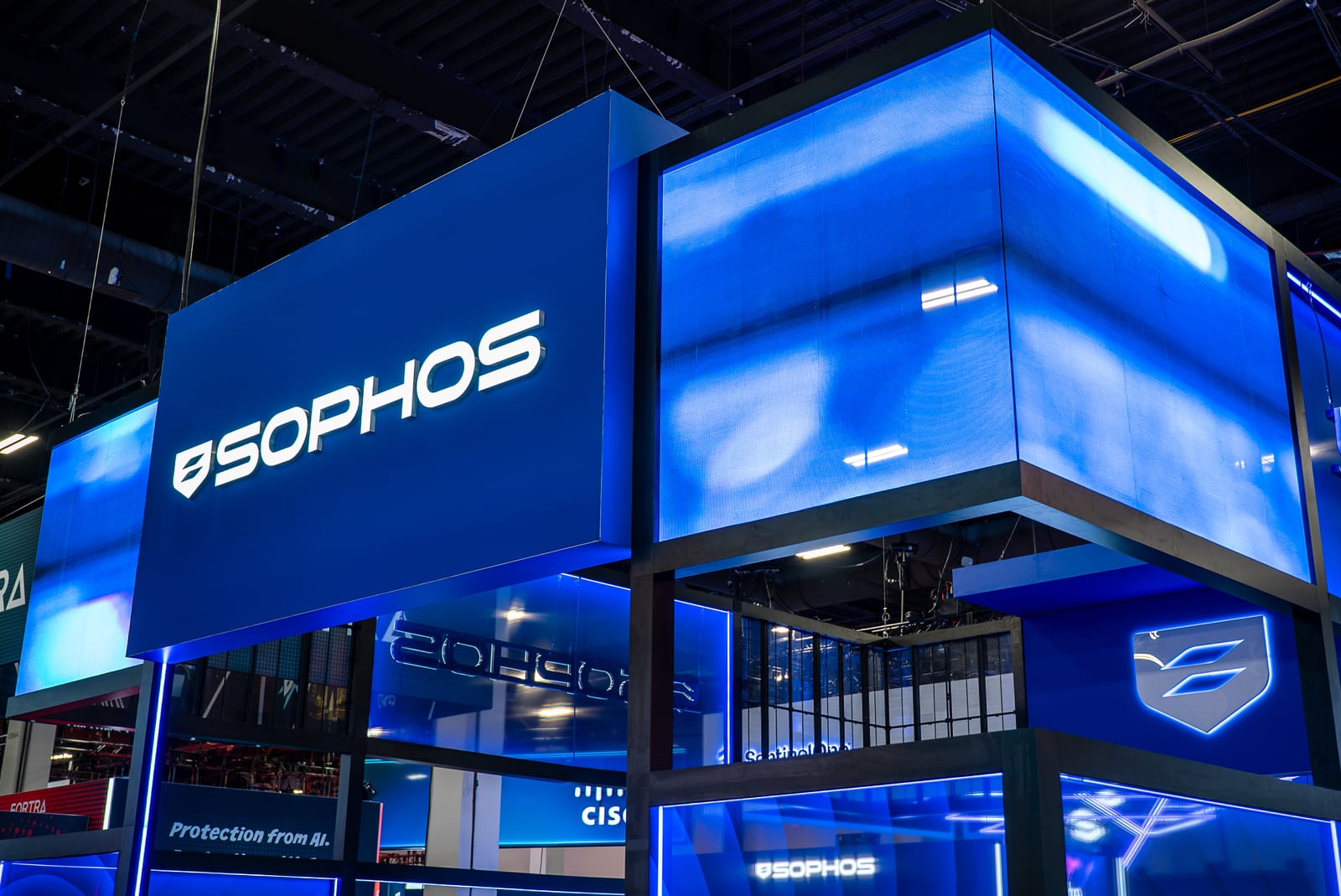
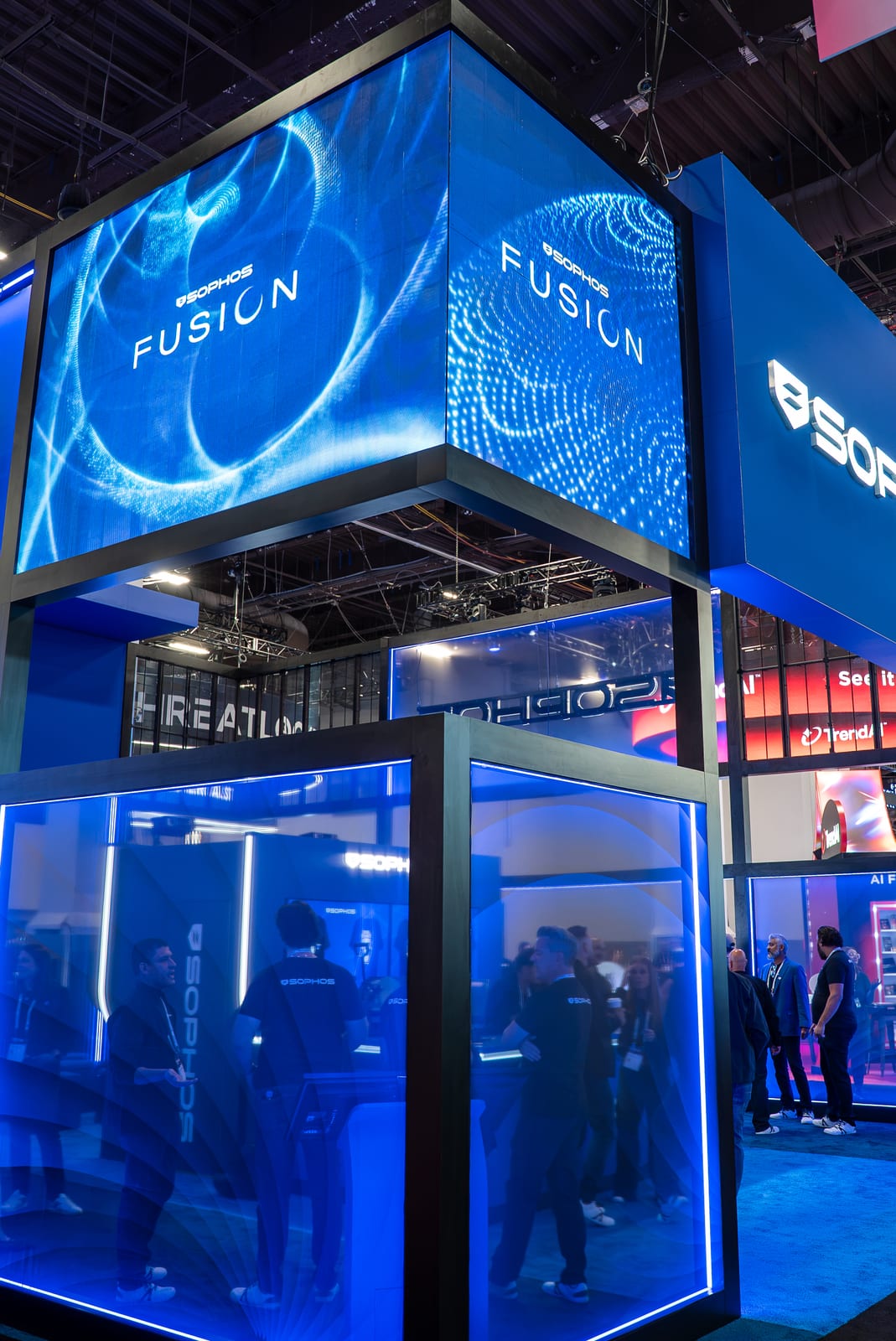
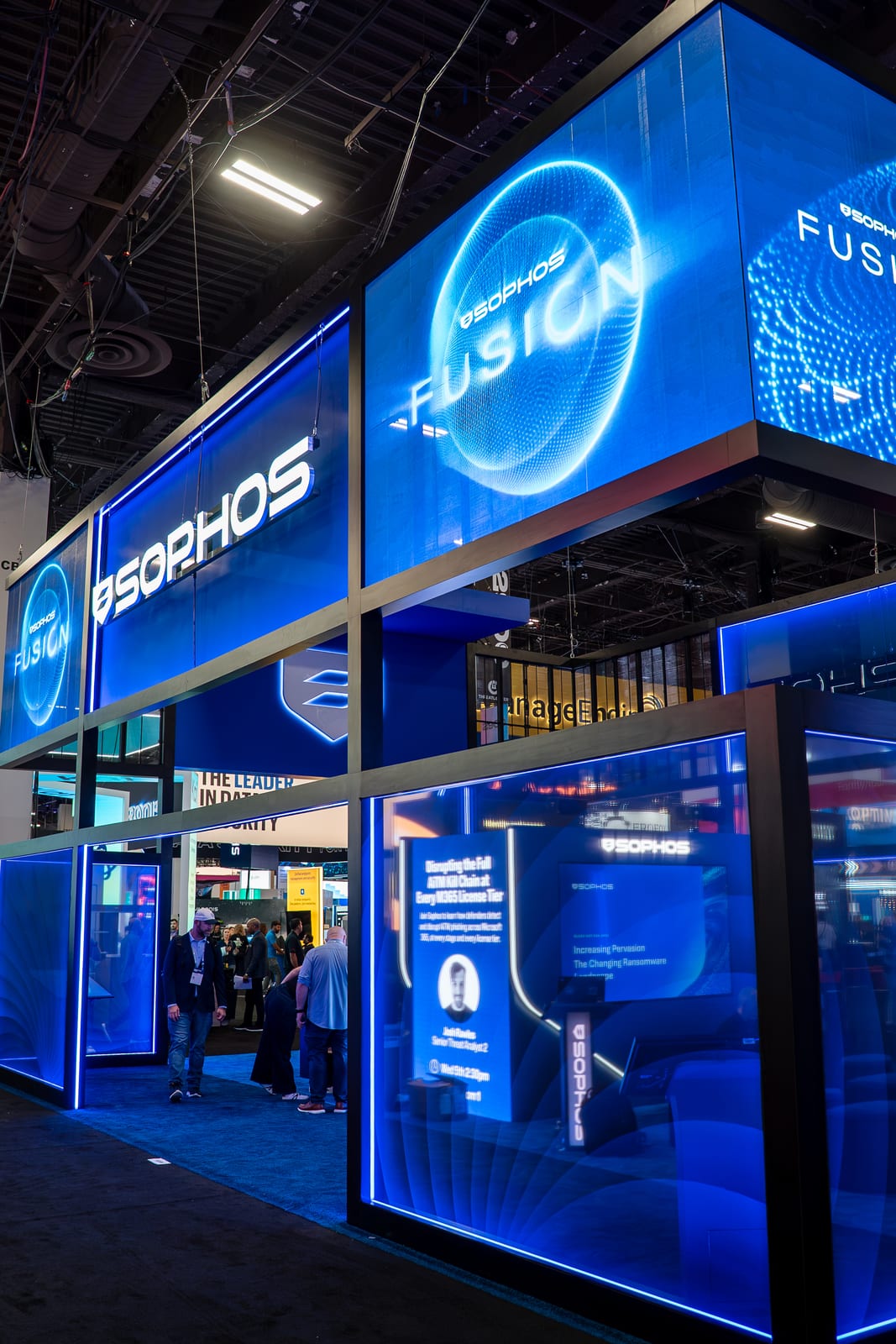
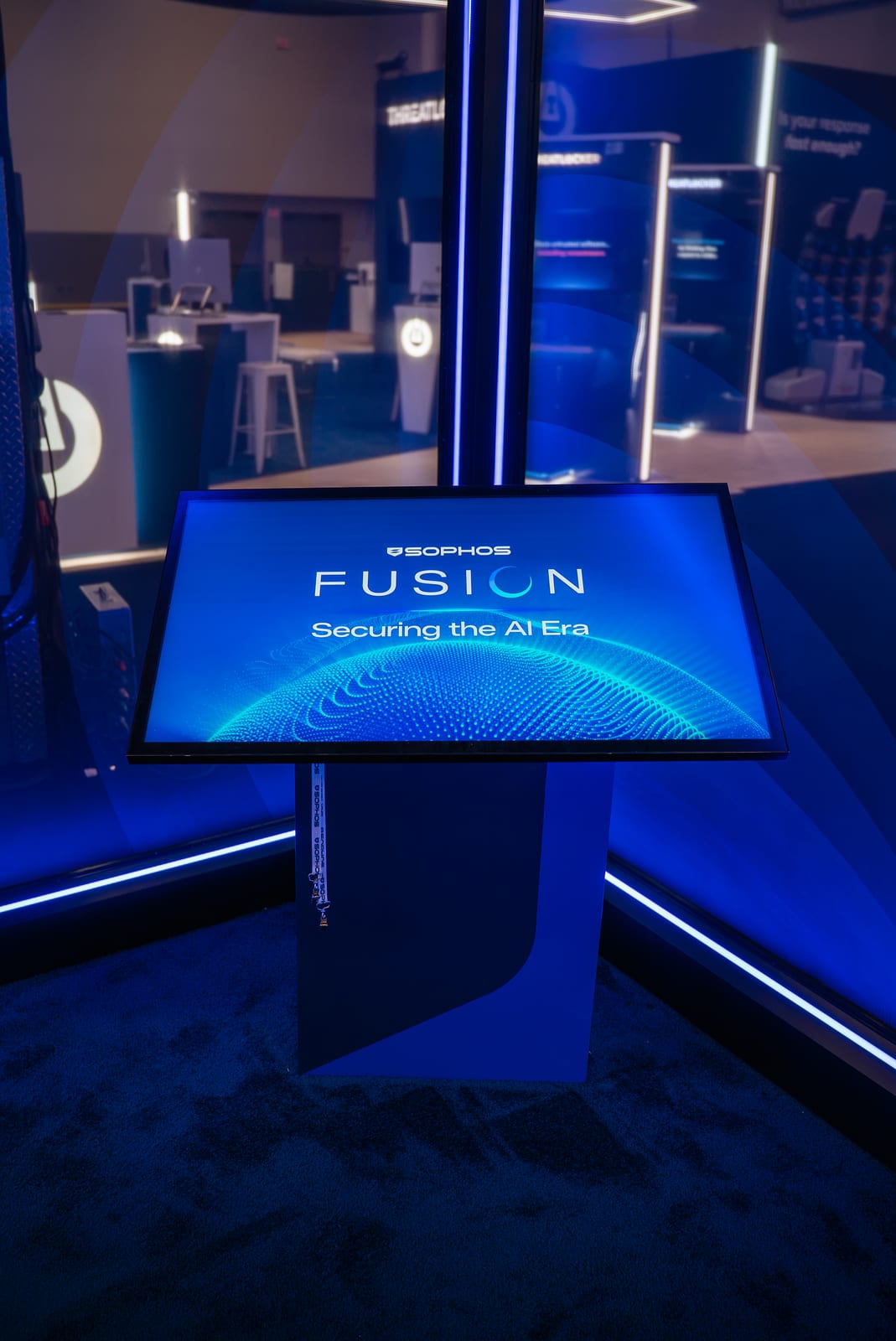
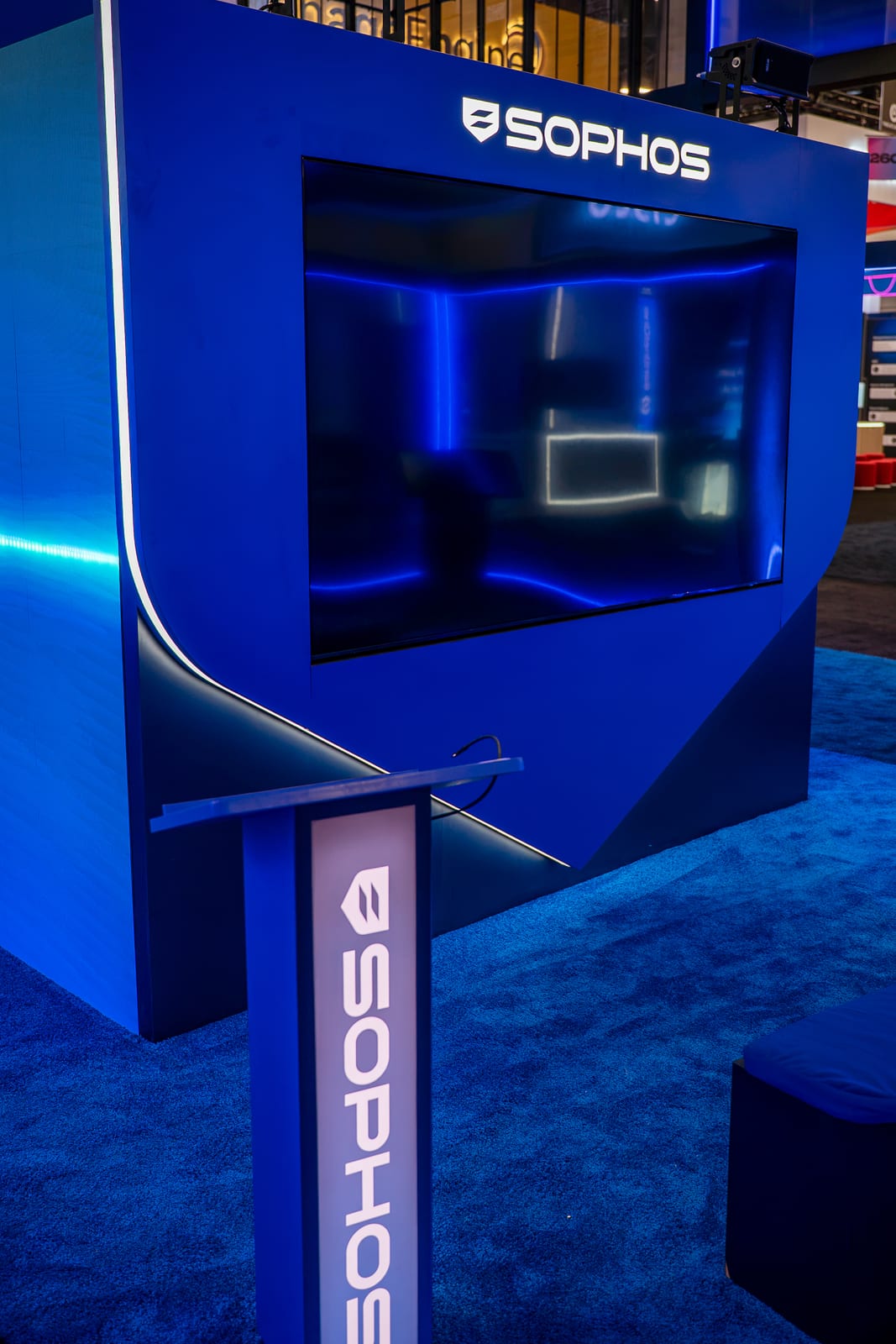
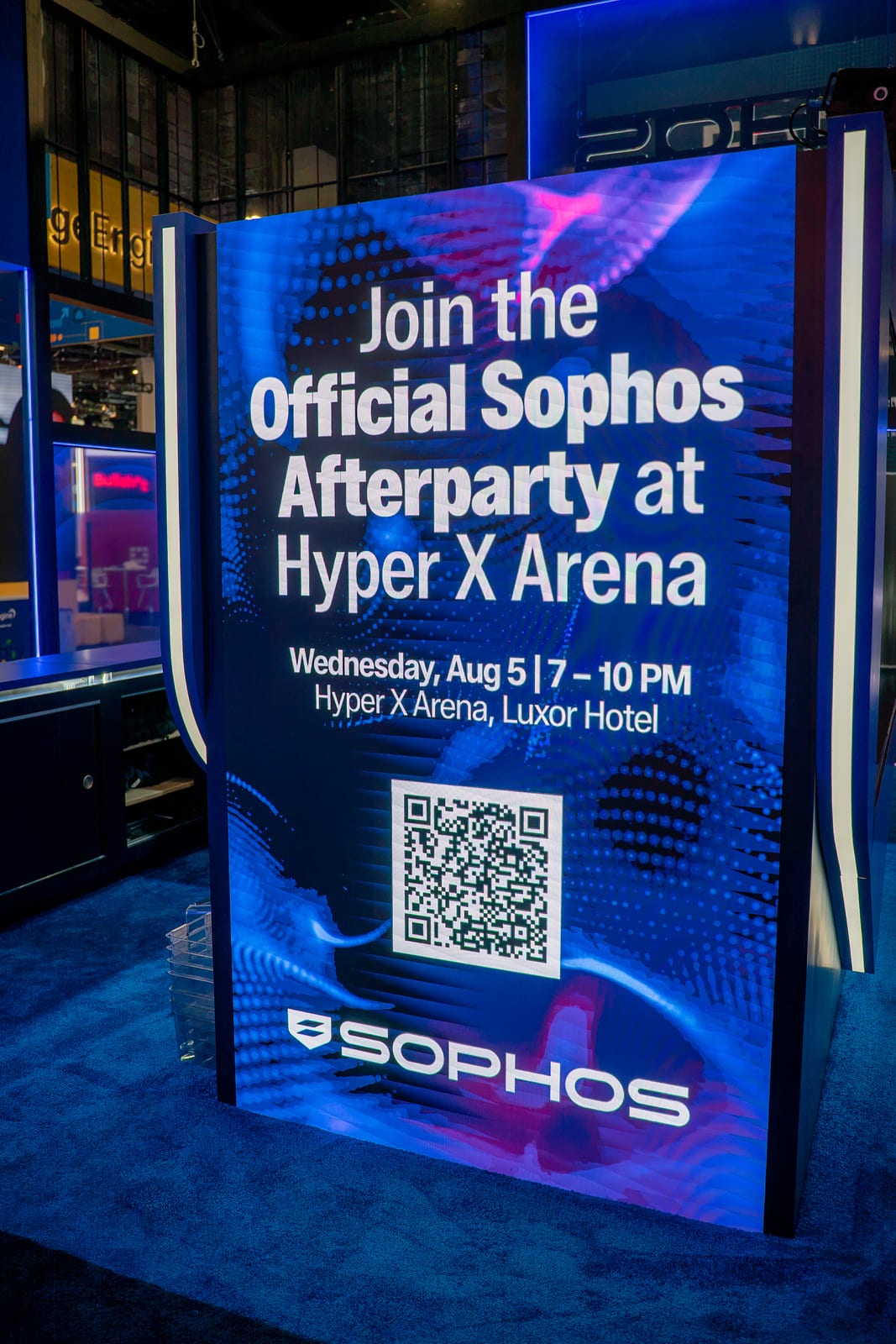
Sophos built up, two levels with LED on every face of the upper deck. We filled it with forty transparent tiles, which is the decision that makes a structure that size work. Clear LED lights up without going solid, so the deck reads as a landmark to the aisle instead of a wall to everyone standing behind it.
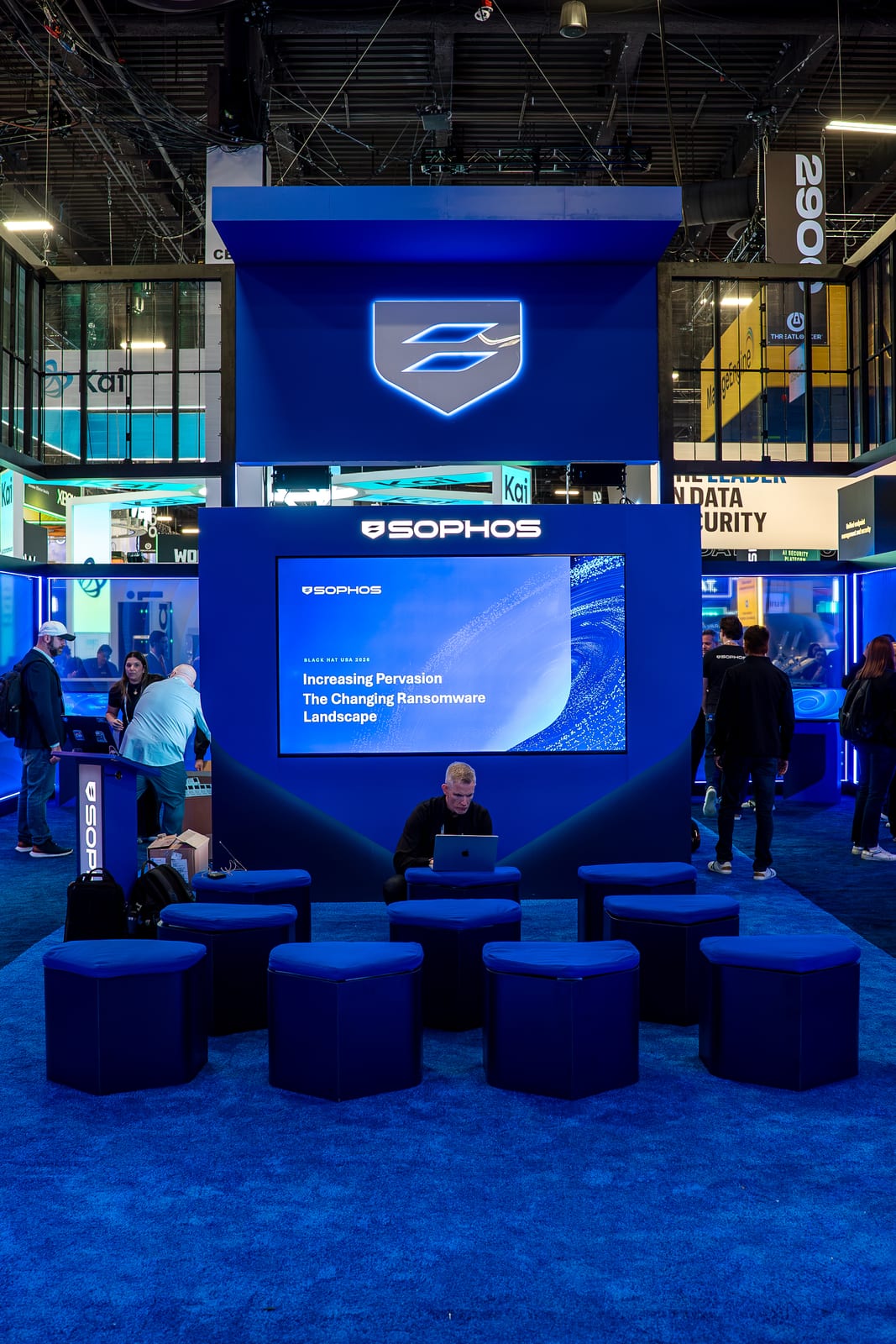
Touchscreens ran demos below, and the theater carried speakers, a mixer and headset mics for presenters.
We test fit the entire clear LED build in June, weeks out from the show. Nothing about it surprised anyone in Las Vegas, which is the only reason to do a test fit.
ThreatLocker: a ring you could not miss
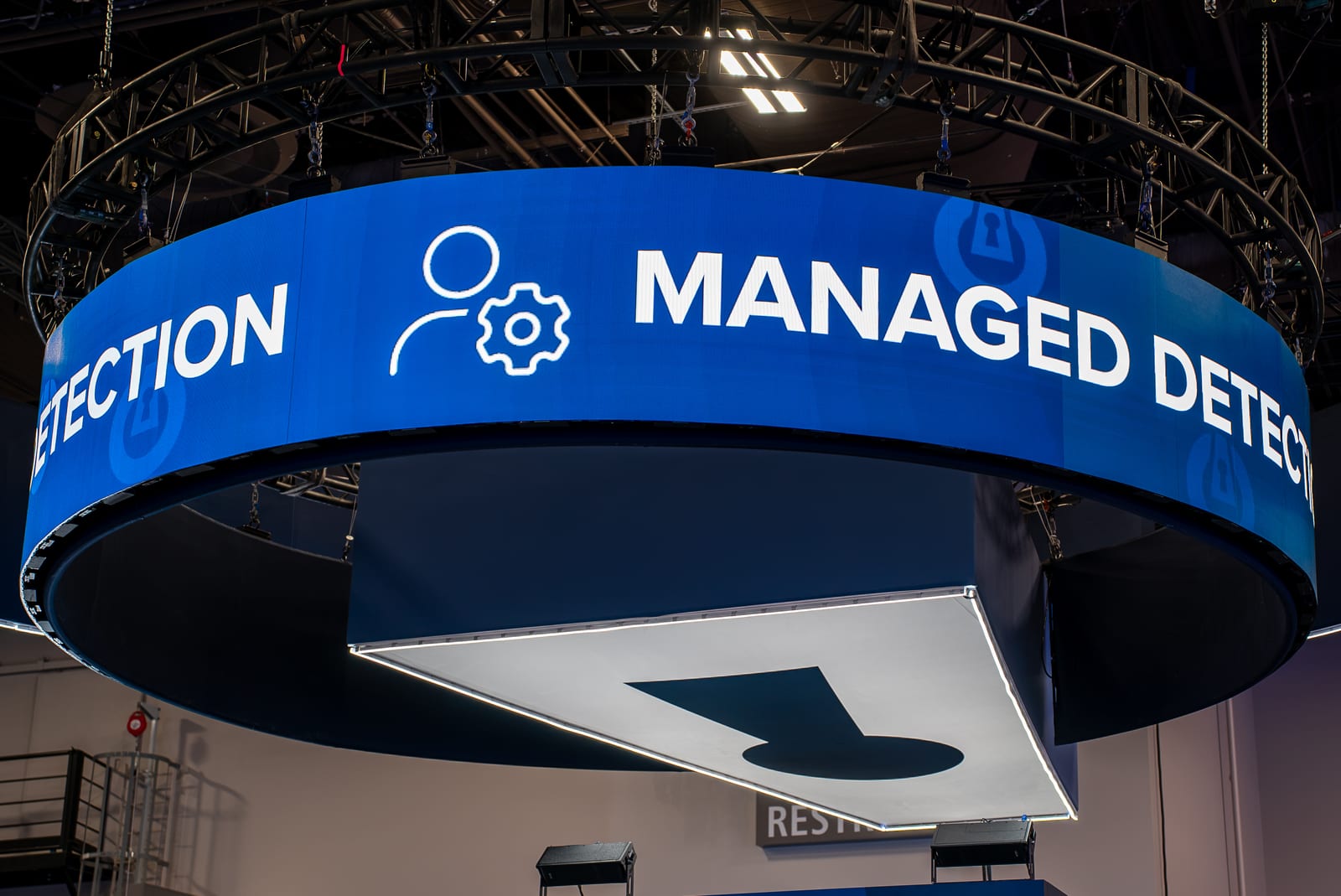
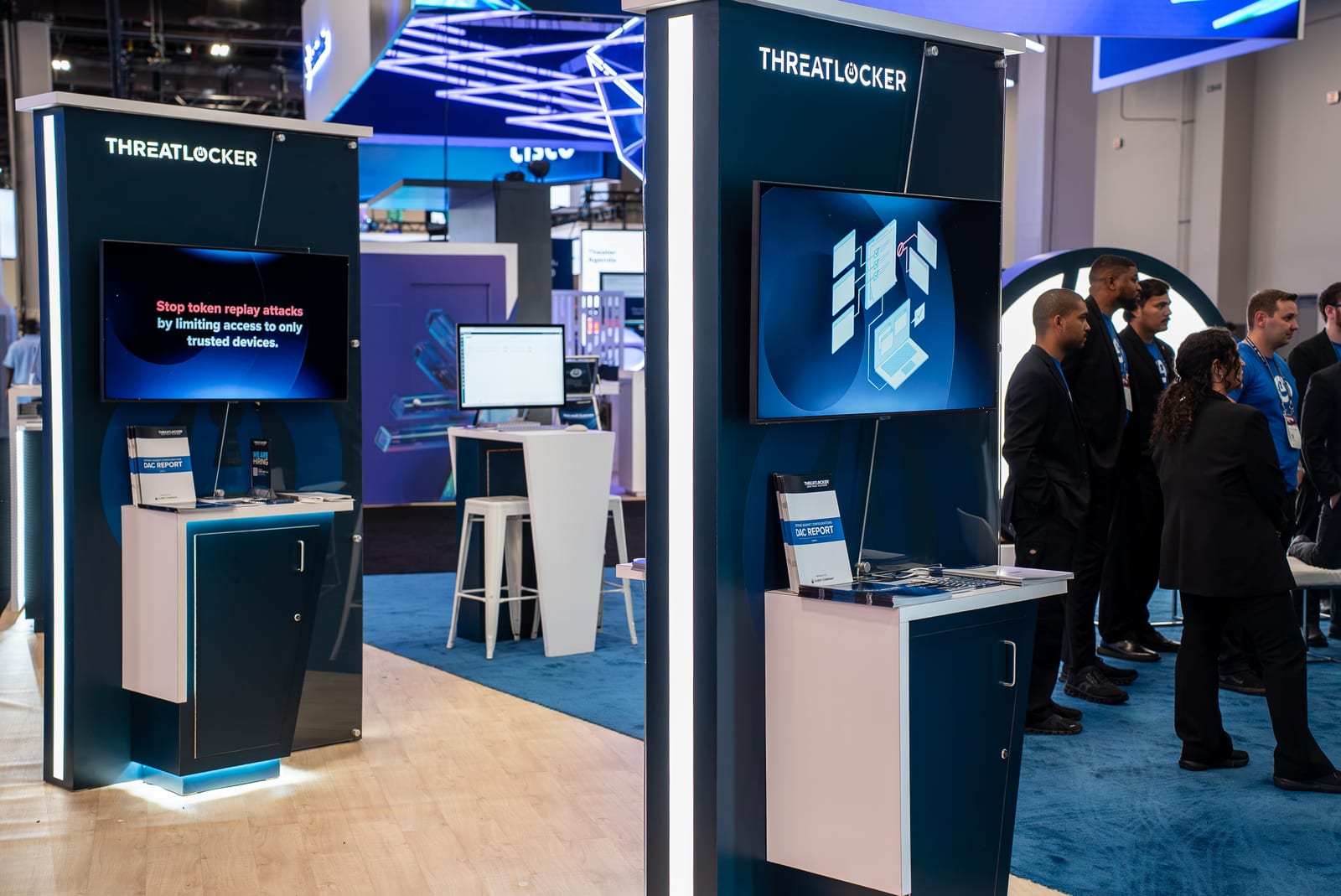
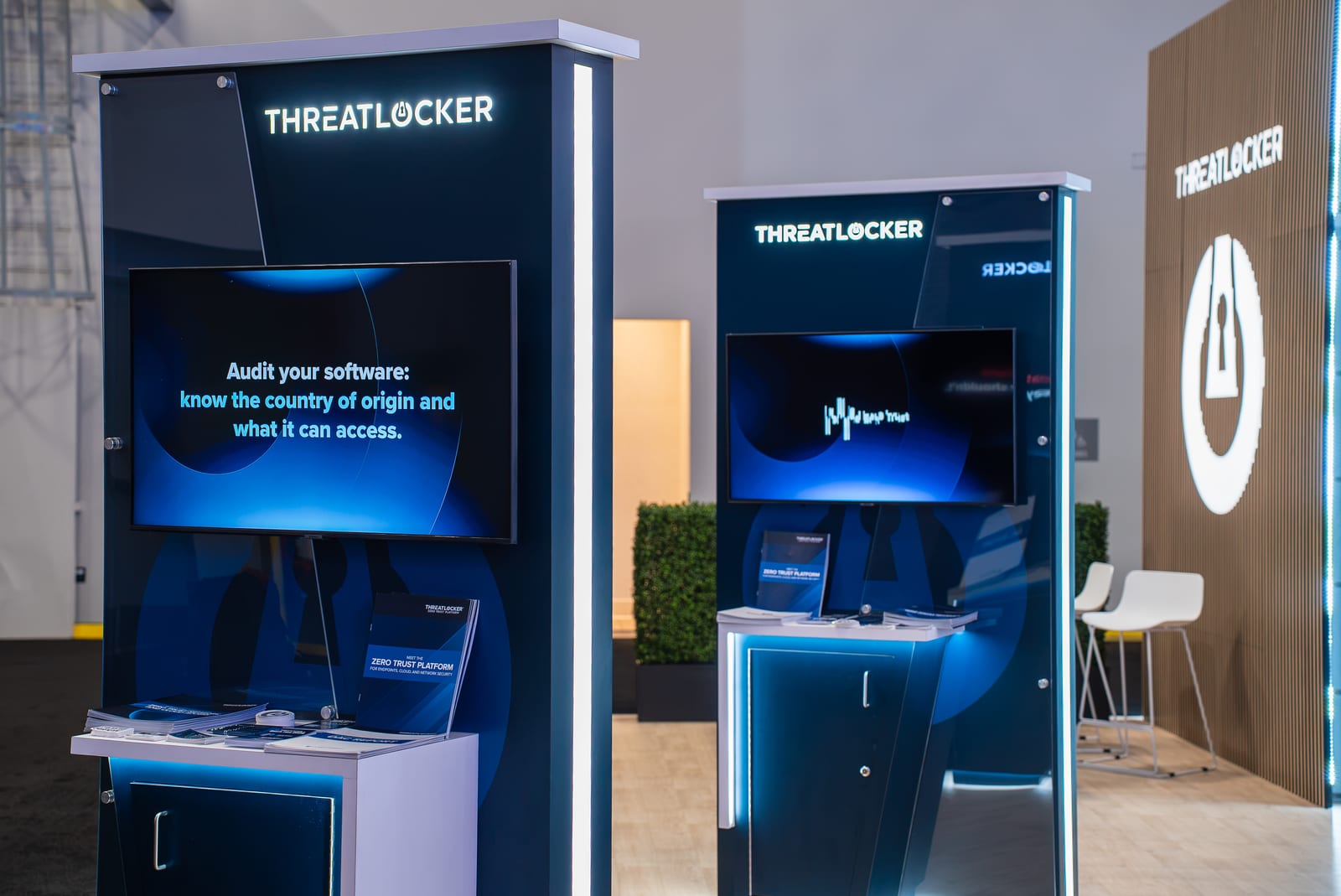
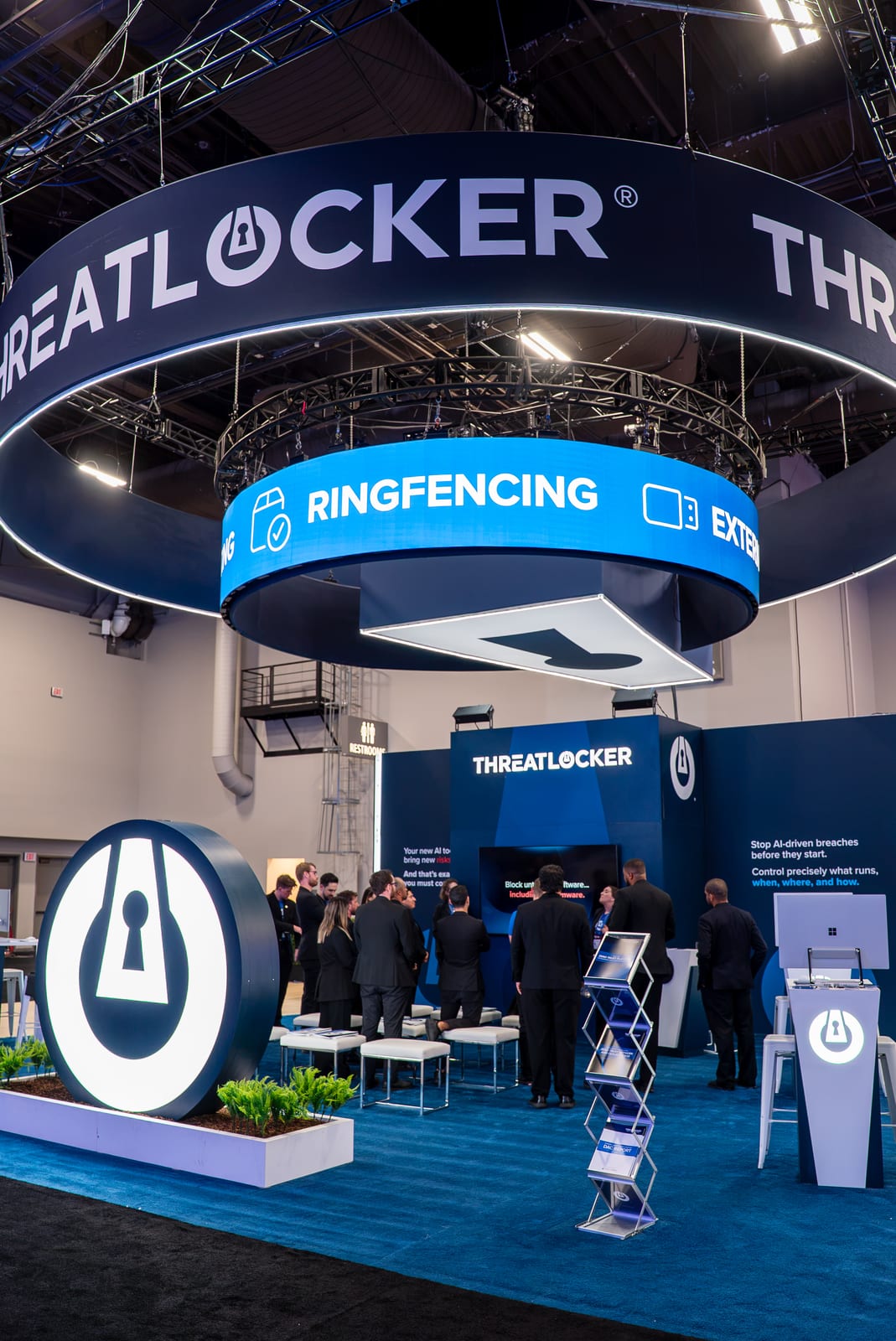
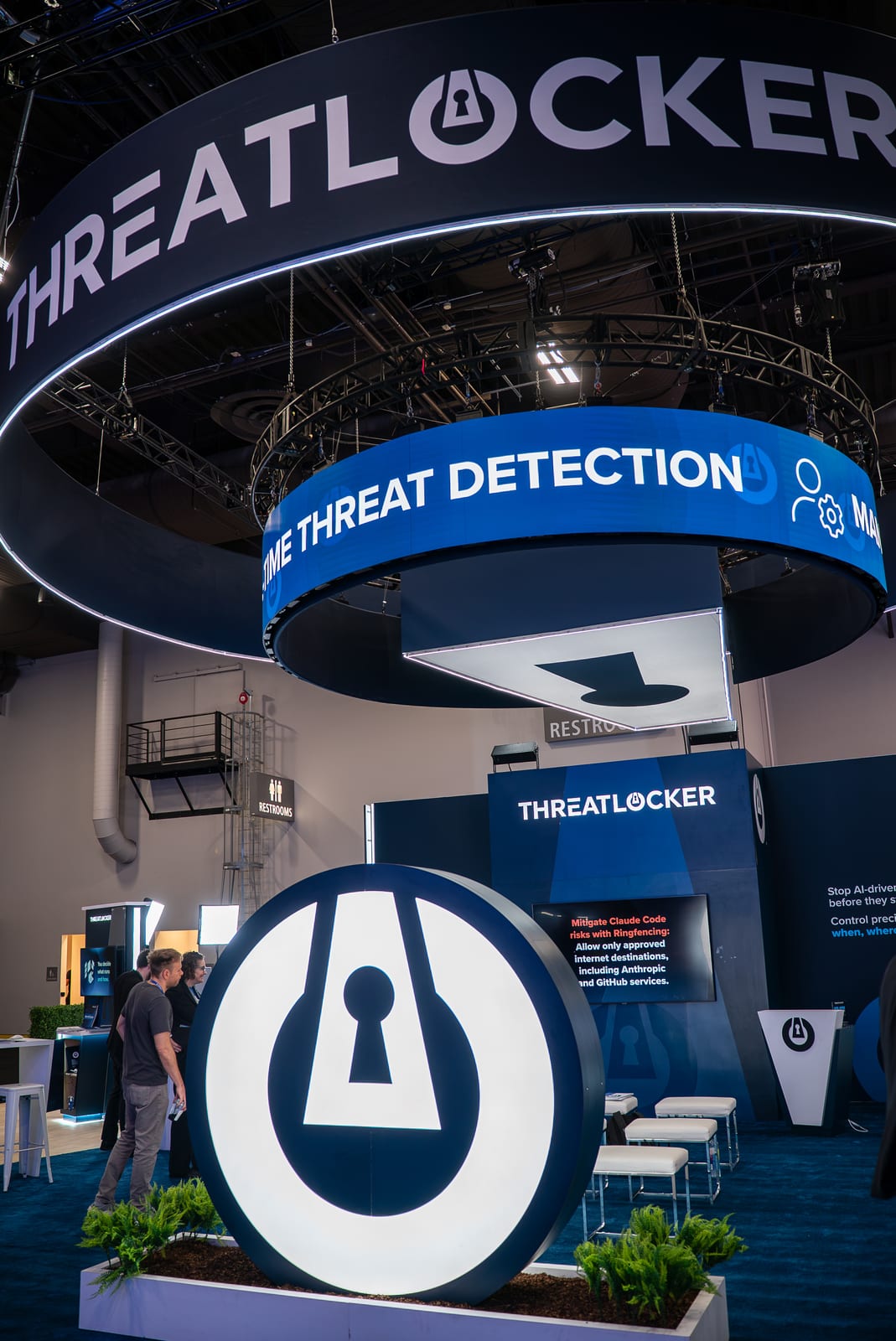
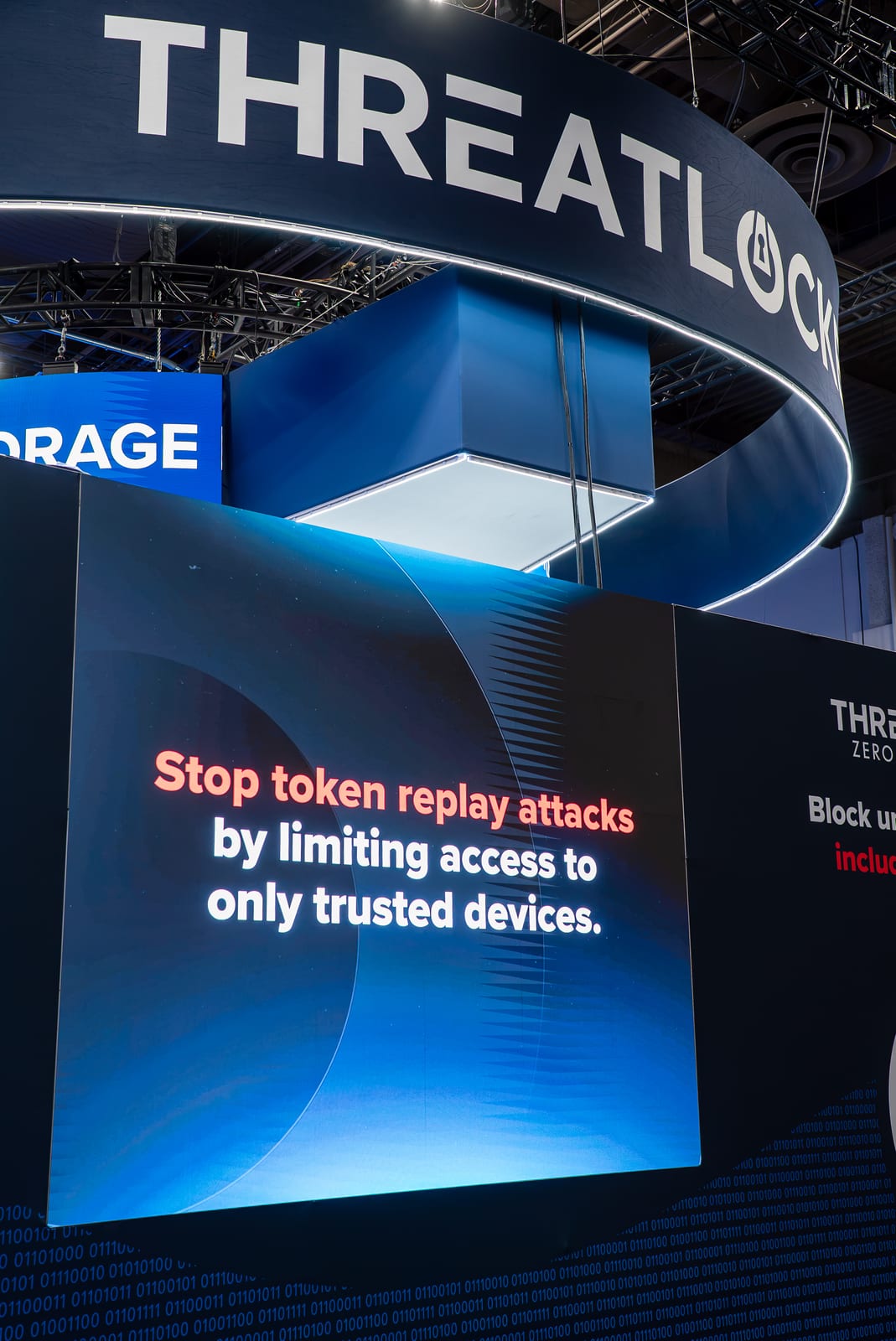
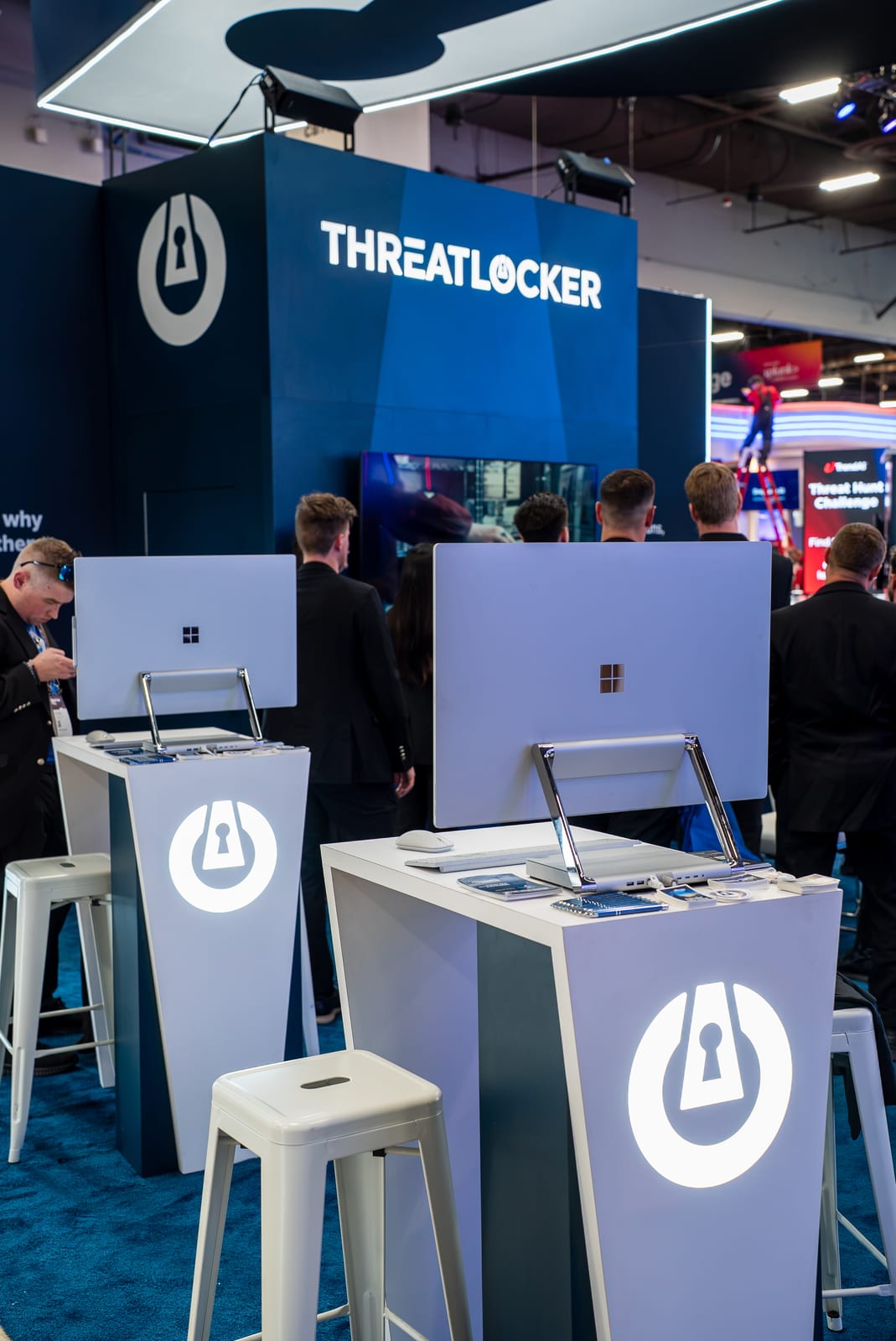
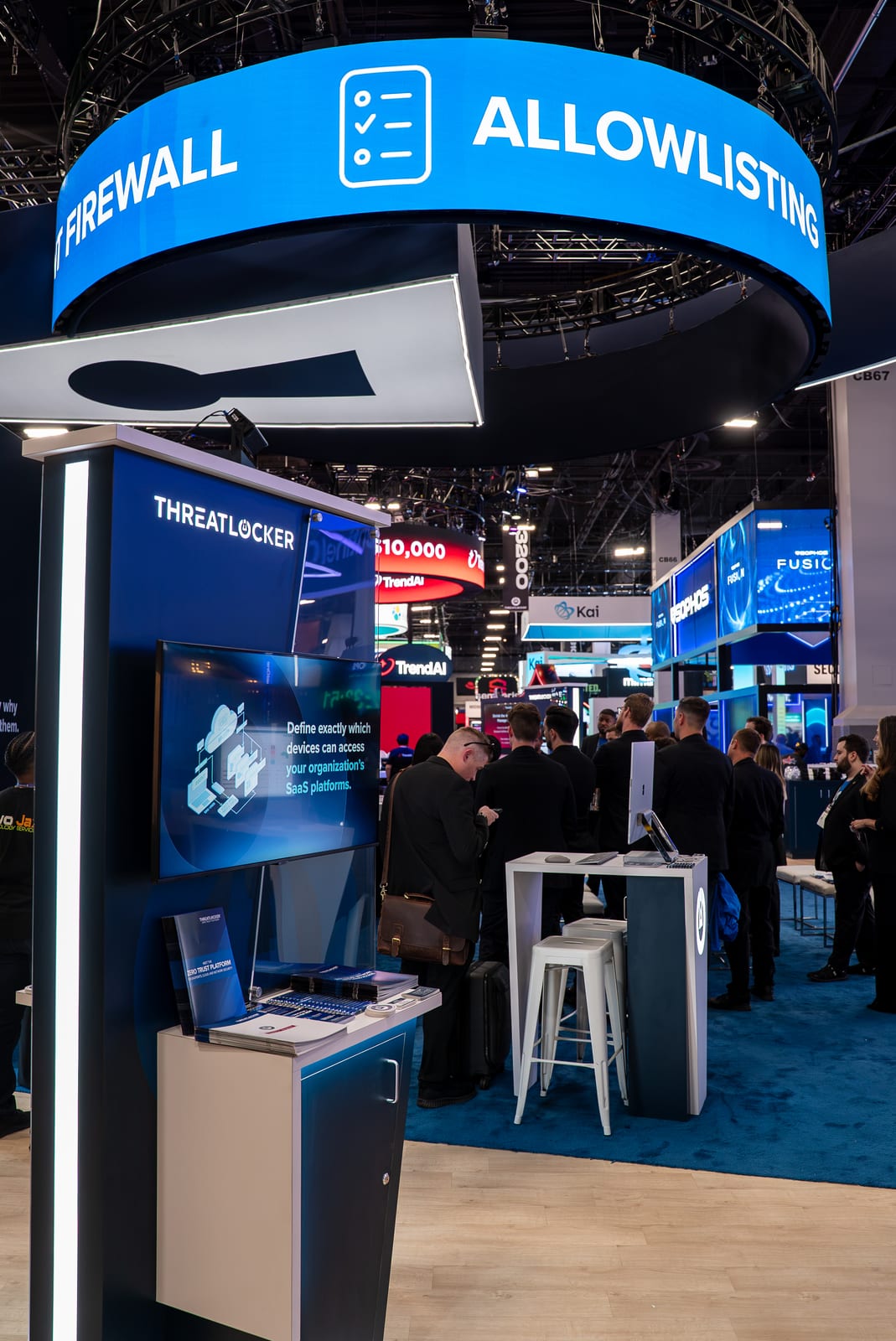
ThreatLocker hung a circle. Sixty-six tiles bent into a ring over the booth, running the product line one message at a time: ringfencing, allowlisting, threat detection, managed detection. A ring has no back, so it found you from every aisle. A thirty-one tile wall handled the longer copy at eye level.
Axonius: a wall and four cubes
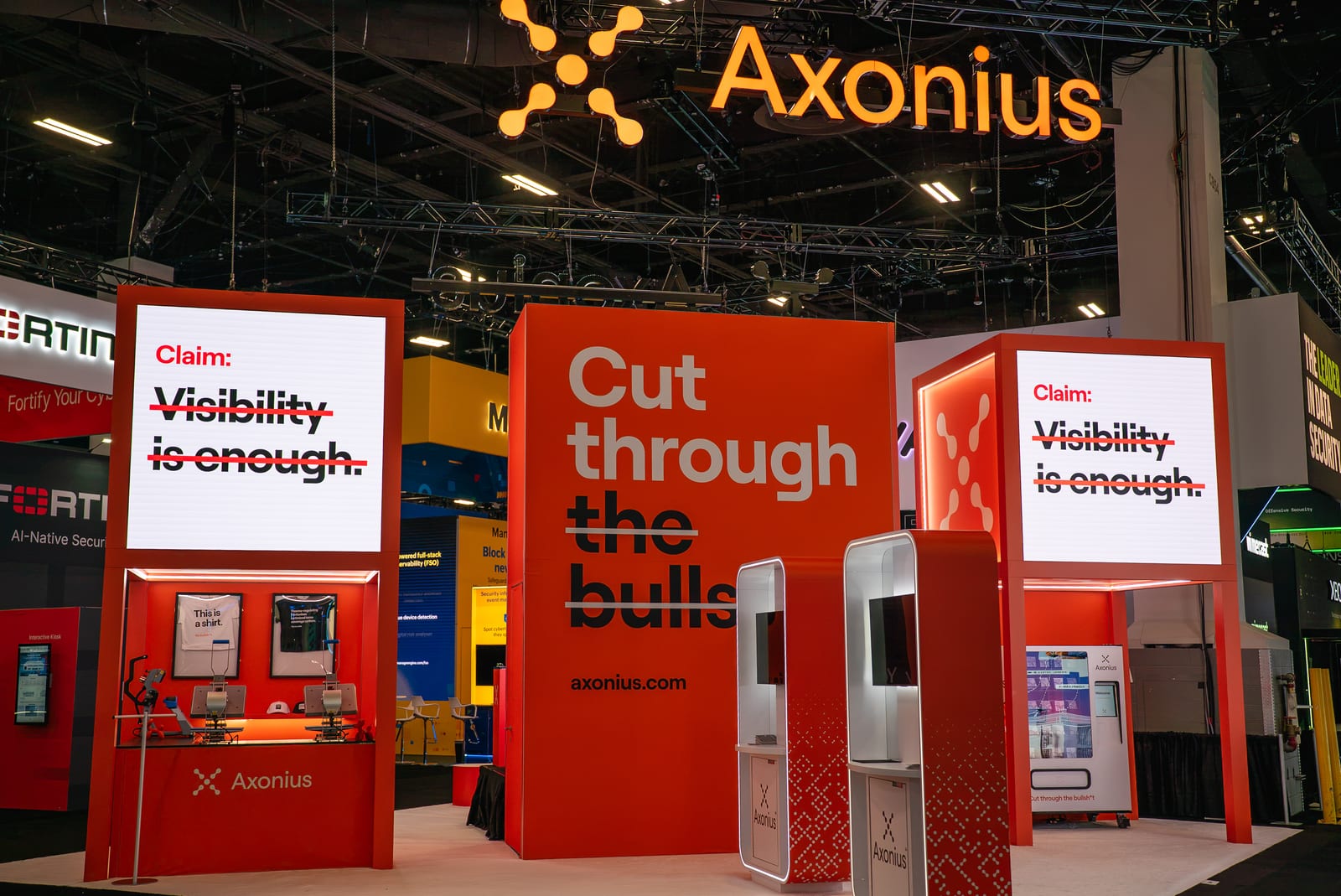
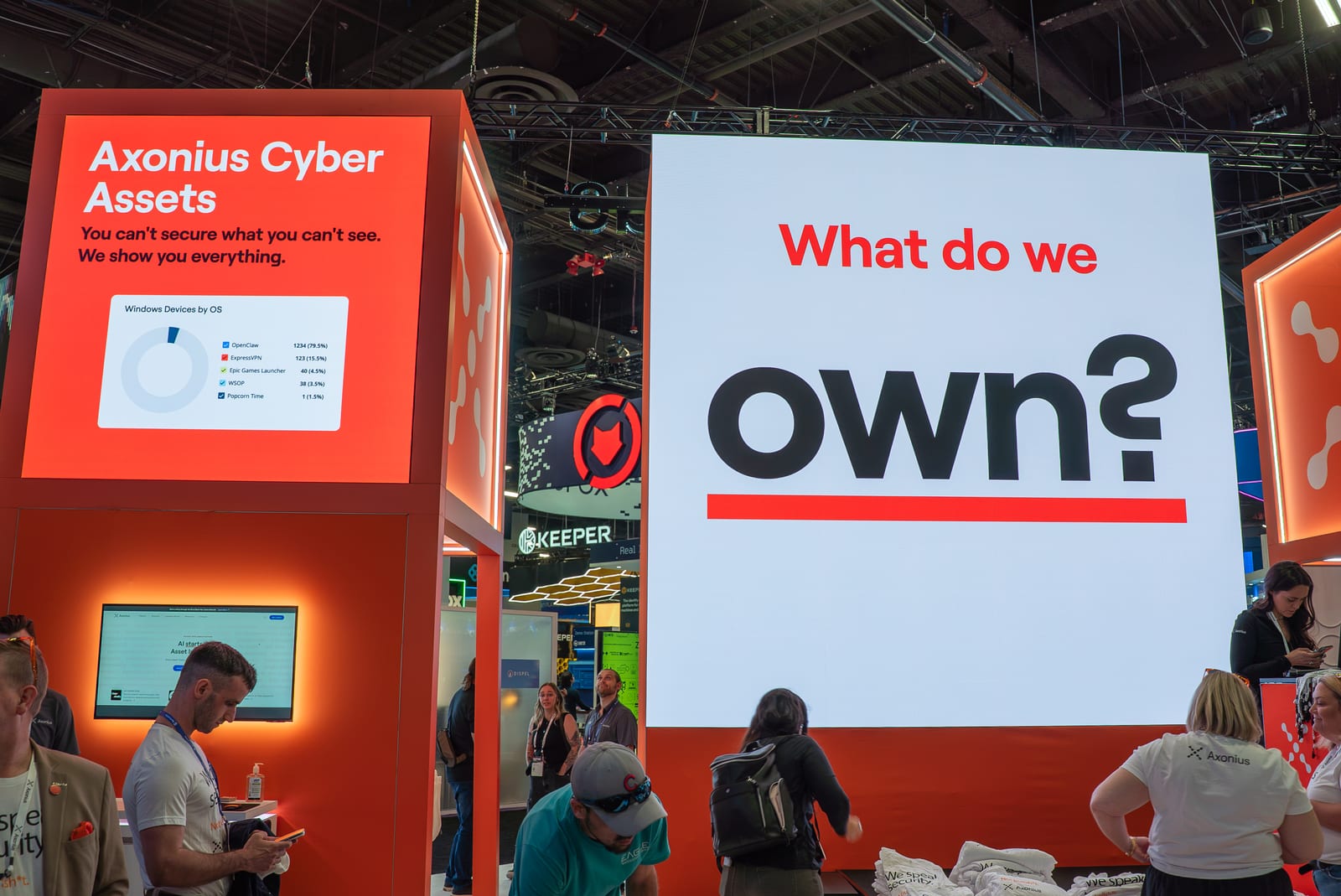
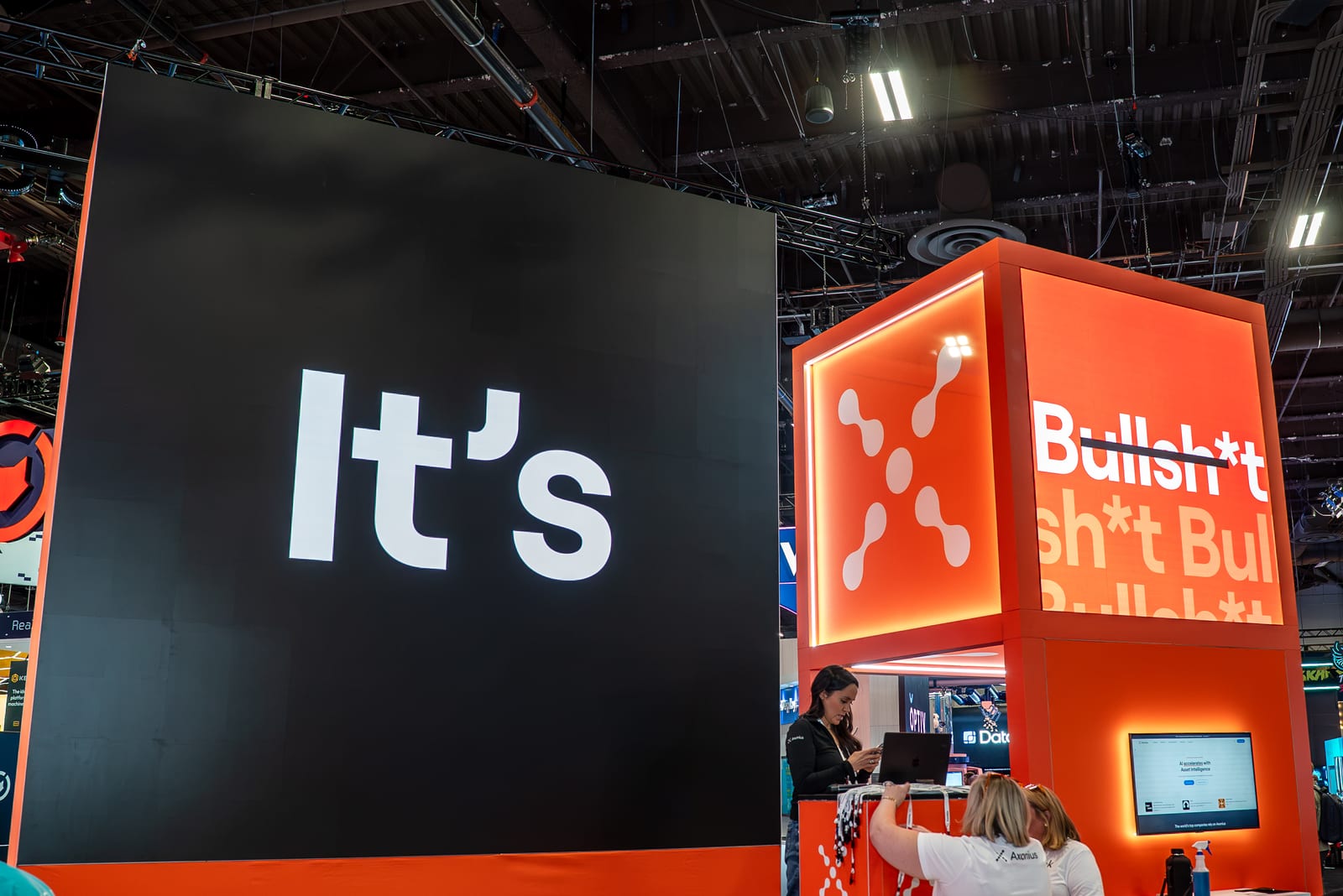
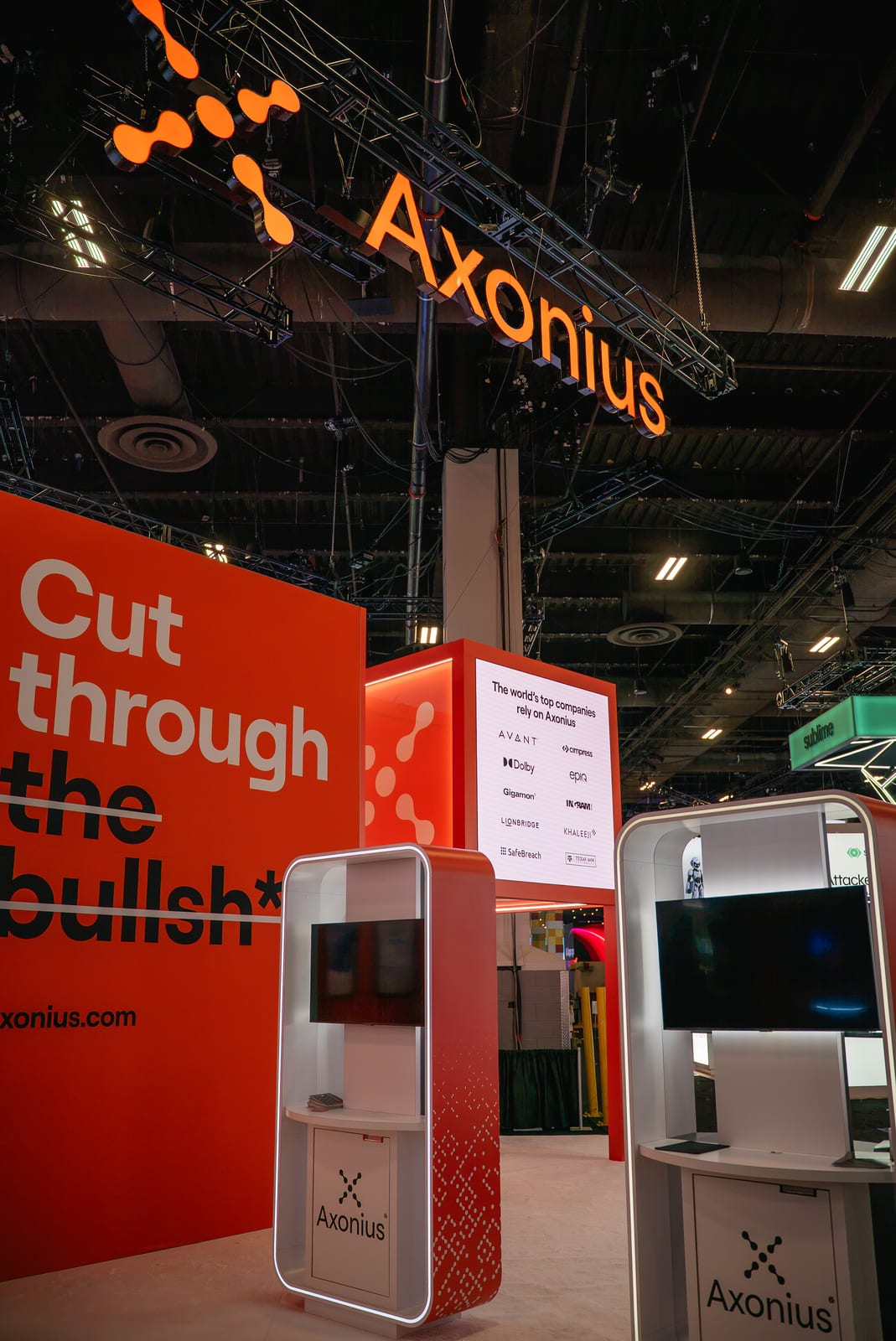
Axonius asked the floor what it owns, seven tiles wide and seven high. A switching package behind that wall let them cut between sources live through the day, and four more LED walls sat in elevated cubes around the floor, sixteen tiles each, so the booth had somewhere to talk as well as somewhere to present.
7AI: dark, with two kinds of LED
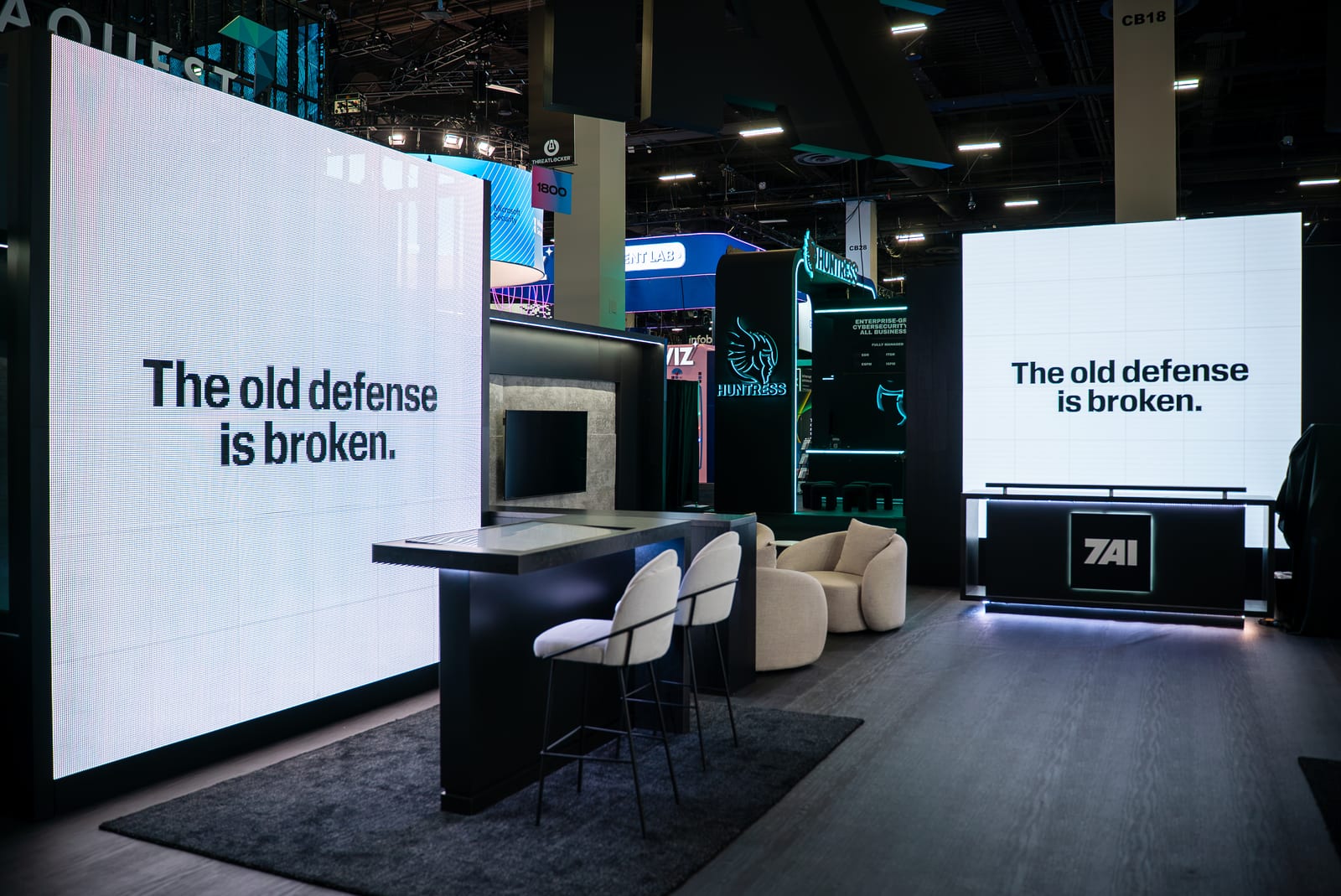
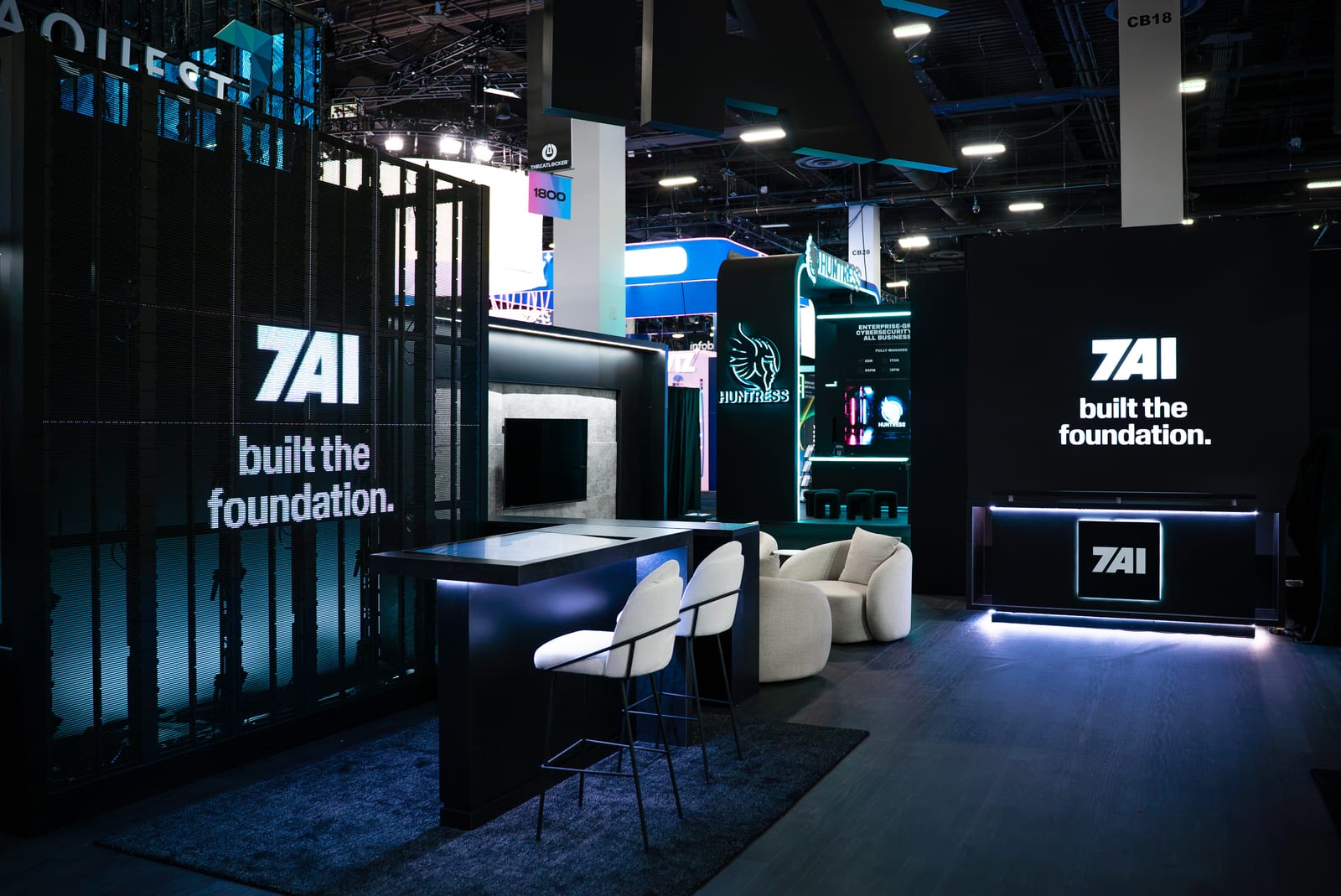
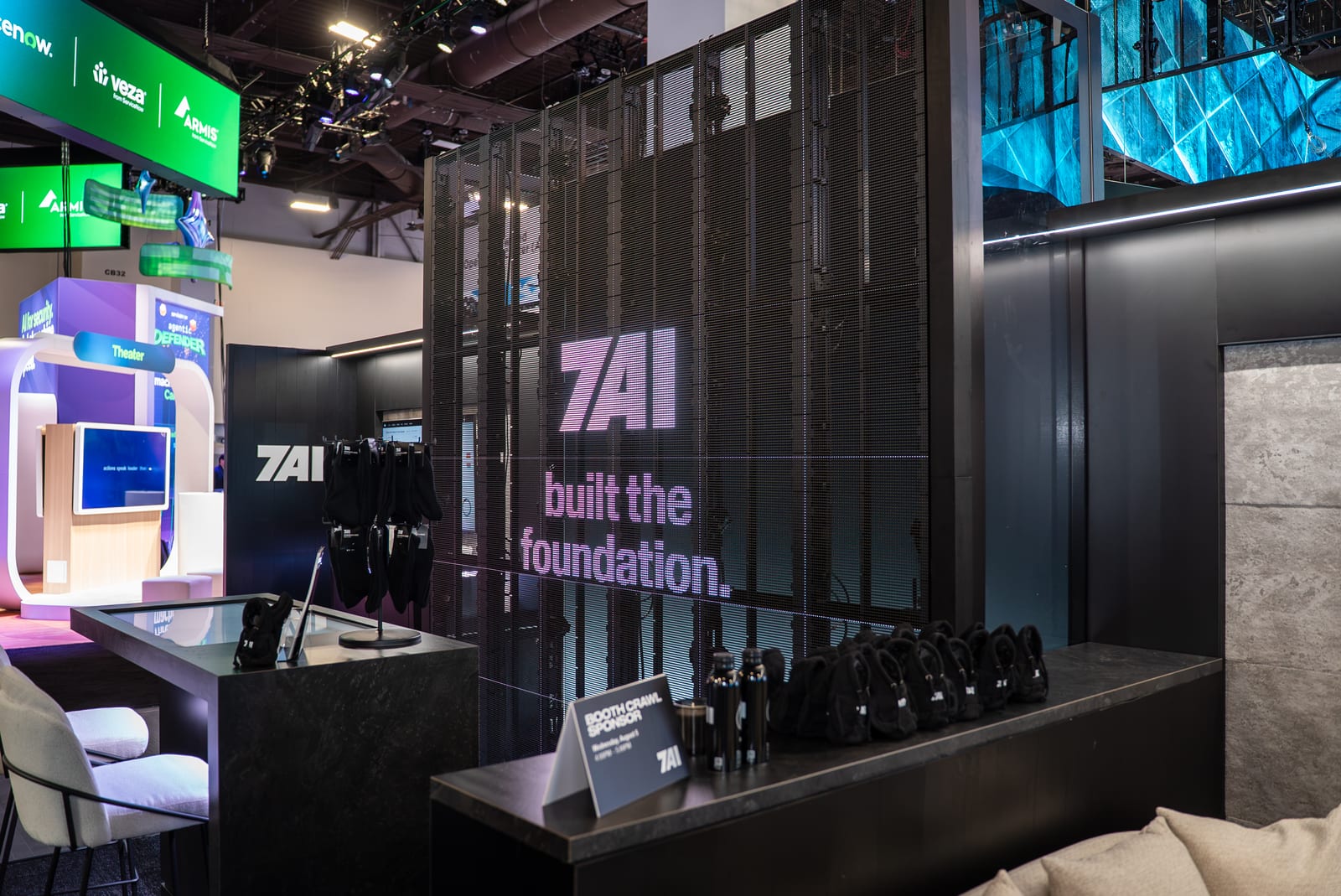
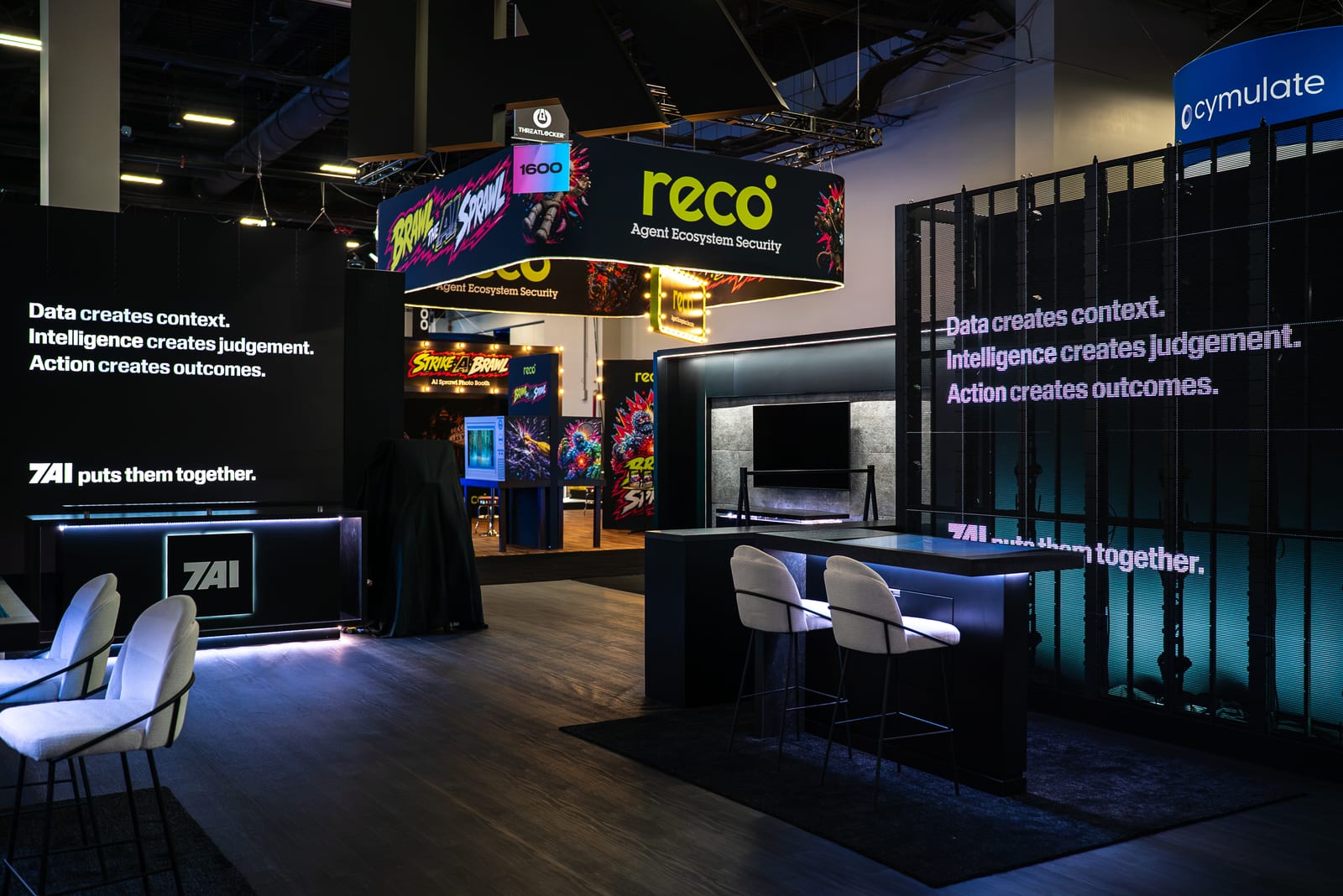
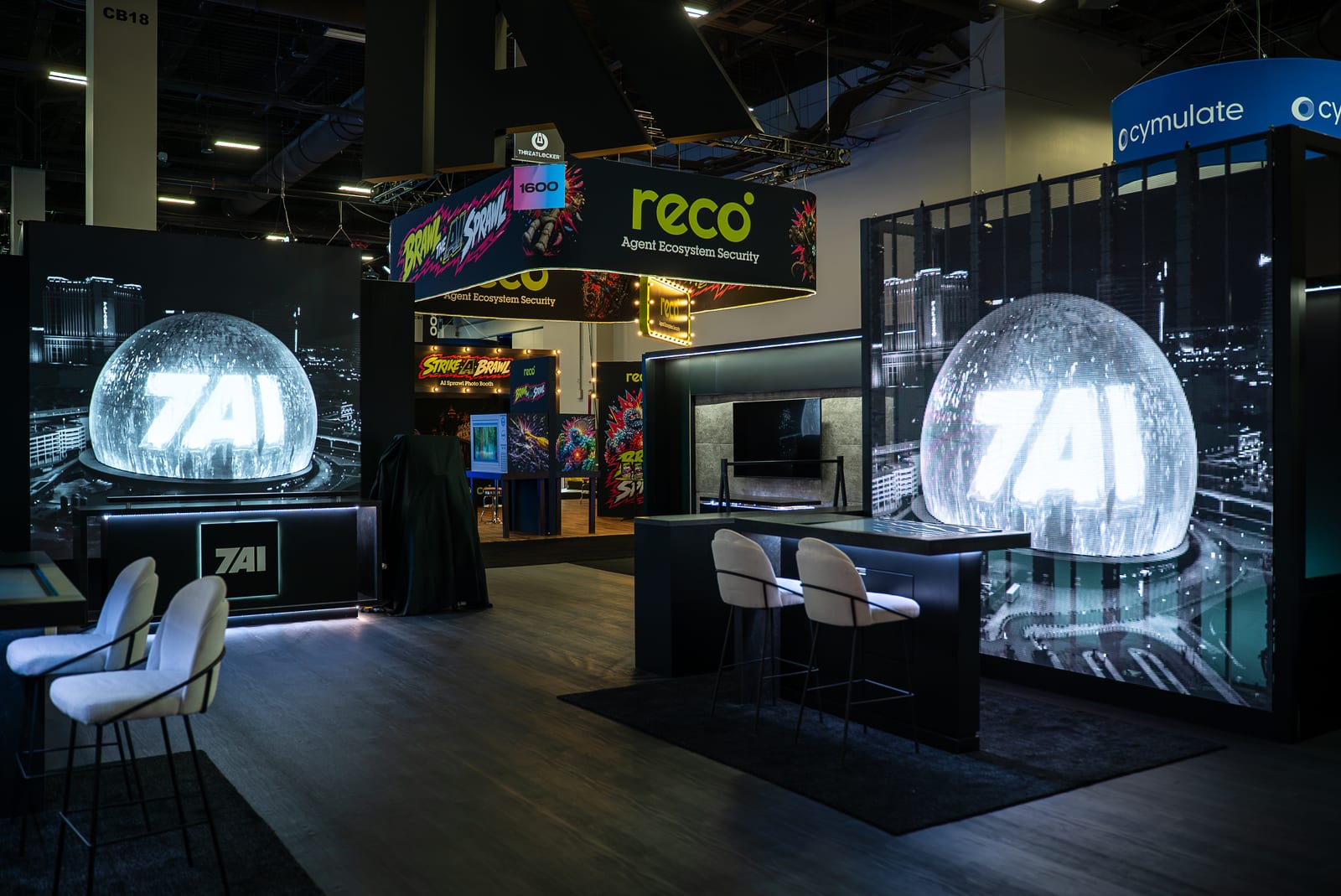
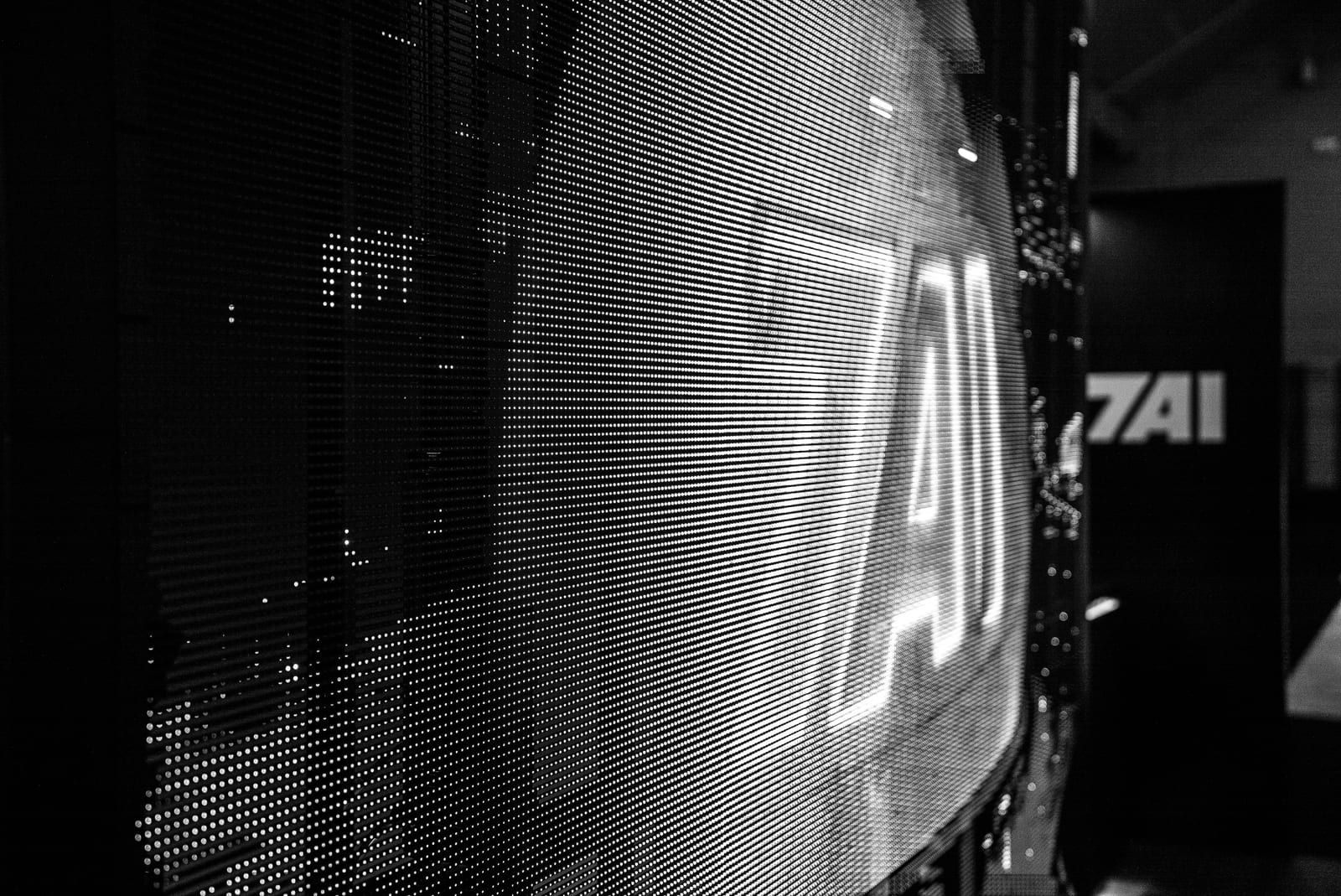
7AI went the other way: a dark booth lit only by its screens, running black and white content on a floor competing in full color.
The artwork ran in sync across three surfaces that render it differently on purpose. The center wall is thirty-six beMatrix LedSkin tiles, the finer pitch, holding the detail. Flanking it, eighteen clear LED tiles in two three by three displays carry the same frame at a coarser pitch you can see straight through, so wherever the content goes black the structure behind the wall shows through it. One picture, two materials, and the difference between them is the whole idea. We prefit a test tile and a touchscreen before the show.
OPSWAT
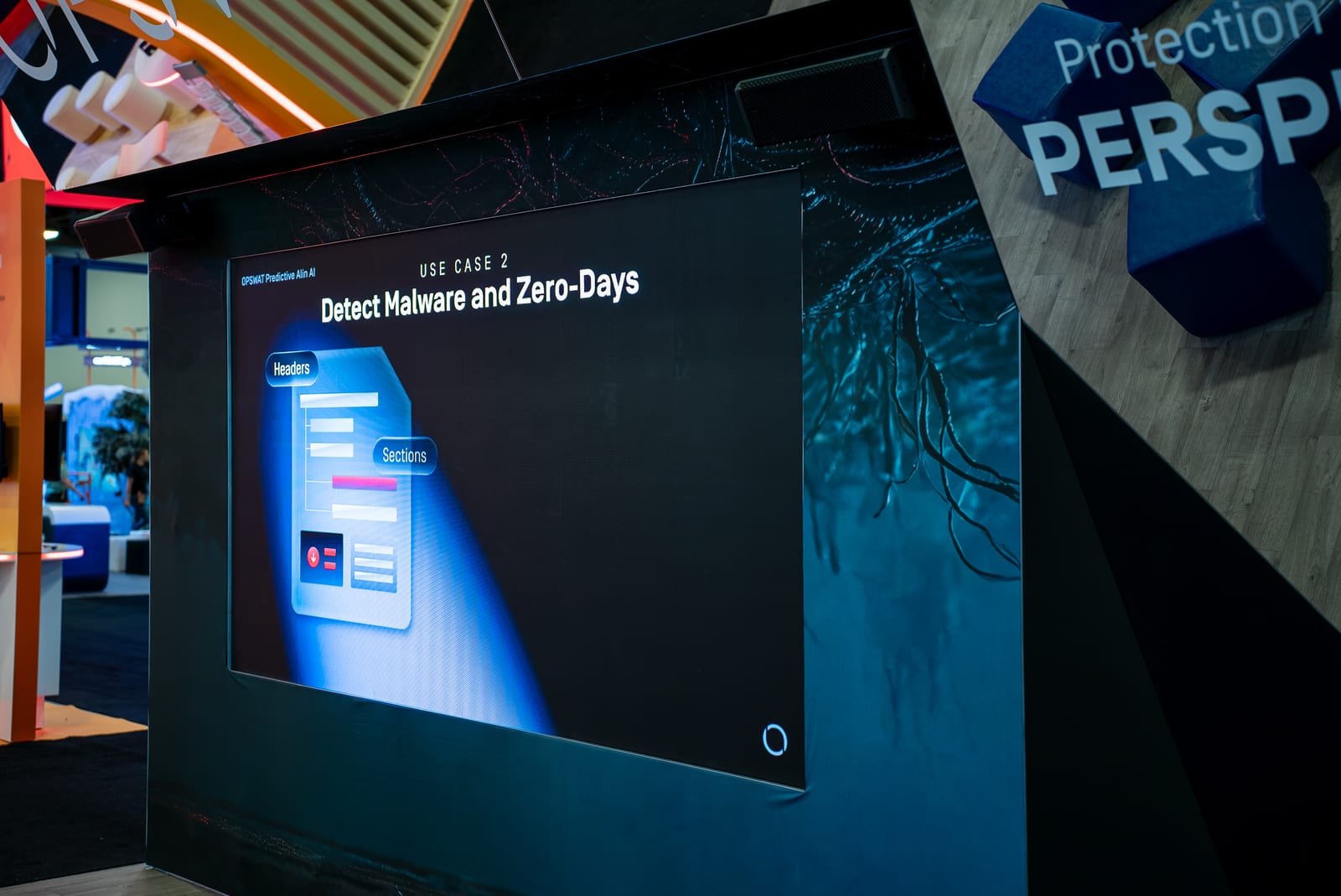
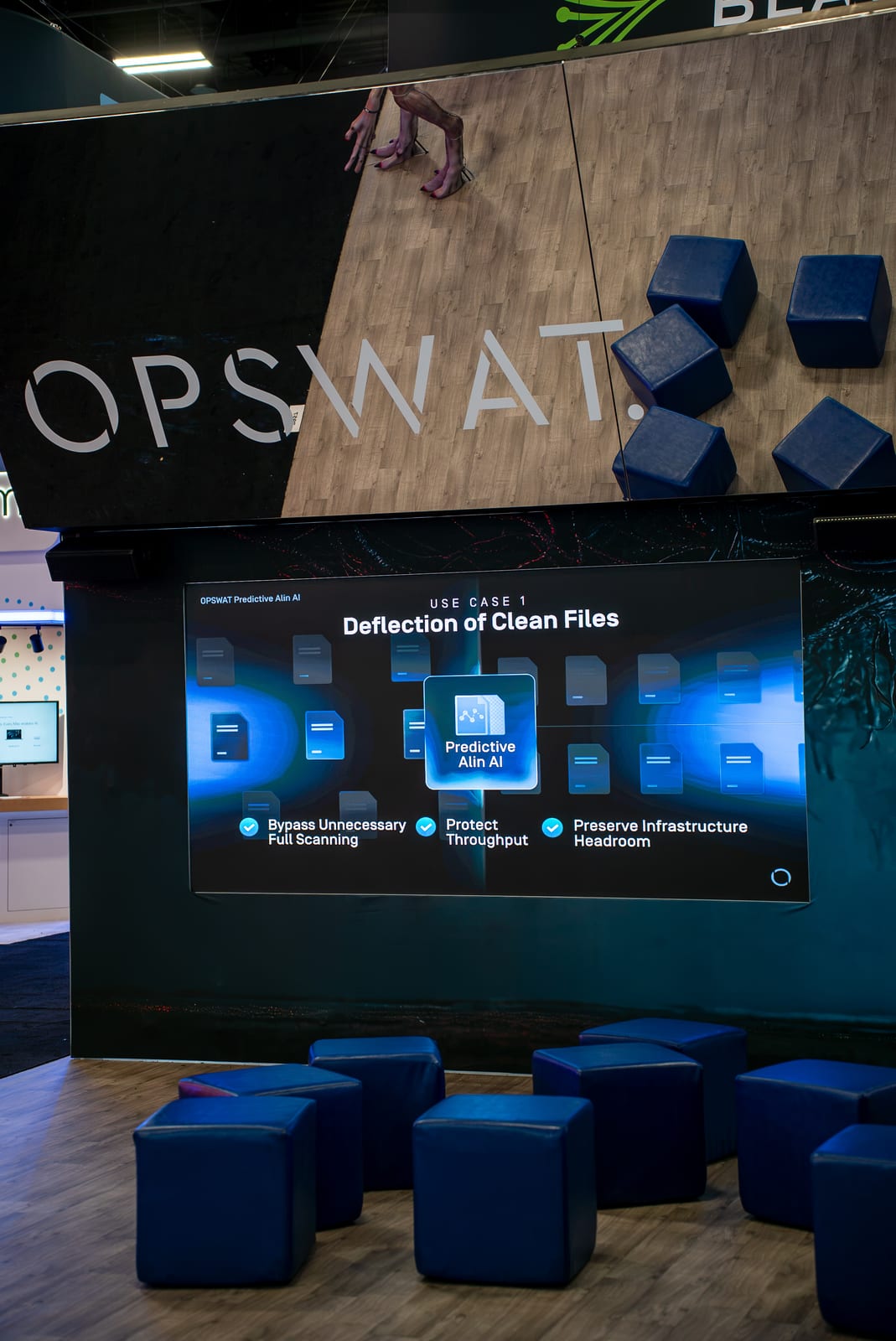
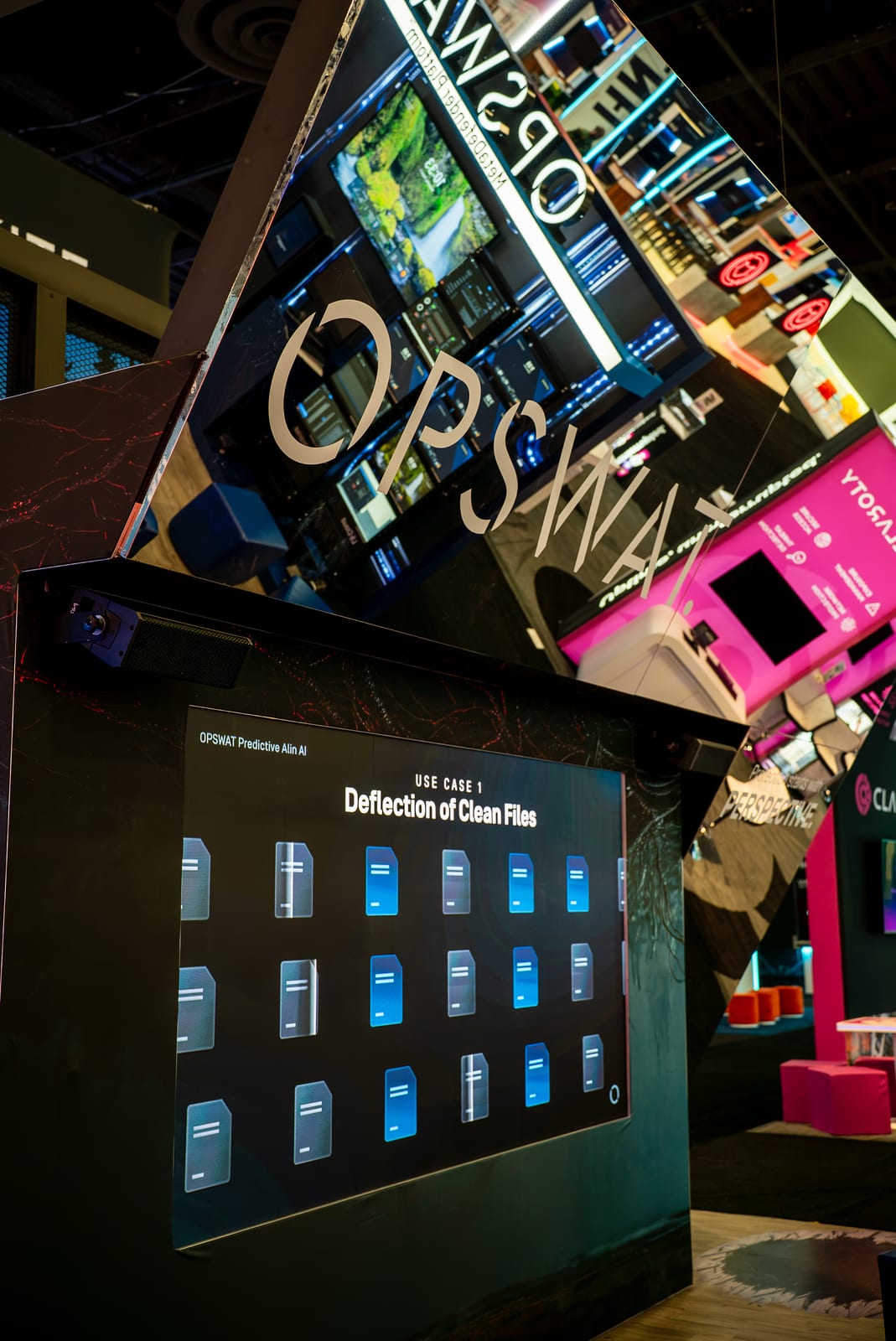
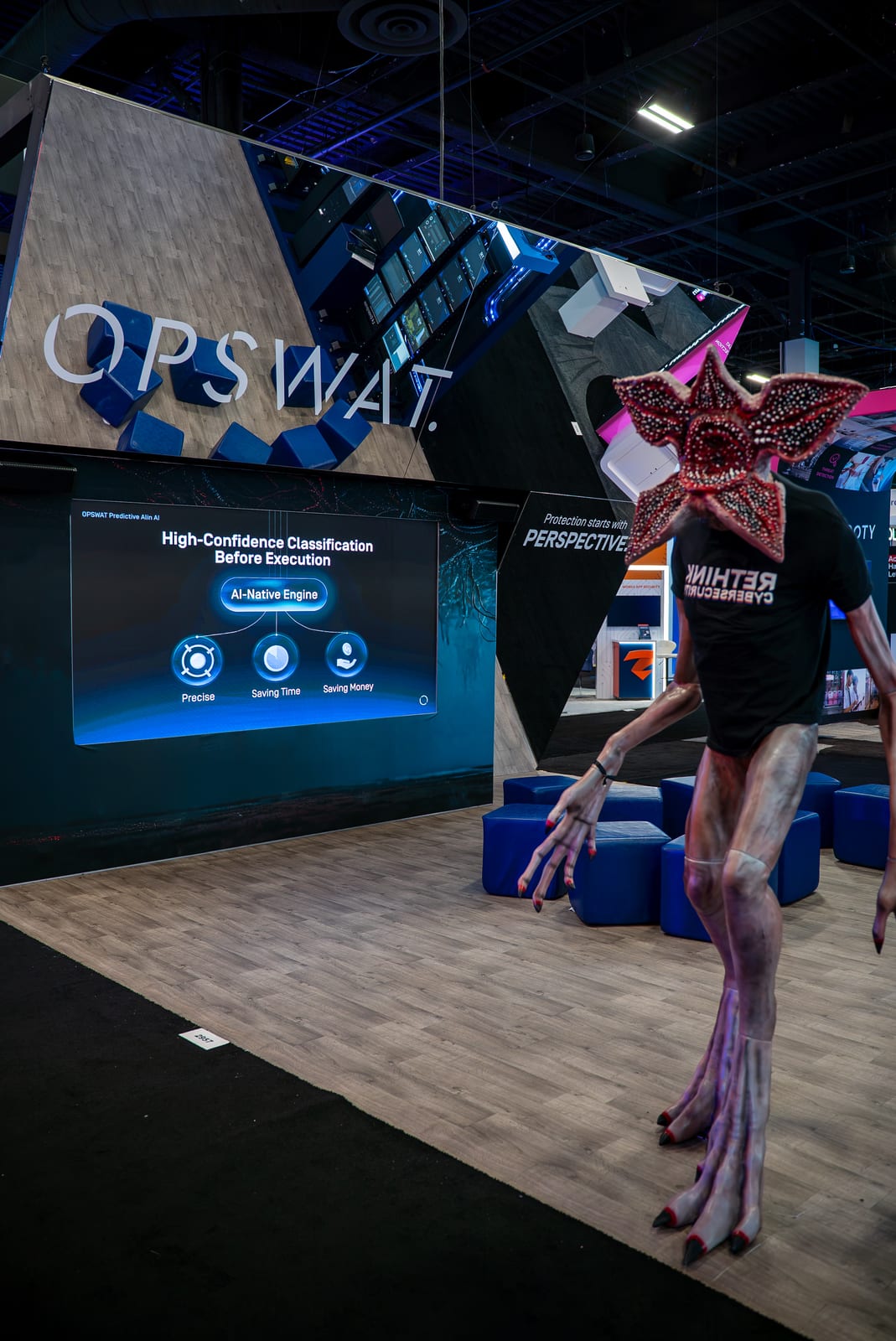
OPSWAT kept it simple: an eighteen-tile wall, six wide by three high, over a theater with a demo screen and enough audio for panel work. Not every booth needs to be the loudest thing in the hall.
The part nobody sees
Thirty-seven booths on our network is a number that hides the work. Each one is a floor plan marked up, a drop count agreed, cable pulled before the carpet goes down, and a switch that has to come up clean the first time, because there is no second time. Bandwidth ran from 10 Mbps at a demo pod to 60 at ThreatLocker, five hundred fifteen megabits in total across one hundred eighty-seven drops.
Thirteen technicians, eighty-three technician-days, July 31 to August 7. One team scoped the drawings, ordered the gear, hung the walls, pulled the cable, wrote the game, and stayed until all of it was back in the truck.
Next deep dive
Xsolla at GDC 2026